
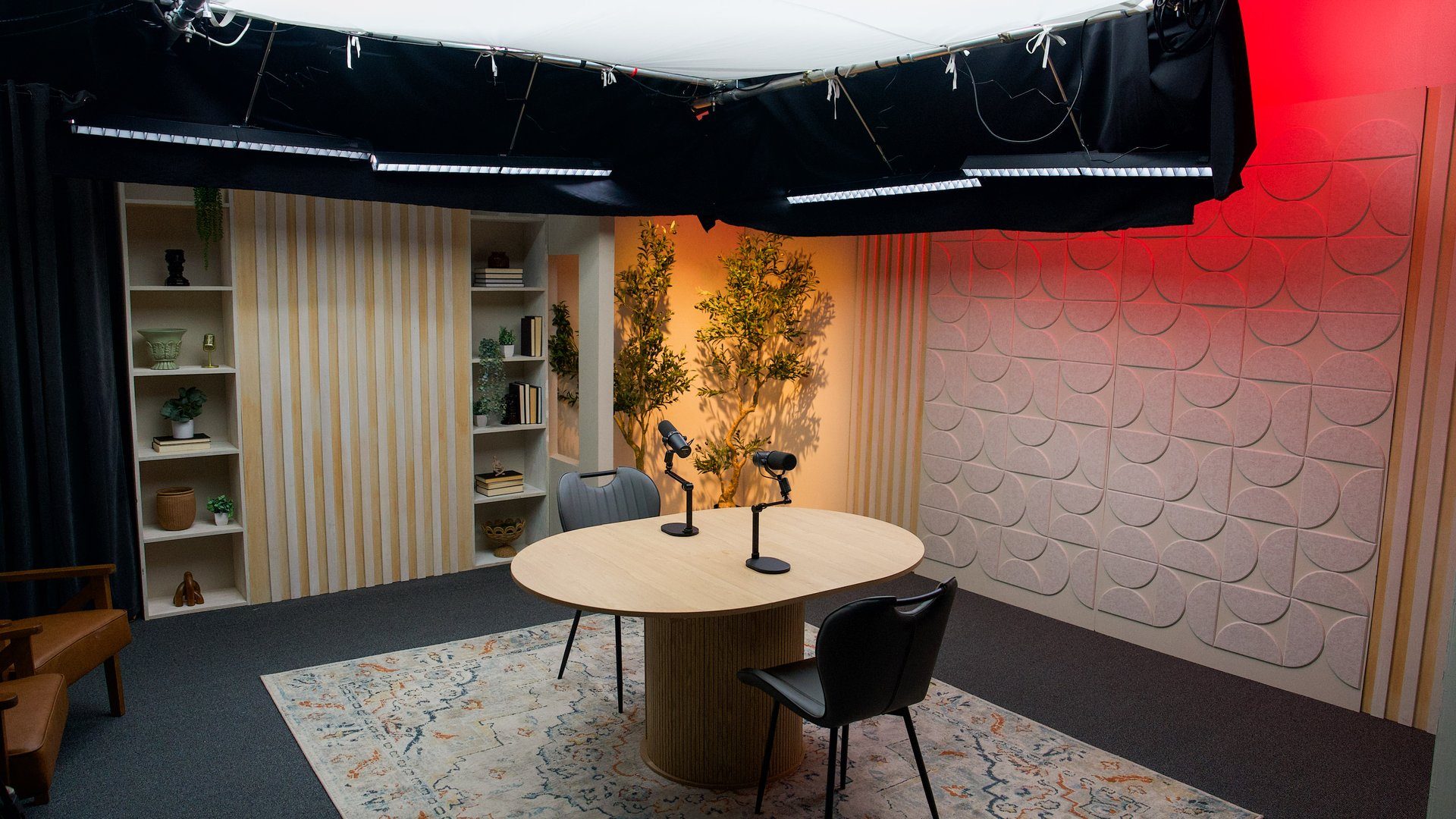
Educational Video Studio Cincinnati | CPS
Educational Video Studio in Cincinnati: What It Is and Who Uses One
If you're producing a course, training series, or instructional content for your business, the space you record in shapes everything — audio quality, visual consistency, how many modules you actually finish in a day. Most people don't realize how much a purpose-built educational video studio changes the output until they've tried to make it work somewhere else first.
This guide covers what an educational video studio actually includes, who uses one, and what you can realistically produce in a single session at a professional facility in Cincinnati.
An educational video studio is a production space built for courses and training content — not just interviews. At CPS, one session typically yields a complete module set or training series, all camera-ready for post-production.
Quick Answer
An educational video studio is a professionally equipped space designed for recording courses, training content, and instructional videos — with broadcast-quality cameras, acoustic treatment, controlled lighting, and production support already in place. In Cincinnati, CPS functions as a full educational video studio: one session typically produces a complete course module set, a training video series, or 10-20 short-form clips, all ready for post-production.
What Is an Educational Video Studio?
The term gets used loosely, but a real educational video studio is purpose-built for instructor-led content. That means it's not just a camera and a clean background — it's a system.
The core difference between an educational video studio and a general recording space is production consistency. When you're recording 8 modules over a day, every module needs to look and sound the same. Lighting that shifts between takes, room echo that creeps into audio, or camera angles that drift between sessions creates a patchwork course that undermines credibility — even if the content is strong.
A studio built for educational content solves those problems at the infrastructure level. The production environment is locked in. The instructor shows up and delivers.
Educational video studios also differ from podcast or interview studios in how they handle delivery format. Courses often involve direct-to-camera instruction, on-screen references, or structured lesson flows that require teleprompter-compatible rigs, consistent eyeline framing, and a production crew that understands course pacing — not just conversation dynamics.
Who Uses an Educational Video Studio in Cincinnati?
The range is wider than most people expect. Anyone producing instructional content at a professional level eventually needs a space that's built for it.
Coaches and consultants building online courses. Business coaches, executive coaches, financial advisors, and professional service consultants often reach the point where they want to scale their expertise beyond 1:1 work. A structured course recorded at a professional course creation studio is the most credible way to do that.
Corporate L&D teams. HR and learning and development departments at mid-size to enterprise companies need training videos that hold attention and look like they came from a real production — not a conference room with a ring light. Employee training, compliance modules, onboarding series, and leadership development content all benefit from professional studio production.
Associations and nonprofits. Professional associations creating member education content, continuing education modules, or certification prep series often have subject-matter experts but no in-house production capability. One studio day at CPS can produce a full curriculum's worth of video content.
Professional services firms. Law firms, accounting firms, financial planning practices, and healthcare organizations are increasingly using educational video to document internal SOPs, train new hires, and build authority-based client content. Studio production makes those videos watch-worthy rather than obligatory.
If you're in the Cincinnati or Northern Kentucky market and need professional-quality instructional content, the practical choice is a dedicated facility over building out your own setup. The studio rental model lets you access broadcast-grade infrastructure without carrying the overhead.
What a Professional Educational Video Studio Includes
Not all studios advertising "educational" capability are actually built for it. Here's what a professional setup should include and why each element matters for course and training content specifically.
Broadcast-quality 4K cameras. Course buyers associate production quality with content quality. 4K cameras with proper lenses — not webcams or consumer-grade setups — give your content the visual authority it needs to compete with established course creators. CPS runs a video-first production model built around professional broadcast equipment.
Professional audio. This is the non-negotiable. Viewers tolerate imperfect video far longer than they tolerate bad audio. A professional studio uses lavalier or shotgun microphones with proper gain staging and isolation — no HVAC noise, no room echo, no ambient bleed. One bad audio day can make an entire module set unusable.
Acoustic treatment. A room that sounds good isn't about silence — it's about controlled reflections. Professional acoustic panels eliminate the flutter and echo that make voices sound distant or unprofessional. This can't be replicated with soft furnishings in an office. The difference is audible immediately.
Controlled professional lighting. A lighting rig designed for on-camera subjects eliminates shadows, prevents flickering, and maintains consistent color temperature across a full recording day. For multi-module courses, every lesson needs to look like it was recorded in the same environment — because it should be.
On-site production team. At CPS, you don't show up and figure out the gear. The production team handles setup, framing, audio checks, and session pacing. That frees the instructor to focus entirely on delivery. It also means technical issues get caught and resolved before they become post-production problems.
Teleprompter-compatible setup. Many instructors prefer working from an outline on screen rather than memorizing or reading from printed notes. CPS's setup accommodates teleprompter delivery without sacrificing natural eyeline or requiring awkward camera placement adjustments.
Batch recording model. The studio is structured for volume. Unlike a single-interview setup, CPS's approach to course video production is built around getting as many finished modules as possible per session. Most clients complete 6-10 modules per day with proper pre-production.
Educational Video Studio vs. Recording at Home or in the Office
The comparison matters because most people try the DIY route first. It's worth being direct about where the gaps show up.
Audio is where DIY breaks down fastest. Home offices and conference rooms have HVAC noise, reflective surfaces, and ambient sound that standard microphones pick up regardless of price. You can spend thousands on a microphone and still have audio that sounds like it was recorded in a hallway if the room isn't treated. Professional educational video production eliminates this problem at the room level.
Background consistency across modules. Course buyers notice when module 3 looks nothing like module 1. Changing light, shifting backgrounds, or visible differences in framing signal that the content was assembled rather than produced. A professional studio locks in a consistent visual environment for the entire recording day.
The real cost of DIY. When you factor in professional lighting gear, acoustic panels, a quality camera, a good microphone, and the time investment to learn to operate all of it competently, the cost of building your own educational video setup is significant. For most coaches, consultants, and L&D teams, renting a professional studio at CPS produces better results faster and at lower total cost — especially once you account for the production team's time you'd otherwise be spending yourself.
Credibility on screen translates to credibility for the content. Course buyers form opinions about the quality of instruction within the first 30 seconds of a lesson. Professional production signals that the instructor takes their work seriously — and by extension, that the content is worth taking seriously. For consultants and coaches whose business is built on expertise positioning, that signal matters.
How to Get the Most Out of One Studio Session
The single biggest variable in how much you produce in a studio day is how prepared you arrive. A well-prepared client can finish an entire course module set in one session. An underprepared one may finish three lessons and spend the rest of the day reworking delivery.
Here's how to maximize a session at an educational video studio:
- Outline every module before you arrive. Not full scripts — but clear lesson objectives, talking points, and transitions for each module. Know what each lesson is supposed to accomplish and what the viewer should walk away with.
- Sequence your lessons. Record in the order that makes instructional sense, so any cross-references between modules are accurate when you say them. Fixing continuity errors in post-production is expensive and sometimes impossible.
- Batch 6-10 modules per session. A half-day session supports 4-6 modules comfortably. A full day supports 8-12 depending on lesson length and complexity. Plan your recording day around that range.
- Prepare your wardrobe in advance. Solid colors read best on camera. Fine patterns create visual noise. Avoid all white (blows out against studio lighting) and all black (loses detail). Bring a backup option in case something doesn't look right on monitor.
- Use the production team. The crew at CPS can tell you if a take needs to be redone, flag audio issues in real time, and help pace the session so you're not burning time between modules. Let them do that job.
If you're working with the CPS team on a course production project, we'll walk through a pre-session prep checklist with you before your recording day. Most of the common mistakes are preventable with a 30-minute pre-production call.
For Cincinnati and Northern Kentucky businesses producing employee training, member education, or professional development content: one studio day at CPS is typically enough to produce a complete series or curriculum. That's the batch recording model — and it's the reason clients don't need to schedule three or four separate sessions to finish a single course.
FAQs About Educational Video Studios in Cincinnati
What is an educational video studio?
An educational video studio is a production space built specifically for recording courses, training content, and instructional video series. It includes broadcast-quality cameras, professional audio, controlled lighting, and often on-site production support — so the instructor focuses on delivery, not setup.
How much content can I produce in one studio session?
Most clients record 6-10 course modules or training videos in a single half-day or full-day session at CPS. Thorough pre-production — outlined lessons, clear scripts or bullet-point guides — is the biggest multiplier.
Do I need a script to record at an educational video studio?
Not word-for-word, but you should have a clear outline for each module. CPS works with both scripted delivery (teleprompter available) and conversational lesson formats. Coming in with a lesson plan dramatically increases how much you finish per session.
What makes an educational video studio different from a regular recording space?
Purpose-built educational video studios are optimized for instructor-led content: consistent lighting across long multi-module sessions, acoustics designed to eliminate room noise, and production crews experienced with course formats — not just interviews or podcasts.
Is Cincinnati Podcast Studio set up for educational video recording?
Yes. CPS handles course creators, L&D teams, coaches, consultants, and associations producing training content. The studio's course creation services and batch recording model are specifically built for multi-module sessions.
What should I bring to an educational video studio session?
Bring outlined or scripted lessons for each module, any visual references or props, wardrobe that reads well on camera (solid colors, no fine patterns), and notes on how you want modules divided. CPS handles the rest — lighting, audio, camera direction, and session flow.
Ready to Record?
If you're building a course, a training series, or professional instructional content and you want a clean, professional result without building your own studio, CPS is the practical answer for teams in Cincinnati, Northern Kentucky, and the surrounding region.
We work with coaches, consultants, L&D departments, associations, and professional services firms. One session produces a full series. The production team handles everything except your expertise.
Book a Discovery Call to talk through your project — what you're building, how many modules, and what a recording day would look like. Or contact the CPS team if you have specific questions about setup, session structure, or post-production handoff.
You can also explore the Cincinnati Business Podcast to hear how CPS produces long-form content at scale — the same infrastructure behind every educational video session.