What to Look for in a Video Studio Rental
What to Look for in a Video Studio Rental
Renting a video studio sounds straightforward until you've booked a space that looked great in photos and spent the first hour troubleshooting lighting and wrestling with audio settings. The checklist below cuts through the noise so you can evaluate any rental space clearly — before you book it.
Not all video studios are created equal. Before you book, here's a practical checklist of what separates a studio that saves you time from one that costs you it.
The Short Version
The most important things to look for in a video studio rental are 4K-capable cameras and professional lighting already dialed in, clean acoustic-treated audio, a crew or technical staff on-site, and a set designed for your recording format — whether that's interviews, solo presenter, or panel. A good studio rental means you show up and record. Everything else should already be handled.
1. Professional-Grade Video Equipment That's Already Set Up
The camera quality and configuration determine how your content looks in the final cut. Look for 4K-capable cameras on proper mounts, not consumer webcams on a tripod. Lens selection matters too — a wide-angle lens that distorts faces is not a feature.
More importantly, find out whether the equipment is already configured and tested, or whether you're expected to set it up yourself. A professional Cincinnati Podcast Studio rental space has gear that's camera-ready before you walk in. You shouldn't need to know what a shutter speed is to record a good interview.
Questions to ask: What cameras are in the room? Are they pre-configured? Is there a multicam setup or single-camera? Who operates them during your session?
2. Lighting That's Built In — Not Something You Adjust
Professional lighting is the single biggest difference between content that looks like it was recorded in a spare bedroom and content that looks like it belongs on a major brand's website. Look for dedicated studio lighting rigs — not ring lights sitting in the corner.
The best studio rentals have lighting pre-set for the recording format. That means you arrive to a lit set, not a lighting tutorial. Soft key lights, fill, and background separation are what separate studio-quality video from everything else.
Questions to ask: Is the lighting pre-set for my session type? Are there lighting technicians or operators on-site, or am I adjusting it myself?
3. Acoustic Treatment and Audio Quality
Audio quality tanks credibility faster than almost anything else in video content. Poor audio makes viewers stop watching — even when the visuals are fine. A studio designed for recording should have acoustic panels, sound dampening, and professional microphones already positioned.
Watch for red flags: rooms with hard floors and parallel walls that create echo, consumer microphones on long unshielded cables, and no mention of audio monitoring during the session.
For video content — whether professional video podcast production, webinar production, or course creation — clean audio is non-negotiable.
Questions to ask: What microphone setup is included? Is there acoustic treatment in the room? Is audio monitored in real time during recording?
4. Technical Support On-Site During Your Session
This is where many rental spaces fall short. A room full of professional equipment is only useful if someone knows how to run it. Find out whether the rental includes a crew — operators, a producer, or at minimum a technician — or whether you're expected to figure it out alone.
For business leaders who aren't video producers, renting a room with no support is a recipe for lost time. The best studios are staffed. You focus on your message; they handle the technical execution.
The Cincinnati Business Podcast is recorded at a fully staffed studio — guests show up, talk, and leave with no production tasks on their to-do list.
Questions to ask: Is there a producer or operator included? Who's responsible for audio levels, camera framing, and recording during my session?
5. A Set Designed for Your Recording Format
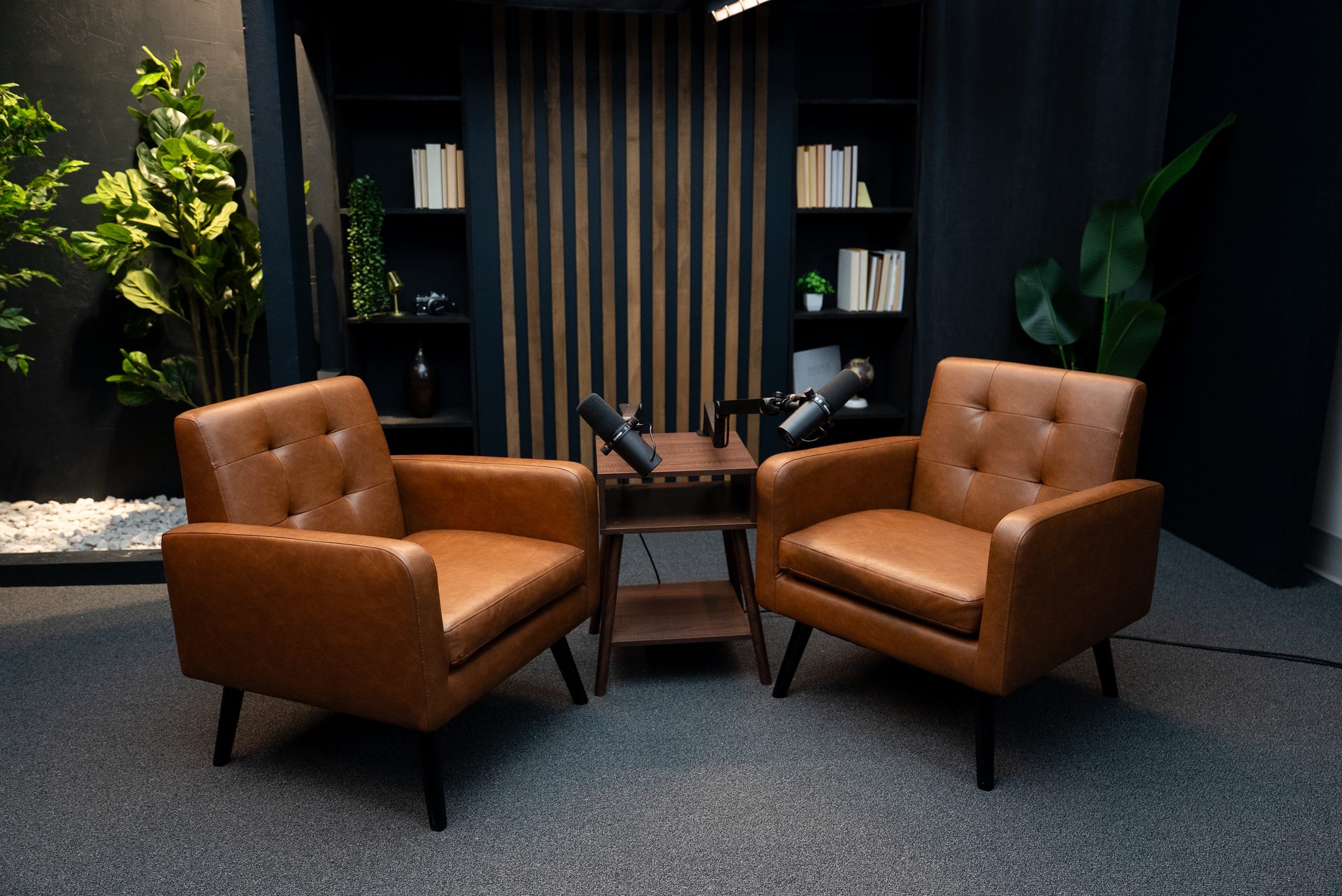
The physical set matters for how your content performs. Interview-format podcasts need a round or diagonal table setup with natural sightlines. Solo presenter content needs a clean background and tight framing. Panel discussions need spacing that puts multiple faces on camera without crowding.
Look for a studio with a set that's been built and tested for the type of content you're creating. A one-size-fits-all room with a white wall and a single chair is not a studio designed for short-form video content, professional interviews, or brand-representative recordings.
Questions to ask: What does the set look like on camera? Can I see recent recordings or a video walkthrough? Is the set adjustable for my format?
6. Booking Flexibility and Session Structure
Understand what you're buying before you commit. Some rentals are bare-bones hourly rates with no support. Others include pre-session setup, a producer, and post-session file delivery. Know what's included, what's add-on, and how much lead time the studio needs.
For teams doing batch recording — capturing four to six pieces of content in one session — booking flexibility and session structure become critical. Ask whether the studio can support multi-segment recording days or whether the booking model is capped at a single episode format.
If your goal is a repeatable content operation, pair your studio rental with content strategy consulting to plan session cadences that match your publishing schedule.
Questions to ask: What's included in the rental fee? Is there a minimum booking window? Can I batch multiple pieces of content in one session?
Common Mistakes When Renting a Video Studio
- Booking based on photos alone. Request a video walkthrough or an in-person preview. Lighting and set quality rarely translate from a listing photo.
- Assuming equipment is operated for you. Confirm whether the rental includes operators or whether you're self-directed.
- Not asking about file delivery. Find out what format your recordings are delivered in, how quickly, and whether any editing or clip export is included.
- Underestimating setup time. Studios that require you to set up your own equipment eat into your recording window. Confirm what's ready before your session starts.
- Booking too short. Rushed recording sessions produce rushed content. Give yourself buffer time, especially for your first session in a new space.
If You're in Cincinnati or Northern Kentucky
If you're a B2B team in Greater Cincinnati or Northern Kentucky, the proximity to a staffed, fully equipped studio removes the biggest production friction point: having to own, maintain, and operate your own gear. You can book a discovery call to walk through what a session at Cincinnati Podcast Studio looks like before committing to a booking.
Frequently Asked Questions
What should I ask before renting a video studio?
Ask about camera specs and configuration, whether lighting is pre-set, whether technical staff are on-site, what microphone setup is included, and how files are delivered after your session. These five questions will surface most of the meaningful differences between rental options.
Do video studio rentals include an operator or producer?
It depends on the studio. Some rentals are room-only; others include a producer, camera operator, or full crew. Confirm before booking, especially if your team doesn't have production experience. A staffed rental typically produces significantly better results.
Can I record multiple videos in one studio rental session?
Yes, if the studio is set up for it. Batch recording — capturing multiple episodes, clips, or course segments in a single session — is efficient and cost-effective. Ask whether the studio's booking structure supports multi-segment days.
What's the difference between a podcast studio and a video production studio?
Many modern podcast studios are video-first and function as full video production spaces. The key difference is orientation: a podcast studio is typically built for conversational interview formats with multiple cameras, while a video production studio may be configured for solo presentations, course recordings, or commercial content. Cincinnati Podcast Studio supports both formats.
Is it better to rent a studio or build one?
For most business content producers, renting is the practical choice. Building a studio that matches professional quality requires significant investment in gear, acoustic treatment, lighting, and ongoing maintenance. Renting gives you professional-grade output without the capital cost. If your volume grows, the math may eventually shift — that's a conversation worth having with a content strategy team.
What to Do Next
If you're evaluating video studio rentals in Cincinnati or Northern Kentucky, the most useful next step is seeing the space and understanding what a session actually looks like. Schedule your discovery call with Cincinnati Podcast Studio to walk through the setup, ask your production questions, and find out whether it's the right fit for your content goals. Or reach out to the team directly if you have a specific project in mind.