
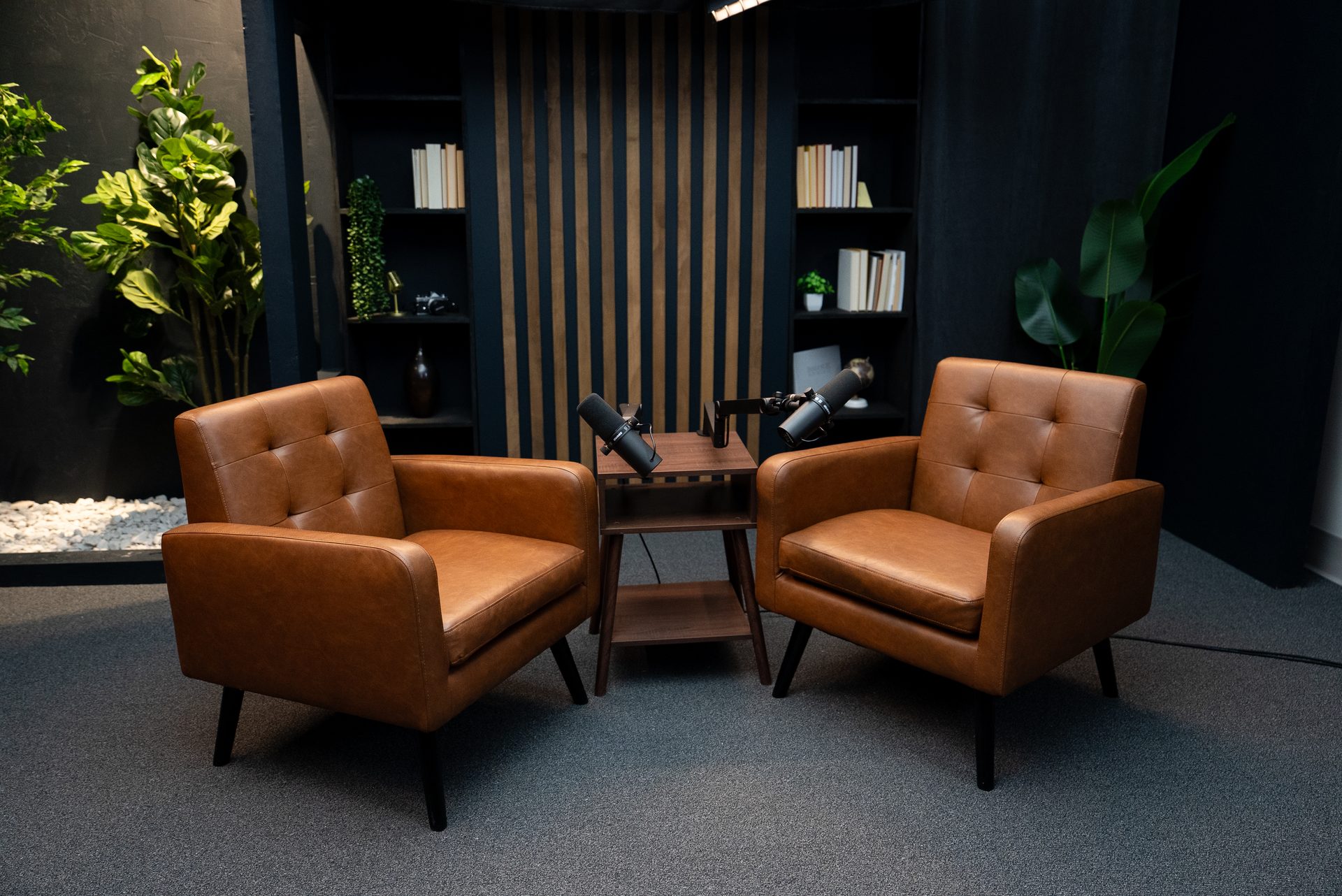
Webinar vs. Video Podcast: Which Format Is Right for You?
Webinar vs. Video Podcast: What's the Difference and Which Should You Choose?
Webinars and video podcasts both involve cameras, microphones, and people talking on screen. But they serve fundamentally different purposes — and confusing them leads to the wrong content strategy. If you're trying to decide which format your business should invest in, this breakdown will make the decision clear.
Understanding the distinction helps you match the right format to your actual goal — whether that's generating leads this quarter or building a content engine that compounds over years.
Quick Answer
A webinar is a live or pre-recorded video presentation designed to teach, train, or generate leads — usually one-directional. A video podcast is an ongoing series of recorded conversations that builds a long-term audience and content library. Webinars convert. Podcasts compound. Most B2B organizations that take content seriously eventually use both.
What Is a Webinar?
A webinar is a structured video event — live or pre-recorded — where one or more presenters deliver information to a registered audience. The format is designed around a defined outcome: generate leads, train employees, launch a product, or educate prospects on a specific topic.
Webinars are typically gated. Attendees register in advance, which makes them pre-qualified by definition. That registration step is a built-in lead capture mechanism, which is why webinars have become a staple of B2B demand generation.
Key characteristics of a webinar:
- Runs 30–90 minutes, usually with a defined agenda
- Gated by registration — audience is pre-qualified
- One-directional or light Q&A at the end
- Often includes slides, screen share, or presenter demos
- Optimized for conversion: a CTA at the end drives the next step
- Frequently used for product launches, training, lead generation, and employee education
A well-produced webinar recording also has a second life as a video asset — repurposed into on-demand content, email sequences, or short-form video clips for social. But that repurposing is most effective when the original recording is high quality from the start.
What Is a Video Podcast?
A video podcast is a recurring series of recorded conversations — interviews, co-hosted discussions, or solo commentary — published openly on platforms like YouTube, Spotify, and Apple Podcasts. Unlike a webinar, a podcast has no gating, no single event, and no agenda tied to a conversion moment. It's a series built to accumulate trust and audience over time.
The business case for video podcasting is a content multiplication model. A single recorded episode typically yields a full-length YouTube video, a podcast audio track, 8–12 short-form clips, a blog post, and several weeks of email and social content. That's why businesses that invest in video podcast production at CPS often describe it as their most efficient content spend.
Key characteristics of a video podcast:
- Episodic — a series, not a one-time event
- Open distribution on public platforms (no registration required)
- Conversation-forward: interviews, co-hosts, roundtables, or solo
- Audience grows over time through subscribes, follows, and search
- Each episode generates a full content library: clips, blog posts, email content
- Builds long-term authority and parasocial familiarity with potential clients
The Cincinnati Business Podcast is a strong example of what B2B video podcasting looks like when done consistently — an evergreen library of conversations that keeps generating traffic and trust long after each episode publishes.
Key Differences: Format, Audience, and Goal
On the surface, both formats involve someone talking on camera. But the intent, distribution, and return on investment work differently.
Event vs. Series
A webinar is an event with a beginning and end. A podcast is an ongoing series with no defined endpoint. One is a sprint; the other is a long game. Webinars drive action now. Podcasts build the environment where action becomes inevitable later.
Gated vs. Open
Webinars require registration — which means your audience self-selected and gave you their contact information. Podcasts are open — they grow through platform algorithms, word of mouth, and search. Gated content converts faster; open content scales further.
Structured vs. Conversational
Webinars follow an agenda, often with slides or presenter-driven flow. Podcasts are built around natural conversation — which tends to feel more human and less formal. Both formats require good audio and video quality, but the production style differs.
One-time vs. Compounding
A webinar recording is an asset you can repurpose. A podcast library is a compounding asset — each episode adds to an existing body of work that builds search presence, audience, and trust over time. The more episodes you publish, the more the whole library benefits.
Short-term ROI vs. Long-term ROI
Webinars are measurable in weeks: registrations, attendees, leads generated. Podcast ROI develops over months: audience growth, inbound inquiries, shortened sales cycles with prospects who feel like they already know you. Both are real ROI — they just operate on different timelines.
When to Use a Webinar vs. a Video Podcast
The format decision comes down to your goal and your timeline. Here's how to think about it.
Choose a webinar when you need:
- A lead generation mechanism tied to a specific topic or offer
- Employee or partner training that needs a structured delivery format
- A product or service launch event with a clear CTA
- On-demand educational content for a defined audience segment
- A live interaction format with Q&A, polls, or audience participation
Choose a video podcast when you need:
- Long-term thought leadership and audience building
- A content multiplication engine — one session, dozens of assets
- A way to build trust with prospects before they're ready to buy
- A platform for guest relationships that open doors (referrals, partnerships, introductions)
- An evergreen content library that builds search equity over time
Neither answer is wrong. The question is which goal is most urgent right now. If you're unsure, podcast idea research is a good first step — it helps you validate the format, audience, and positioning before you commit to production.
If you're a B2B team in Cincinnati or Northern Kentucky trying to decide where to invest your content budget, the conversation usually shifts quickly once you see what a single studio session can produce in either format. Content strategy consulting can help you map that out before you book time.
Can You Produce Both from One Studio Session?
Yes — and it's more common than people expect.
At CPS, we regularly help clients batch multiple content formats in a single recording day. A well-planned session can produce:
- One or more webinar recordings (presentation-forward, with a defined CTA arc)
- Two to four podcast episodes (conversation-forward, interview or co-host format)
- Short-form clips from both formats — 8 to 20 clips per session depending on runtime
- Content ready for YouTube, Spotify, LinkedIn, and email in a single day
The key is upfront planning. Webinars and podcasts require different energy from presenters — one is more structured and polished, the other is more conversational and natural. A good production partner helps you sequence those correctly so you get the best of both without burning out the talent.
Our studio rental options support both formats, and the on-site production team handles the technical side so your team can stay focused on the content. If you want to see what a batch day looks like, a Discovery Call is the fastest way to get a realistic picture of what's possible.
Frequently Asked Questions
Can I repurpose a webinar as a podcast episode?
Yes — with the right setup. If your webinar is recorded at broadcast quality with clean audio and an engaging conversation format, it can be repackaged as a podcast episode or cut into short-form video clips. A dedicated studio recording session makes this far more efficient than trying to repurpose a Zoom recording.
Do webinars and video podcasts require different equipment?
Not as much as people assume. Both benefit from professional camera, audio, and lighting. The main difference is format: webinars often use slides or screen share, while podcasts are conversation-forward. A professional studio like CPS handles both without requiring you to own or configure any gear.
Which format generates more leads?
Webinars convert faster because they're gated events with a specific CTA. Podcasts generate leads more slowly but more sustainably — they build trust over time and create a content ecosystem that keeps working for months or years. The best answer for most B2B organizations is eventually both, with the webinar driving near-term pipeline and the podcast building the long-term authority that makes future sales easier.
Can I record a webinar and a podcast in the same studio session?
Yes. CPS regularly helps clients batch multiple content formats in a single session. With proper planning, you can leave with a webinar recording, multiple podcast episodes, and a library of short-form clips. The professional webinar production setup and podcast setup share the same professional infrastructure.
Is a video podcast just a recorded webinar?
No — though they can look similar on screen. A webinar is designed as an event with a defined topic and a live or registered audience. A podcast is a series built around ongoing conversations and a growing subscriber base. The intent, distribution strategy, and production arc are different even when the equipment overlaps.
What does CPS recommend for B2B companies just getting started?
Start with a podcast if you want to build long-term authority and a content library. Start with a webinar if you have a specific lead gen goal or training need right now. Many clients use our podcast idea research service to figure out which direction makes the most sense before they commit to production. It's the fastest way to get a clear answer without guessing.
The Bottom Line
Webinars and video podcasts are not the same thing — and they shouldn't be treated as interchangeable. Webinars are built to convert a specific audience at a specific moment. Podcasts are built to compound trust over time with a growing audience that finds you on its own.
Both formats produce measurable returns. Both can be produced from the same studio in the same session. And both work better when the production quality is high enough that people actually stay until the end.
If you're a B2B organization in Cincinnati or Northern Kentucky trying to figure out which direction makes sense for your goals and your budget, the first step is a conversation. We'll help you pick the right format — and build a production plan that doesn't require you to become a media company to pull it off.
Schedule a Discovery Call and let's figure out which format fits your business. Or contact us if you have a specific project in mind and want to talk through the details first.