
Video Podcast Strategy in Cincinnati | CPS Consulting
Video Podcast Strategy for Cincinnati Businesses: How to Build Content That Works
Most business podcasts don't fail because of bad audio or weak guests. They fail because there was no strategy behind them — no clear reason to exist, no defined audience, and no plan for what happens after the episode is recorded. A video podcast without a strategy is just expensive content that goes nowhere.
At Cincinnati Podcast Studio, strategy is where every client conversation starts. Before we talk about cameras or episode formats, we talk about what you're trying to accomplish and how a video podcast production system can get you there.
Quick Answer
A video podcast strategy starts with a defined audience, a consistent recording cadence, and a clear distribution plan. Most Cincinnati businesses see the strongest results when they tie their podcast directly to a business goal — building trust with prospects, generating referral content, or fueling a lead nurture funnel — before they ever hit record.
Why Most Business Podcasts Stall Before They Gain Traction
The pattern is consistent: a business leader gets excited about podcasting, records a few episodes, and then quietly stops somewhere around episode four or eight. The content was fine. The guests were good. But there was no system underneath it to keep it moving.
Here's what's usually missing:
- No audience definition. "Everyone" is not an audience. The most effective B2B podcasts are built for a specific buyer — a CFO, a marketing director, an operations lead — and every topic, guest, and format decision flows from that clarity.
- No publishing schedule. A podcast without a cadence is a project, not a show. Audiences build through consistency. Algorithms reward regularity. Without a schedule, momentum dies between episodes.
- No tie to a business outcome. Is the show meant to generate leads? Build referral relationships with guests? Establish authority in a niche? Each goal requires a different content approach. Without one, you're producing content for content's sake.
- Treating production like a one-off task. The businesses that sustain long-running shows build a repeatable system — batch recording days, a content workflow, a distribution checklist. Those who treat each episode as a separate project eventually run out of bandwidth.
The good news: every one of these is fixable before you record a single episode. That's what content strategy consulting is designed to solve.
The 4 Elements of a Working Video Podcast Strategy
A video podcast strategy doesn't need to be complicated. It needs to be clear. Here are the four elements that separate shows that grow from shows that fade:
1. Audience Clarity
Define exactly who you're making the show for. Not a broad demographic — a specific role, in a specific type of organization, with a specific problem you can help them think through. The more specific the audience, the more valuable the show becomes to that audience, and the easier it is to attract the right guests and topics.
2. Format and Cadence Commitment
Decide on your format — interview, solo, panel, or a mix — and commit to a publishing schedule you can actually sustain. A bi-weekly show you can maintain for two years is worth more than a weekly show you abandon in month four. Batch recording makes consistency realistic even for busy executive teams.
3. Distribution Plan
Recording the episode is only half the job. The distribution plan determines where that content lives and how it finds new audiences. A complete distribution plan covers YouTube, LinkedIn, podcast directories, your email list, and short-form video clips for social reach. Each platform has different requirements — a strategy accounts for all of them.
4. Business Goal Alignment
Every content decision should connect back to a business outcome. If the goal is trust-building with prospects, your guest list and topic selection should reflect that. If the goal is generating referral relationships, the format and follow-up process need to support it. Strategy means every episode has a job to do beyond filling a publishing slot.
How to Choose the Right Format for Your Business
Format choice isn't about preference — it's about audience fit and production sustainability. Here's a practical breakdown:
Interview Format
The most common B2B format, and for good reason. Interviews bring in guest audiences, create natural referral relationships, and generate content without requiring the host to carry every episode alone. Best for shows focused on thought leadership, industry trends, or building a guest ecosystem around your business.
Solo Format
Higher authority signal, lower booking overhead. Solo episodes position you as the expert and are often more searchable because you control the topic directly. Best for consultants, advisors, and founders who have strong existing credibility and want to build a direct content relationship with their audience.
Panel Format
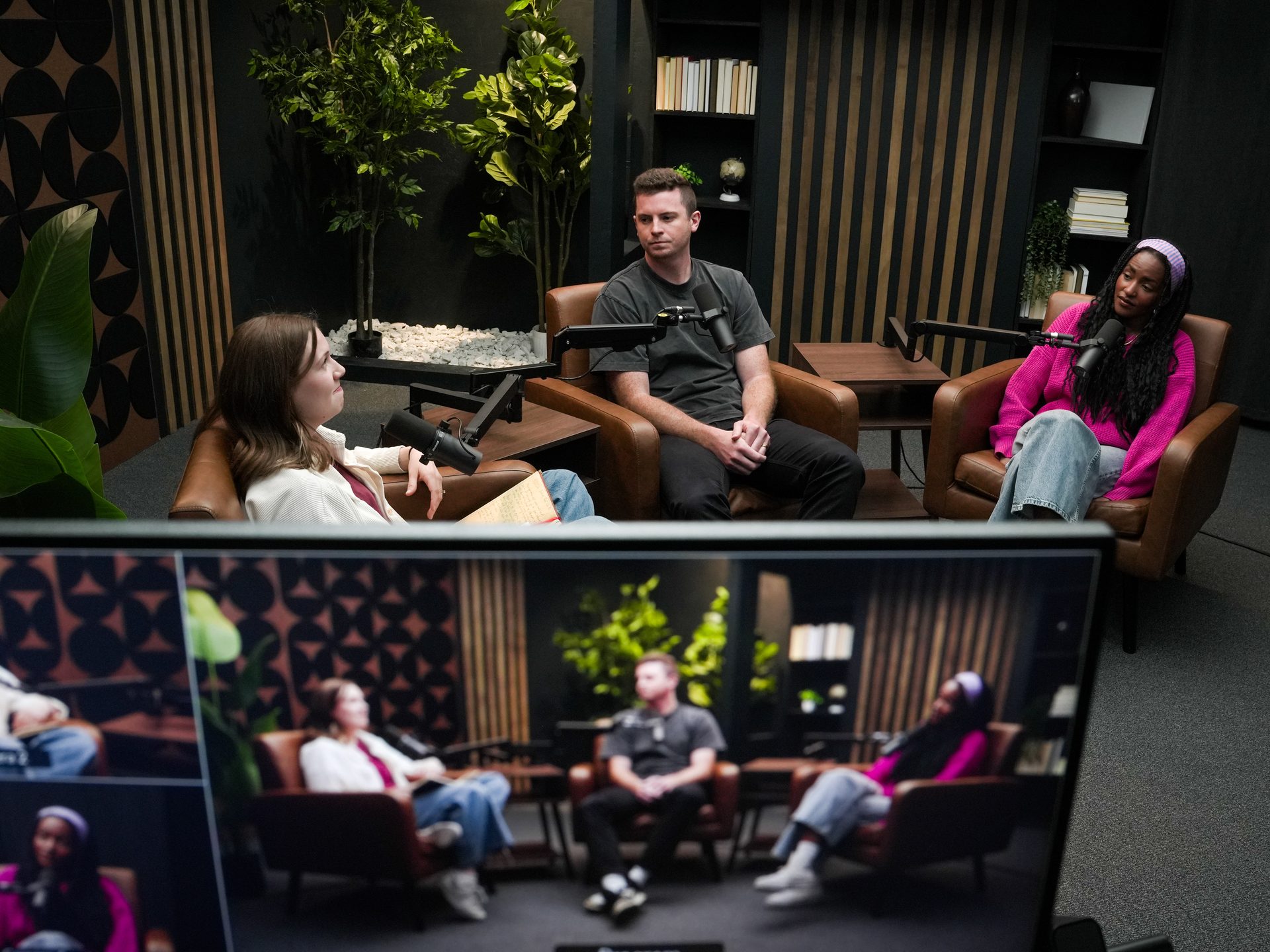
Multiple perspectives in one episode. Works well for industry roundtables, team-based expertise, or shows that want to cover complex topics with multiple angles. Requires more production coordination but can produce exceptionally rich content. The Cincinnati Business Podcast uses this model effectively.
A hybrid approach — primarily interviews with occasional solo commentary episodes — tends to work well for B2B shows that want the relationship benefits of guests and the authority signal of solo expertise. Our team can help you map this out during a strategy session before your first recording day.
Distribution: Where Your Video Podcast Content Should Live
Recording the episode is the beginning of the content lifecycle, not the end. A clear distribution plan ensures the episode keeps working long after it's published:
- YouTube — the primary long-form video archive. Video podcasts index well on YouTube search and compound in value over time as the library grows.
- LinkedIn — the highest-leverage platform for B2B video in Cincinnati and NKY. Native video clips outperform link posts for reach, and thought leadership content drives inbound connection requests from ideal buyers.
- Short-form social — pulling 60–90 second clips from each episode extends reach across Instagram, TikTok, and YouTube Shorts without requiring additional recording time. This is where the short-form video production workflow creates outsized leverage.
- Email — your list is a direct distribution channel that doesn't depend on an algorithm. A weekly episode email that links to the full video and includes two or three key takeaways keeps your audience in the loop without requiring them to discover it on social.
- Blog/SEO — episode summaries and show notes create searchable written content that extends the reach of each episode into organic search traffic.
If you're also producing webinars or course content, your podcast strategy can be designed to connect those assets — interview guests who become course collaborators, repurpose webinar content into podcast episodes, and build a content ecosystem where each piece reinforces the others.
How to Build a Content Engine Around One Recording Session
The Presence System is our operating model for Cincinnati businesses that want a high-output content strategy without a high-time commitment. The core principle: one studio session per month produces enough content to maintain consistent presence across every platform.
Here's what a single batch recording day can produce:
- 2–4 full-length podcast episodes
- 8–16 short-form video clips for social
- Episode-specific blog posts and show notes
- LinkedIn native video segments
- Email newsletter content for the month
The math adds up fast. Instead of carving out production time every week, you block one focused day — we handle everything from setup to editing — and the content team handles distribution from there. That's how busy founders and executives maintain consistent visibility without making content their full-time job.
Our podcast idea validation service can help you identify whether your concept has a viable audience and competitive positioning before you commit to a production cadence. It's the step that saves a lot of wasted effort downstream.
Video Podcast Strategy in Cincinnati: What the Local Business Landscape Looks Like
Cincinnati and Northern Kentucky run on relationships. Business development here is referral-heavy, trust-first, and community-driven in a way that makes video content an especially powerful tool. A video podcast puts your name, face, and expertise in front of a defined audience on a consistent basis — and in a relationship-driven market, consistent visibility is a competitive advantage.
The B2B professional services sector across Cincinnati and NKY is also early in its adoption of video podcasting as a strategic tool. Most firms are still relying on networking events, cold outreach, and word of mouth. A well-executed podcast positions you as the obvious expert before a prospect ever picks up the phone.
If you're a business leader in Greater Cincinnati wondering whether a video podcast belongs in your content strategy, the answer usually isn't "if" — it's "what kind" and "starting when."
Frequently Asked Questions
What's the difference between a podcast strategy and just starting a podcast?
Starting a podcast means hitting record. A strategy means knowing why you're doing it, who you're talking to, how often you'll show up, and how the content connects to a business outcome. Without strategy, most podcasts stop within the first six episodes.
How often should a business publish podcast episodes?
Consistency matters more than frequency. One episode per week is the standard for growth, but bi-weekly works well for B2B shows with longer sales cycles. The key is setting a cadence you can maintain without burning out — batch recording makes that realistic.
Do I need a professional studio to have a good video podcast strategy?
For video, yes. Lighting, sound, and camera quality directly affect how credible your show feels to a first-time viewer. A professional studio handles all of that so you can focus on the conversation.
How do I know if my podcast strategy is working?
Track the metrics tied to your business goal. If the goal is trust-building, track guest referrals and inbound mentions. If it's lead nurture, track conversion from listeners to prospects. Downloads alone are a weak indicator for B2B shows.
What kind of ROI can I expect from a B2B video podcast?
The ROI on a B2B video podcast compounds over time: deeper relationships with guests who become referral sources, a growing content library that works 24/7, and increased credibility in your market. Most clients see tangible pipeline impact within 6–12 months of consistent publishing.
Can CPS help develop our podcast strategy before we start recording?
Yes. Strategy is where we start. Before any recording session, we work with you to define your audience, format, goals, and content plan. Book a discovery call to start that conversation.
Explore More From Cincinnati Podcast Studio
- Video Podcast Production — Full-service video podcast recording for business leaders.
- Content Strategy Consulting — Strategic guidance for building a repeatable content engine.
- Podcast Idea Validation — Confirm your concept has a viable audience before you invest in production.
- Short-Form Video — Repurpose every episode into social-ready clips.
- Cincinnati Business Podcast — See what a strategic video podcast looks like in practice.
- Contact Our Team — Questions before you're ready to book? We're here.
Ready to Build a Video Podcast Strategy That Actually Works?
You don't need to figure this out alone. We work with Cincinnati and Northern Kentucky businesses to build podcast strategies that fit their goals, their team, and their capacity — and then we handle the production end so the system runs without friction.
Book a Discovery Call and let's map out what a video podcast strategy looks like for your business.