
LinkedIn Video Cincinnati | B2B Short-Form Video Production
LinkedIn Video in Cincinnati: How B2B Teams Show Up on Camera and Win New Business
LinkedIn video is no longer optional for B2B leaders who want to grow their pipeline. The platform rewards native video with dramatically higher organic reach than text posts or links — and Cincinnati buyers are watching. The problem is most business owners either avoid the camera entirely or record one shaky clip on a phone and wonder why nothing happens.
This guide breaks down what actually works for LinkedIn video production in Cincinnati, how to get weeks of content from a single studio session, and what separates the clips that build authority from the ones that disappear into the feed.
If you're a B2B team in Greater Cincinnati or Northern Kentucky, LinkedIn video is one of the clearest paths to building recognition with decision-makers before the first sales conversation happens.
Quick Answer
LinkedIn video in Cincinnati means showing up on the platform consistently with professional, short-form clips that build recognition and trust with your target audience. At Cincinnati Podcast Studio, B2B teams record 10–20 LinkedIn-ready videos in a single batch session — scripted or conversational, produced with broadcast-quality equipment. The result is weeks of content that positions you as the obvious choice in your market.
Why LinkedIn Video Works for Cincinnati B2B Leaders
LinkedIn's algorithm has a clear preference: native video outperforms external links, text-only posts, and image carousels in terms of reach and engagement. That's not a rumor — it's been consistent platform behavior for years. If you post a link to an article versus uploading a 90-second video saying the same thing, the video wins on reach by a wide margin.
But the deeper advantage isn't algorithmic. It's psychological.
Video creates parasocial familiarity. When someone watches you speak — even a short clip — they develop a sense of knowing you before you've ever had a conversation. By the time they book a call or respond to an outreach message, you're not a stranger. You're someone they've already spent time with. That changes the dynamic in every sales conversation that follows.
For Cincinnati B2B leaders — whether you're in professional services, consulting, tech, manufacturing, or healthcare — your buyers are on LinkedIn. The question isn't whether video works. The question is whether you're showing up consistently enough to matter.
- Higher organic reach — LinkedIn's algorithm favors native video over links and static posts
- Parasocial trust at scale — viewers feel they know you before the first call
- Content that compounds — a consistent library of clips builds authority over time, not just in a single news cycle
- Differentiation — most of your Cincinnati competitors aren't doing this consistently; the bar is lower than it looks
The Cincinnati Business Podcast is a clear example of this flywheel in action — consistent video presence builds the kind of credibility that shortens sales cycles.
What Makes a LinkedIn Video Actually Perform
Not all LinkedIn video is created equal. Plenty of B2B leaders post content that gets a handful of likes from coworkers and nothing else. The difference between clips that perform and clips that disappear usually comes down to five elements.
1. A strong hook in the first 2–3 seconds
LinkedIn autoplays video without sound. You have two or three seconds to earn a pause before someone scrolls past. Your hook should either name a specific problem your audience has, make a counterintuitive claim, or preview something worth watching. "Here's what no one tells you about B2B content" beats "Hi, I'm Brian and today I want to talk about…" every time.
2. One clear idea per video
The most common mistake in LinkedIn video is trying to cover too much ground. Pick one point, make it clearly, and stop. A 90-second video that lands a single idea is more effective than a 4-minute video that tries to cover everything you know about the topic. Treat each video like a paragraph, not a chapter.
3. Broadcast-quality audio
Viewers will tolerate imperfect lighting. They will not tolerate bad audio. If your voice is echoing off drywall, crackling from a laptop mic, or competing with background noise, the viewer is gone. Audio quality is the single biggest production variable that affects whether people finish watching your content.
4. Captions
Most LinkedIn video is consumed on mute — in an office, on a commute, or between meetings. If your video doesn't have captions, you're cutting off a significant portion of your potential audience. At short-form video production level, captions are a non-negotiable delivery element, not an afterthought.
5. Camera confidence
This one is less technical and more personal. Looking directly into the lens — not at your own face on a monitor, not down at your notes — reads as authority. It's the difference between someone who looks like they know what they're talking about and someone who looks like they're reading a script. Studio sessions help with this because you have on-site support keeping you on track and relaxed, which changes how you come across on camera.
How to Get 10–20 LinkedIn Videos From One Studio Session
The biggest operational problem with LinkedIn video isn't the camera. It's the logistics. Most B2B leaders don't have time to show up, set up equipment, record one video, and edit it themselves — let alone do that every week for months. That's why the batch model exists.
Instead of recording one video at a time, you plan 15–20 short topics in advance, come in for a single session, and record everything in one day. CPS handles the production side — framing, lighting, audio, and on-set direction — and delivers edited clips ready to post. You leave with weeks of content from a single afternoon.
Here's how a typical LinkedIn video batch session works:
- Pre-session planning (done before you arrive) — You or your team maps out 15–20 topics. These can be talking points, short lessons, client questions you get regularly, or industry takes. They don't need to be fully scripted — bullet points work fine.
- Recording day (typically 3–4 hours) — You come in, get set up quickly, and record straight through. On-set support helps with pacing, energy, and keeping takes tight. Most leaders are surprised how many clips they can lock in once they stop managing the gear themselves.
- Editing and delivery — The post-production team cuts each clip, adds captions, color grades the footage, and delivers finished files. You review, approve, and post on your own schedule.
For Cincinnati B2B teams that want a steady LinkedIn presence without dedicating hours every week, the batch model is the most practical path. You think once, record once, and post for the next month. That's the same system behind the video podcast production model — applied to short-form content.
Need help developing a content angle and topic list? That's part of what consulting and content strategy covers before you ever show up to record.
What to Expect at a LinkedIn Video Shoot
If you've never recorded professional short-form video in a studio, here's what a session at Cincinnati Podcast Studio looks like.
Before you arrive: You'll have a short planning conversation to align on the topics you want to cover, the look and feel you want for your brand, and whether you'll work from a teleprompter, talking points, or free-form speaking. Most business leaders find talking points work better than a full script — it keeps the delivery conversational.
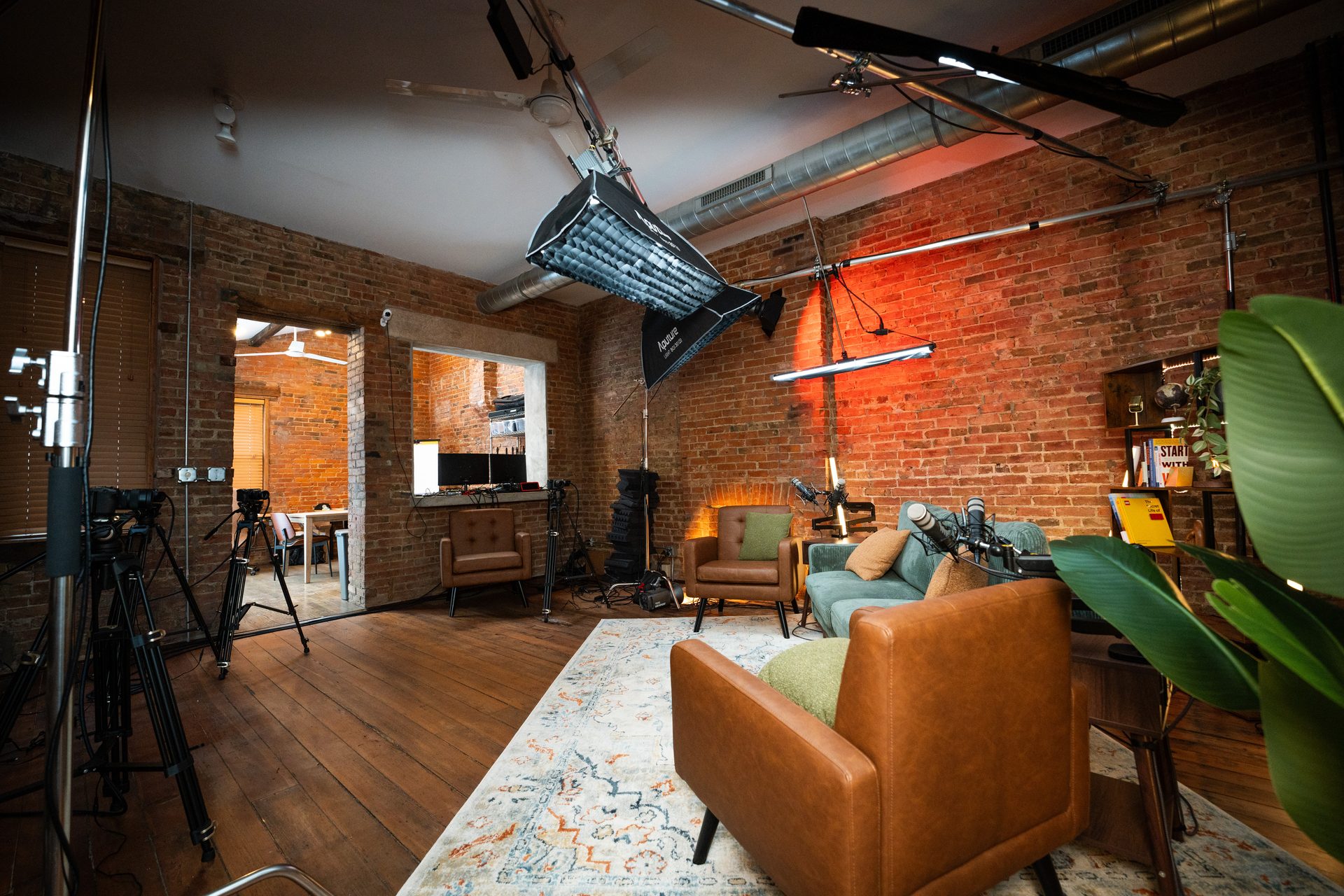
In the studio: The space is purpose-built for video production. 4K cameras, professional lighting that's already dialed in for your shoot, broadcast-quality audio, and a clean, branded backdrop. You don't need to bring anything except your content ideas and a willingness to be on camera.
On-set support: Someone is with you throughout the session to cue your clips, give feedback on pacing, flag anything that needs a second take, and keep the session moving. The goal is to make sure you walk out with clean, usable footage for every topic you came in to cover.
After the session: Your footage goes to post-production. Clips are cut to length, captioned, color graded, and delivered in formats ready for LinkedIn upload. You're not doing any of the editing — you review and approve.
If you're curious about what a session produces or how to plan topics, the best next step is a Discovery Call — it's a short conversation to figure out what your content needs are and whether a studio session makes sense for your team.
Common LinkedIn Video Mistakes (and How to Avoid Them)
Most of the LinkedIn video mistakes we see come from the same root cause: treating it like a one-off project instead of a repeatable system.
- Recording one video at a time. This is unsustainable. The logistics of setting up, recording, and editing one clip at a time will exhaust you within a few weeks. Batch instead — plan 15–20 topics, record in one session, and let the system do the work.
- Trying to cover too many ideas in one clip. Every video should have one point. If you find yourself saying "and also…" multiple times, you have multiple videos. Split them up.
- Bad audio from a laptop mic or phone in a noisy environment. Viewers forgive a lot of things. Bad audio isn't one of them. If the production environment is working against you, fix that first before worrying about the content itself.
- No call to action. Every video should tell the viewer what to do next — follow for more, send a message, visit a link, book a call. Without a CTA, you're building awareness with no path to conversion.
- Posting once and disappearing. One great video doesn't build a LinkedIn presence. Consistency does. The algorithm rewards accounts that post regularly, and audiences remember faces they see repeatedly. The batch model solves this problem by taking consistency off your weekly to-do list.
If you want to see how other Cincinnati businesses have built consistent content systems, the content resources section is a good place to start. And About CPS covers the production model in detail.
Frequently Asked Questions
How long should a LinkedIn video be?
60 to 90 seconds is the sweet spot for most LinkedIn audiences. Videos under 3 minutes tend to see stronger completion rates. If you have more to say, split it into a series rather than stretching one video past the audience's attention span.
Do I need a professional studio to record LinkedIn videos?
Not always — but studio quality matters more than most people expect. LinkedIn's feed is competitive. Poor audio or a cluttered background signals low investment. A professional studio removes those friction points and lets you focus on what you're saying, not on managing gear.
How many LinkedIn videos can I record in one day?
Most B2B leaders record 10–20 LinkedIn clips in a single half-day session at CPS. With proper planning, a 4-hour session can generate 4–6 weeks of content. The key is batching topics in advance so you're not writing scripts on the day.
What kind of content performs best on LinkedIn?
Point-of-view clips, lessons learned, process breakdowns, and industry takes tend to outperform promotional content. Viewers want insight, not ads. Lead with something useful and let your expertise do the selling.
Is LinkedIn video worth it for a B2B company?
Yes — if your buyers are on LinkedIn. For professional services, consulting, B2B tech, and any business where trust drives the buying decision, LinkedIn video is one of the highest-ROI channels available. It builds familiarity at scale before the first sales conversation.
Where can I record professional LinkedIn videos in Cincinnati?
Cincinnati Podcast Studio on Mentor Avenue in Cincinnati specializes in short-form video production for B2B teams. You come in, we handle the rest — lighting, audio, framing, and post-production delivery.
Ready to Show Up on LinkedIn With Professional Video?
LinkedIn video isn't complicated. But it does require a production system that you can actually maintain — one that doesn't drain your time or require you to become a video editor on top of running a business.
At Cincinnati Podcast Studio, we build that system for B2B teams in Cincinnati and Northern Kentucky. You plan the topics. We handle everything else — the setup, the shoot, the editing, and the delivery. You leave with weeks of content and a process you can repeat every quarter.
If that sounds like what you've been looking for, the next step is a Discovery Call. It's a short conversation about your content goals, your audience, and whether a studio session makes sense. No pressure — just a clear picture of what's possible.
Or if you're still figuring out your content angle, explore course creation and consulting options — both pair well with a LinkedIn video strategy when you're building a content library from your existing expertise. Contact us anytime with questions.