
Is a Podcast Worth It for a Small Business?
Is a Podcast Worth It for a Small Business? Here's the Real Answer
The question comes up constantly: should we start a podcast? For small business owners, the instinct is usually right — podcasting can be one of the highest-leverage content plays available. But "can be" is doing a lot of work in that sentence.
A podcast is worth it for some businesses and a distraction for others. The difference usually comes down to a few clear factors — and once you understand them, the answer gets much easier.
We've helped dozens of B2B businesses in Cincinnati and Northern Kentucky launch and sustain professional video podcast studios in Cincinnati, and we've seen both sides of this question up close.
Quick Answer
A podcast is worth it for a small business when you have expertise to share, a relationship-driven sales cycle, and a commitment to consistency. It's not a quick traffic hack — it's a trust-building tool that compounds over time. For B2B businesses especially, a well-produced show can shorten sales cycles and generate more qualified leads than most paid channels. If you're unsure whether your business is the right fit, a podcast idea research session can sharpen that answer before you commit.
What "Worth It" Actually Means for a Business Podcast
Before answering whether podcasting is worth it, you have to define what "worth it" means for your specific business. The answer looks different depending on your goal.
Are you trying to build brand awareness in your market? Generate inbound leads? Deepen relationships with existing clients? Accelerate referrals? Establish credibility in a competitive niche? Each of those is a valid outcome — and each has a different timeline and measurement approach.
Here's the core truth most business owners miss: most successful business podcasts don't get millions of downloads. They don't need to. A show with 150 targeted listeners who are all potential clients or referral partners is worth more than a show with 50,000 listeners who will never buy from you.
If you set realistic expectations upfront — this is a long-term brand asset, not a short-term traffic spike — the calculus changes entirely. The Cincinnati Business Podcast is a direct example of this model working in a regional B2B context.
The Real Advantages of Podcasting for Small Businesses
When it's working, a business podcast does things most marketing channels can't.
It builds trust at scale. Audio and video create parasocial familiarity — listeners and viewers feel like they know you before they ever schedule a call. That compression of the trust-building phase has a direct impact on close rates and sales cycle length. Prospects who've listened to six of your episodes show up to discovery calls already pre-sold on your expertise.
Guest strategy doubles as outreach. Inviting a potential referral partner, a prospective client, or an industry peer onto your show is one of the warmest approaches in B2B. You're offering value first — a platform and an audience — and building a real relationship in the process. Some of the best business development conversations happen in a recording session.
Video podcasting multiplies your content output. A 45-minute video episode can become a full YouTube upload, 10-20 short-form clips for LinkedIn and Instagram, a blog post, an email to your list, and a set of audiogram quotes — all from a single recording session. Short-form video clips derived from podcast episodes are now one of the most effective B2B social content formats available.
It compounds. Each episode you publish builds on the ones before it. Your archive becomes a searchable content library. New listeners who find episode 60 can go back and consume episodes 1 through 59. That's not how a one-off blog post or paid ad works.
When a Podcast Is Probably Not the Right Move
Podcasting isn't for every business, and it's worth being direct about when it probably won't pay off.
You don't have a defined audience or topic niche. "General business topics" is not a show concept — it's a starting point for brainstorming one. The shows that grow are specific. If you can't articulate who you're making the show for and what problem you're helping them solve, you'll struggle to attract the right listeners regardless of production quality.
You're not ready to commit to consistency. Sporadic publishing is worse than not publishing at all. Three episodes and a six-month gap signals to both listeners and search algorithms that the show isn't a priority. If you can't sustain a minimum of two episodes per month, consider building that capacity before you launch.
You expect fast results. Podcasting compounds, which means the early months feel slow. If your business needs lead generation results in 90 days, a podcast is not the right tool for that job. Paid search, events, or direct outreach will move faster. The podcast complements those channels over time — it doesn't replace short-cycle tactics.
Your sales cycle doesn't involve trust-building. If you're selling a commodity product with a short, transactional sales cycle, a podcast is likely overkill. Podcasting earns its keep in longer B2B sales cycles where familiarity, expertise, and relationships are the differentiators. If that's not your model, there are better uses of your marketing budget.
What It Actually Takes to Run a Business Podcast
The businesses that get real ROI from podcasting treat it like a system, not a side project. Here's what that actually looks like in practice.
A clear format. Solo episodes, guest interviews, and panel conversations each serve different goals. Solo shows build personal authority and are easier to batch-produce. Guest shows build relationships and network effects but require booking and coordination. Pick a primary format before you record your first episode and stick with it long enough to evaluate it fairly.
Production quality that doesn't embarrass you. You don't need a broadcast facility, but you do need clear audio and, ideally, clean video. Listeners forgive a lot — but they don't forgive sound quality. Hollow room reverb, background noise, or muffled audio kills credibility before you've said a useful word. Video quality compounds this: if your show lives on YouTube or LinkedIn, the visual environment communicates as much as what you're saying.
An editorial calendar. The shows that outlast the initial enthusiasm run on a calendar, not inspiration. Map out 12 episodes before you launch. Know your episode cadence, your recording days, and your publishing schedule. This removes the week-to-week friction that kills most podcasts in months two through four.
A distribution strategy. Recording good content is step one. Getting it in front of the right people is step two — and most business podcasters underinvest here. Your show needs a YouTube presence, active sharing on LinkedIn, and ideally a short clip strategy that puts excerpts in front of people who haven't subscribed yet. Our consulting and content strategy team helps businesses build this distribution layer alongside their production schedule.
How to Get More From Every Episode You Record
One of the biggest mistakes small businesses make with podcasting is treating each episode as a standalone event. The episode is the raw material — the content engine is what you build around it.
From a single well-produced episode, you should be able to generate:
- A full YouTube upload (video version)
- 10-15 short-form clips for LinkedIn, Instagram Reels, and YouTube Shorts
- A blog post summarizing the key insights for SEO
- 2-3 email newsletter segments
- A pull-quote graphic or audiogram for social
That's the Cincinnati Podcast Studio model — batch recording, maximum content output per session. One focused recording day produces enough content to maintain consistent presence across multiple channels for weeks. Most of our clients run 2-4 sessions per month and walk out with 30-40+ assets each time.
This is where video-first podcasting pays for itself. Audio-only shows are limited to the podcast feed and maybe a transcript. Video opens up YouTube, short-form clips, and visual social content simultaneously. For a small business trying to do more with a lean team, that leverage matters.
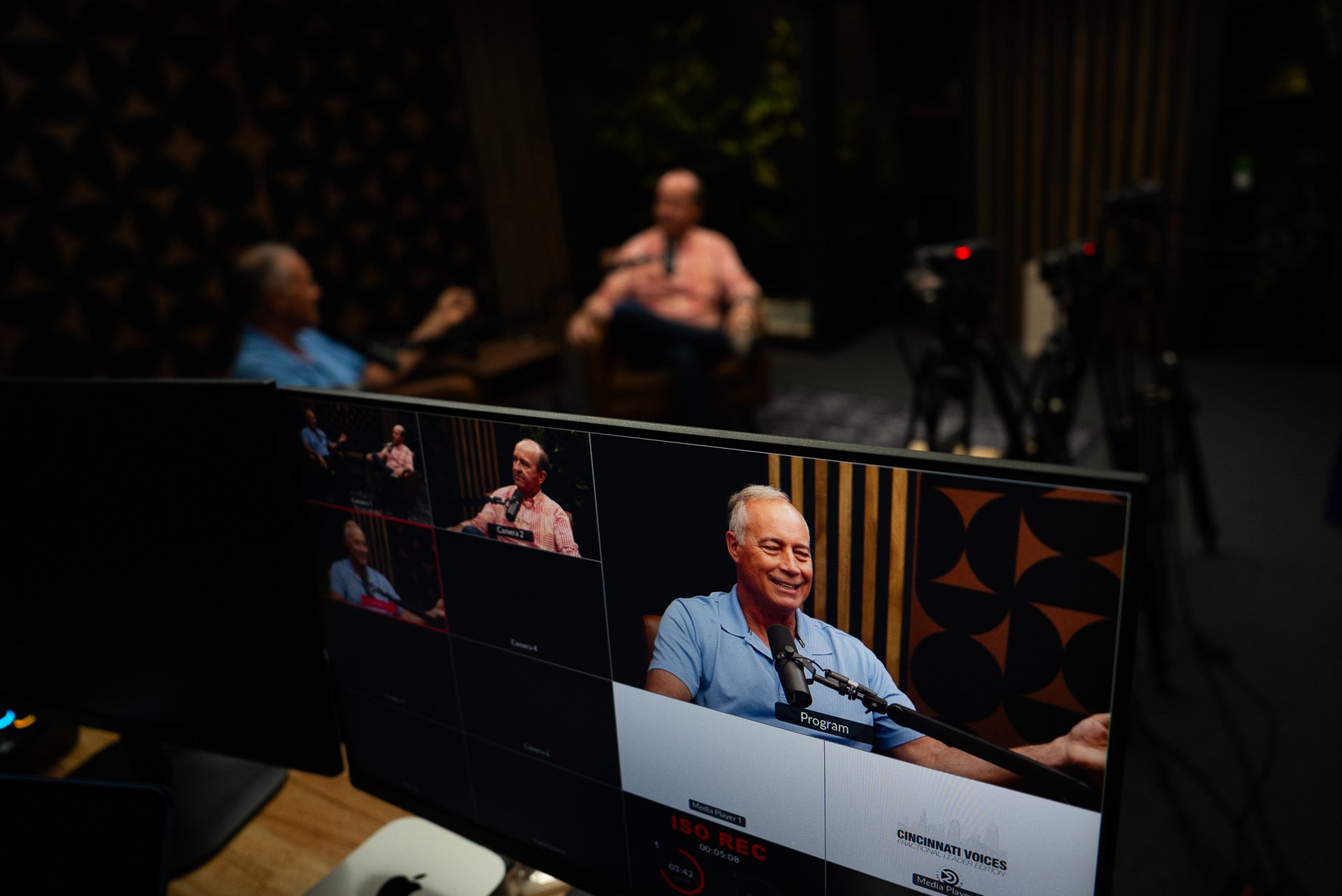
If you're in Greater Cincinnati or Northern Kentucky and want to see what a video-first production session actually looks like in practice, a Discovery Call is the right starting point. We'll walk through your current content goals and show you exactly what a session at CPS produces.
Frequently Asked Questions
How long does it take for a business podcast to show results?
Most business podcasts see meaningful traction between 6 and 18 months in. The compounding effect of consistent publishing is real, but patience is required. Early wins often come from guest relationships and direct listener engagement, not download counts.
Do I need a large audience for a podcast to be worth it?
No. A small, targeted audience of 50-200 ideal clients is more valuable than 10,000 general listeners. If the right people are hearing your show, a podcast absolutely pays off — especially in relationship-driven B2B sales.
Is video podcasting better than audio-only for small businesses?
For most small businesses today, video-first is the right default. You get the podcast episode plus YouTube presence plus short-form video clips for social — all from a single recording session. Audio-only limits your content output significantly.
How much does it cost to start a business podcast?
Costs vary widely depending on production quality. DIY setups can run a few hundred dollars in gear, while professional studio time gives you broadcast-quality results without the equipment overhead. We walk through specific options on a Discovery Call because every show's scope is different.
What should a small business podcast be about?
Focus on the problems your best clients face — not on your services. A show that genuinely helps your target audience builds far more trust than one that pitches your business. If you're unsure of your niche, a podcast idea research session can sharpen it before you commit.
Can a small business in Cincinnati or NKY start a podcast without a big team?
Absolutely. Many of the most effective B2B podcasts in Greater Cincinnati run with just the host and a production partner. The studio handles the gear, setup, and post-production so you can focus entirely on the conversation. Contact us to talk through what a lean, sustainable show looks like for your business.
The real question isn't whether podcasting works — it does, for the right businesses. The question is whether your business has the audience clarity, the topic focus, and the consistency commitment to make it work. If the answer to those three is yes, the upside is significant: trust at scale, a compounding content archive, and a guest strategy that quietly does your best business development for you.
If you want to pressure-test your idea before committing to a launch, podcast idea research is a practical first step. And when you're ready to see what production actually looks like, our CPS podcast production services team is ready to walk you through it.
Schedule a Discovery Call and let's figure out if a podcast is the right move for your business — and what it would actually take to do it well.