
Corporate Training Video Production in Northern Kentucky
Corporate Training Video Production in Northern Kentucky
Most companies in Northern Kentucky build their first training videos the same way: someone with a laptop webcam, a quiet-ish conference room, and good intentions. It works for one video. It falls apart the moment you need ten.
As the business base across Covington, Newport, Florence, and the rest of the region keeps growing, more teams are hitting the point where onboarding and compliance training can't run on improvised Zoom recordings anymore. The fix isn't more effort from whoever's recording the videos - it's a process built for the job.
Quick answer: Corporate training video production in Northern Kentucky works best when a single studio day replaces scattered webcam recordings. A dedicated studio handles audio, lighting, and multi-camera setup so a training library gets built in hours instead of weeks, with consistent quality across every module.
That's the short version. Here's what actually changes when you move training recording into a real studio process - and how to know if it's worth it for your team.
Why Northern Kentucky Businesses Are Moving Training Off Webcams
Northern Kentucky isn't a small satellite market anymore. Covington, Newport, Florence, Fort Thomas, Fort Mitchell, Erlanger, and Independence are home to a growing base of companies scaling past the size where "figure it out as you go" training works. More hires means more onboarding sessions. More regulation in a given industry means more compliance documentation that has to hold up to scrutiny.
Here's the part most companies don't think about until it bites them: webcam and laptop recordings create inconsistent audio and lighting from video to video, and employees notice. A training library that sounds different in every module, with echoey audio in one and a blown-out window behind the presenter in the next, quietly tells new hires that this content wasn't a priority. A studio-based process sends the opposite signal - that training gets the same production standard as anything client-facing.
What a Professional Training Video Day Actually Looks Like
A studio training day isn't more complicated than a DIY recording - it's just organized differently, with the complexity handled by someone other than your subject matter expert.
Before the session, topics get outlined into modules. Not a word-for-word script - a structured list of what each module needs to cover, in what order. That outline becomes the day's shot list.
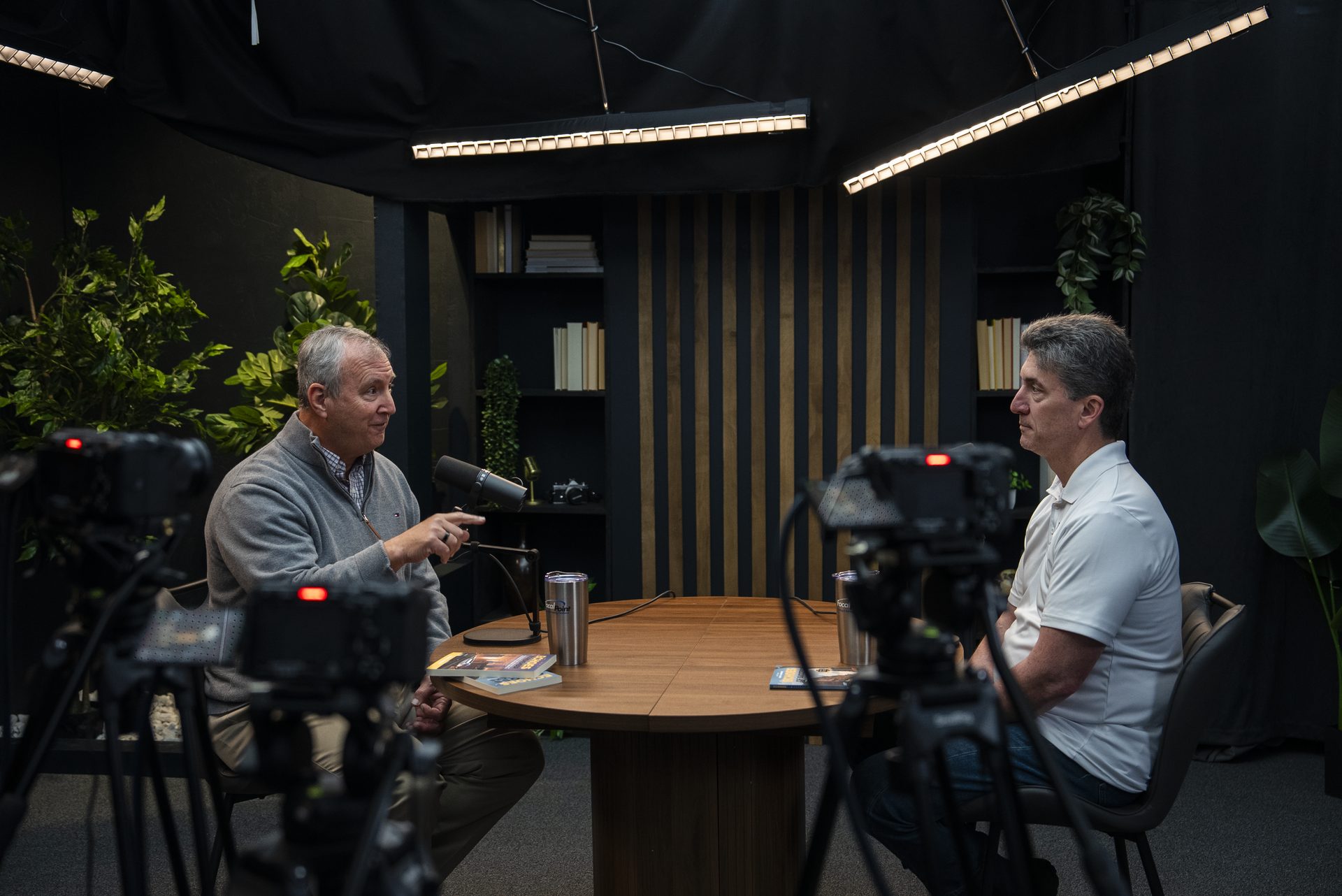
On recording day, a technical producer handles lighting, multiple camera angles, clean audio, and teleprompter support if it's useful. The person on camera does one job: talk through the material naturally, module by module. Everything else - framing, sound levels, retakes - is someone else's problem to manage.
Batching: How to Record a Full Training Library in One Session
The single biggest efficiency gain in training video production is batching. Instead of recording one module every time a new need comes up, group related modules together - onboarding, compliance, product training - and record them in one studio day.
The key is recording in short, modular segments rather than one long continuous video. A 40-minute training video is hard to update later; a set of eight 5-minute modules is easy to update one piece at a time when a policy changes. Done this way, a single day in studio can realistically produce several weeks' worth of usable training content, all with the same consistent look and sound.
For teams already thinking about course creation production beyond internal training - turning expertise into a sellable course or certification program - the same batching approach applies. The studio day doesn't change; only the audience does.
Common Mistakes That Make Training Videos Hard to Watch
A few patterns show up repeatedly in training videos that don't land:
- Reading word-for-word from a script. It flattens tone and makes even confident subject matter experts sound robotic. An outline beats a script every time.
- Modules that run too long without structure. A 25-minute module with no clear sections loses employees halfway through. Shorter, clearly labeled segments hold attention better.
- Inconsistent audio and lighting across videos. When training content is recorded piecemeal over months in different rooms, the inconsistency is more distracting than any single flaw.
Most of these aren't content problems - they're production problems. Fixing the process fixes the videos.
Who This Is For (and Who It Isn't)
Studio-based training production is a strong fit for Northern Kentucky companies with 20 or more employees building out onboarding, compliance, or product training libraries - especially teams currently patching together a mix of recorded Zoom calls and hoping it reads as professional.
It's not the right call for every situation. A one-off internal announcement or a quick process update doesn't need a studio day - a simple Teams or Zoom recording gets the job done. Save the studio time for content employees will reference repeatedly, where consistency and clarity actually matter.
If you're a growing team in Covington, Newport, Florence, or anywhere else in Northern Kentucky, this matters because your training library is often the first thing new hires judge your company culture by - and a patchwork of webcam recordings sends the wrong signal.
It's also worth looking at the data behind this: research from the Association for Talent Development consistently links video-based training to stronger retention and completion rates than text-based alternatives, which makes the production quality of that video worth getting right.
A studio day for training pairs naturally with other studio rental options for teams already producing webinar content or short-form video for internal communications. If you're not sure where training fits into a broader content plan, that's a conversation for consulting and strategy, not something to figure out alone.
Frequently Asked Questions
How long does it take to record a full training video library?
A single studio day can typically produce enough modular footage for several weeks of training content, depending on how many topics are batched together.
Do we need a script for corporate training videos?
An outline works better than a word-for-word script. Bullet points for each module keep subject matter experts sounding natural instead of reading flatly.
Can training videos be updated later without a full re-shoot?
Yes, if modules are recorded as short, self-contained segments rather than one long video, individual sections can be re-recorded as policies or processes change.
Is studio production overkill for internal training videos?
Not when the training touches onboarding, compliance, or anything employees will reference repeatedly. One-off announcements are a better fit for a quick Zoom or Teams recording.
Does Cincinnati Podcast Studio work with companies based in Northern Kentucky?
Yes. The studio is within easy reach of Covington, Newport, Florence, Fort Thomas, Fort Mitchell, Erlanger, and Independence.
Building a Training Library That Actually Gets Watched
Training content doesn't need to be flashy. It needs to be consistent, clear, and easy to sit through - and that comes down to production, not production value for its own sake. Learn more about Cincinnati Podcast Studio's approach or hear how other local businesses talk about building their content systems on the Cincinnati Business Podcast.
If your team is ready to turn a patchwork of training recordings into a real library, schedule a Discovery Call or contact our team to talk through what a single studio day could cover.