
Content Strategy Cincinnati: Build a System That Actually Works
Content Strategy Cincinnati: How Cincinnati Businesses Build a System That Sticks
Most Cincinnati businesses don't have a content problem. They have a system problem. They know they should be posting, recording, and showing up online — they just don't have a repeatable way to do it without burning out or burning budget. That's what a real content strategy fixes.
This guide breaks down how B2B teams in Greater Cincinnati and Northern Kentucky build content systems that produce consistently — without a full marketing department or a different strategy every quarter.
A practical content strategy starts with one anchor asset, a clear audience, and a production model that doesn't depend on daily inspiration.
Quick Answer
A content strategy for Cincinnati businesses starts with one anchor asset — usually a video podcast or webinar — and builds a repeatable system around it. From a single recorded session, you can generate a blog post, 10-20 short clips, email content, and social posts. The goal is consistency without complexity: show up, say something useful, and let the system distribute it.
What "Content Strategy" Actually Means for a Cincinnati Business
The word "strategy" gets used loosely. A lot of teams interpret content strategy as a posting calendar or a list of content ideas. That's not strategy — that's a to-do list. A real content strategy is a production system: a defined way to create, distribute, and maintain content that builds trust and drives pipeline over time.
For a B2B business in Cincinnati, the goal isn't to go viral or rack up followers. It's to stay visible and credible to the buyers who are already thinking about your category. That means showing up consistently in their feeds, search results, and inboxes — not occasionally when inspiration strikes.
Three things define a real content strategy:
- A defined audience — not "everyone" but a specific role, sector, or problem set you serve
- A topic you can own — one area where your team has enough depth to produce consistent, useful content without running dry
- A production model — a way to create content that doesn't require heroic effort every single week
When those three things are in place, consulting and content strategy becomes an operational function — not a creative sprint followed by silence.
The One-Asset Model: Why Most Cincinnati B2B Teams Get This Wrong
The most common content mistake we see from Cincinnati B2B businesses is fragmentation. A founder writes a LinkedIn post one week, records a short video the next, and then goes dark for a month because the team got busy. The content exists, but the system doesn't.
The fix is the one-asset model: pick a single anchor format and build everything else from it.
Here's how it works in practice. A company records a video podcast or a webinar series. That recording becomes the raw material for everything else:
- 8-12 short-form clips for LinkedIn, Instagram, and YouTube Shorts
- A long-form blog post optimized for search
- 2-3 email newsletter segments
- A repurposed quote card or carousel
One recording session produces a month of content. That's the leverage the one-asset model creates. And it's the reason the businesses we work with on the Cincinnati Business Podcast consistently out-publish competitors who are trying to create from scratch every week.
The problem most Cincinnati teams face isn't a lack of ideas. It's a lack of infrastructure. When production is slow or painful, you create less. When you create less, you lose momentum. The one-asset model solves that by compressing the production surface area into one regular session.
How to Build a Repeatable Content System in Cincinnati
Here's a five-step framework we use with Cincinnati businesses that are building their content system from scratch or fixing one that's stalled.
Step 1: Define your audience and topic territory. Start narrow. Pick the role you're trying to reach — not every decision-maker, but the specific buyer you want in the room. Then pick one topic cluster you can own. Not five. One. You can always expand later.
Step 2: Choose your anchor format. For most B2B teams in Greater Cincinnati, this is a video podcast, a webinar series, or a structured interview show. The format should fit how your audience already consumes content. If your buyers are watching LinkedIn videos and reading email newsletters, your anchor should produce both.
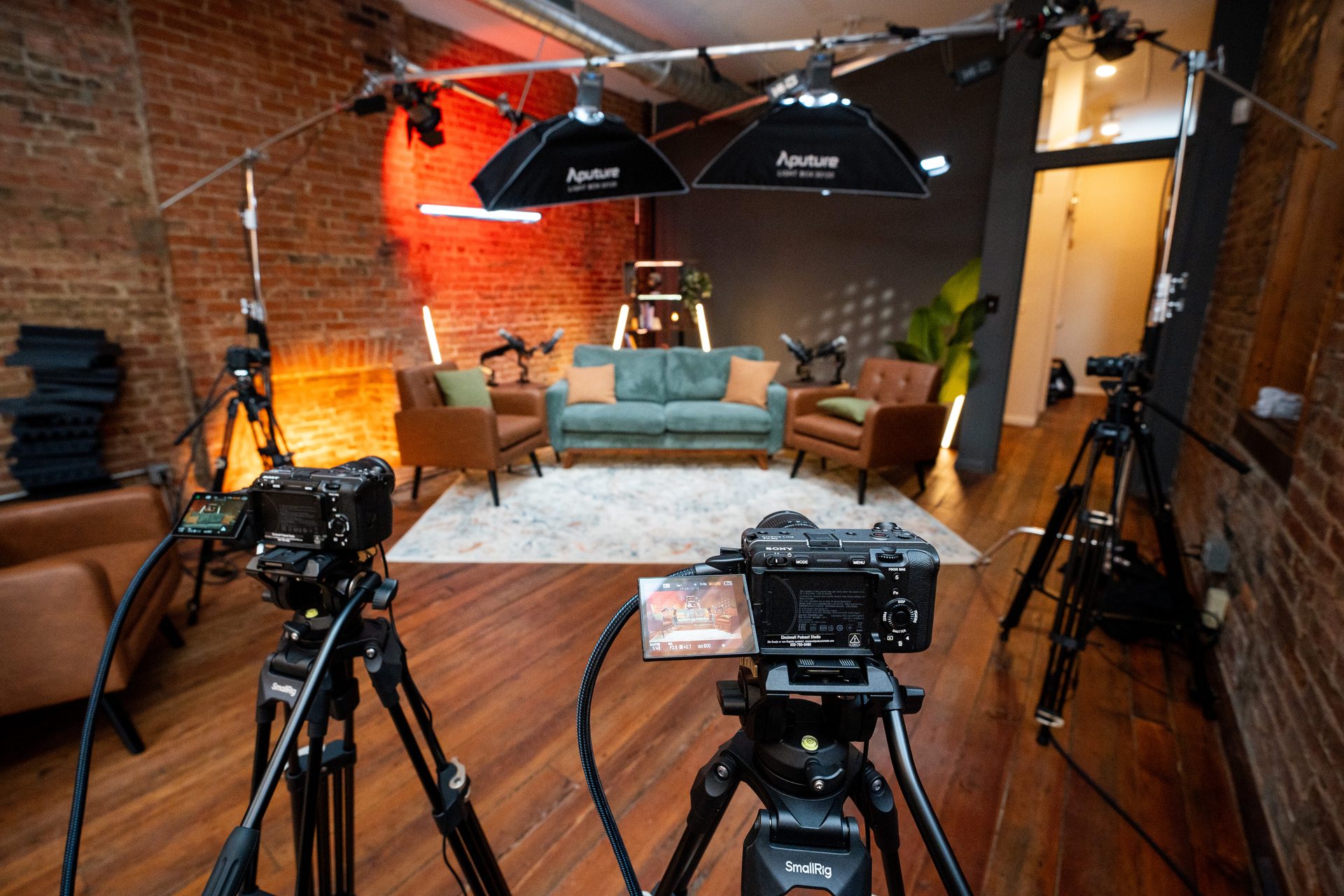
Step 3: Batch record at a professional studio. One of the biggest production bottlenecks is recording quality. When you're trying to record in a home office or a conference room, technical issues become a reason to postpone. A professional studio removes that friction. At Cincinnati Podcast Studio, most clients record 3-4 episodes in a single session, which builds 6-8 weeks of content inventory in one day.
Step 4: Build your derivative stack. Decide in advance what you're producing from each recording: short clips, a blog post, email copy, social graphics. Map it out so the post-production workflow is a checklist, not a conversation every time. We help clients build this stack as part of our short-form video system.
Step 5: Publish at a sustainable cadence. Sustainable beats ambitious. If you can only commit to one anchor piece per month, build the system around that. Consistency over time creates compounding visibility. Publishing 12 episodes a year for three years beats publishing 30 episodes in one quarter and then going dark.
What Good Cincinnati Content Strategy Looks Like in Practice
Let's make this concrete. A B2B consulting firm in Cincinnati wants to build authority in their market. Here's what a working content system looks like for them:
- They record one podcast episode per month, hosted at CPS. Two guests, one camera cut for each, one wide shot for the conversation.
- The recording produces 10 short clips distributed across LinkedIn and YouTube over four weeks.
- A blog post goes up the week after the episode, optimized around the conversation topic.
- The episode transcript feeds two email newsletter issues.
That's one recording day producing a month of consistent, professional-quality content. No daily content grind. No creative exhaustion. The system runs, and the founder stays focused on client work.
If you're a B2B team in Cincinnati or Northern Kentucky, this matters because the buyers in your market are looking for credibility signals before they ever reach out. A consistent content presence — especially video — is one of the fastest ways to build the familiarity that moves someone from aware to in your pipeline.
If you're thinking about webinar production as your anchor format, the same model applies. A 60-minute recorded webinar can generate just as many derivative assets as a podcast episode, and it often has higher perceived production value for certain B2B audiences.
Common Mistakes Cincinnati Businesses Make With Content Strategy
These are the patterns we see most often from teams that try to build a content strategy on their own — and stall.
Starting too broad. Trying to cover every topic your company touches leads to inconsistent content and no clear positioning. Start with one topic you can own, and build density before you expand.
Letting production slow distribution. If recording a video takes three hours of setup and editing, you'll record less. That's a production problem, not a motivation problem. Professional infrastructure — a studio, an editor, a production team — removes the friction that kills consistency.
Treating strategy as a one-time project. Content strategy isn't a document you produce and file. It's a system you maintain. Quarterly check-ins on what's working, what to adjust, and what to add are part of the function. If you want support building or refining your system, our consulting team works directly with Cincinnati B2B founders on this.
Skipping the anchor asset. Teams that try to run a content strategy on short-form clips alone burn through ideas fast. Without an anchor that generates long-form value, you're always creating from scratch. The podcast idea research process is often the right starting point before you record anything.
Ignoring search. A lot of B2B teams publish on social and ignore the web. Blog content and optimized video content create compounding visibility over time that social posts don't. Including a written layer in your content strategy is worth the investment. If you're building or recording a course, the same content can power both a course module and a high-intent search article.
Frequently Asked Questions
What does a content strategy include for a Cincinnati B2B business?
A solid B2B content strategy includes an anchor format (like a video podcast or webinar), a production cadence, a derivative distribution plan, and a clear audience and topic focus. The anchor drives everything else — without it, you're managing fragments instead of a system.
How often should Cincinnati businesses publish content?
Consistency matters more than frequency. Most B2B businesses in Cincinnati do well publishing one anchor piece per week or bi-weekly, with short-form clips distributed 3-5 times per week. The goal is to be a familiar, trusted presence — not to flood feeds.
Do I need a podcast to have a content strategy?
No, but a long-form anchor format — whether that's a podcast, a webinar series, or a course — gives you the raw material to build everything else. Without an anchor, you're starting from scratch every time you need to post something.
How long does it take to build a content strategy in Cincinnati?
Strategy development can happen in a single consulting session. Production takes a day of recording to build 6-8 weeks of content inventory. The system gets faster once your team knows the workflow — most clients see it running on autopilot within 90 days.
What makes CPS different from a marketing agency?
Cincinnati Podcast Studio handles the production infrastructure — 4K video, professional audio, short-form clip editing, and distribution-ready formats. Strategy is woven into how we help you structure your sessions and content calendar. We're not a traditional agency; we're a production partner that helps you show up consistently.
Can I build a content strategy without hiring a full-time content team?
Yes. The batch production model is designed specifically for founders and small teams who don't have a content department. You record once a month in a professional studio, and the system produces enough assets to stay consistently visible without adding headcount.
Build a Content System That Works for Your Cincinnati Business
A content strategy isn't a luxury for well-resourced marketing teams. It's a production infrastructure decision. When the system is right, showing up consistently is a scheduling problem, not a creative one.
If you're ready to build a content system for your Cincinnati B2B business — or if you want to pressure-test the one you already have — schedule a Discovery Call with the CPS team. We'll walk through your audience, your format options, and what a realistic production cadence looks like for your team.
You can also contact us directly if you have a specific question before booking. And if you're still in the research phase, our Cincinnati Podcast Studio podcast covers content strategy, production systems, and what it actually takes to build a visible B2B brand in this market.