Should You Build Your Own Podcast Studio? What Most Teams Miss
Should You Build Your Own Podcast Studio? What to Know Before You Invest
A lot of business leaders reach a point where they think: we're recording enough content that we should just build our own studio. It's a logical conclusion. But the gap between what people imagine a podcast studio costs and what it actually takes to produce professional video content is wide enough to derail a smart team.
Before you buy equipment, gut a conference room, or hire a contractor to soundproof a closet, it's worth getting clear on what you're actually solving for. That's where podcast consulting services come in—and why most teams who go through a planning session end up making a very different decision than the one they started with.
Quick Answer
Building your own podcast studio is possible, but most teams underestimate the true cost—equipment, acoustics, lighting, and the ongoing time to manage it all. Before committing to a DIY build, map out what you need to produce, how often, and what quality level your audience expects. A podcast studio consulting session can save you from expensive mistakes and help you design a setup that fits your actual production goals.
What "Building Your Own Podcast Studio" Actually Involves
The phrase "podcast studio" means different things depending on what you're producing. An audio-only setup is simpler. A video-first podcast studio—the kind that produces content worth putting on YouTube and cutting into short clips for LinkedIn—is a different category of investment entirely.
A functional video podcast studio requires:
- Cameras. At minimum, one 4K camera per seat. Two-person interviews typically need two cameras plus a wide shot. That's three cameras before you've bought a single lens.
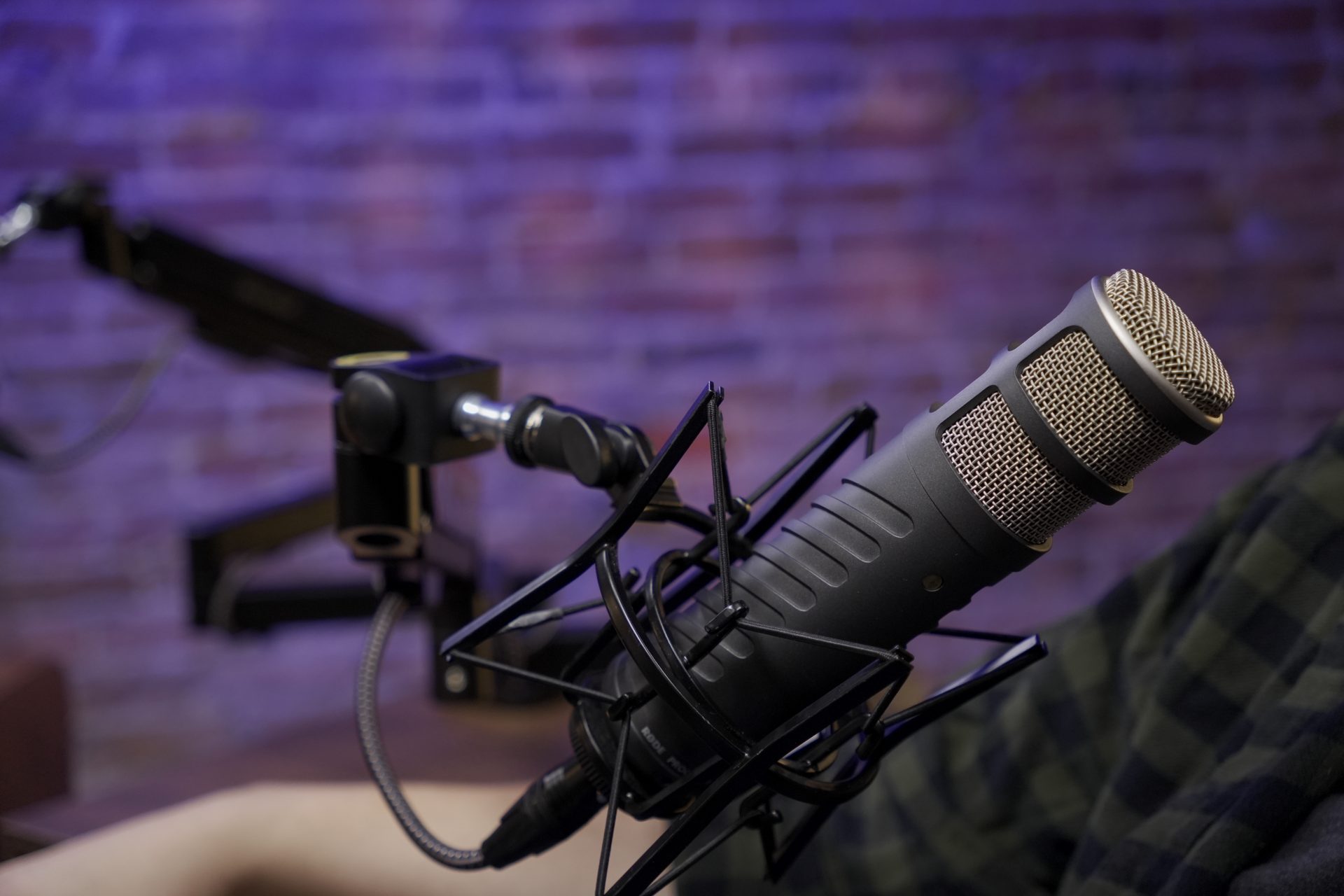
- Audio. Professional microphones, a mixing board or audio interface, and enough channels to handle everyone recording simultaneously without bleed.
- Lighting. Soft boxes, key lights, and background lighting to eliminate shadows and keep color consistent. Overhead office lighting is not a substitute.
- Acoustic treatment. Panels, bass traps, and strategic room placement to control echo and reverb. Most untreated rooms—including conference rooms—fail this requirement without modification.
- Set design. A clean, branded visual background that looks intentional on camera.
- Capture and editing infrastructure. Recording hardware or software, storage, and either in-house editing capacity or a production partner.
None of these elements are optional if video quality matters to you. And if you're using the content to build authority with clients, partners, or prospects, it does.
The Real Costs Most Teams Don't Account For
The equipment cost is the number most people focus on. It's not the biggest one.
Equipment costs for a professional video podcast studio typically run $8,000–$25,000 depending on the camera tier, audio setup, and lighting rig. This is before acoustic treatment, set construction, or any furniture.
Acoustic treatment is frequently underestimated. A proper treatment—panels, bass traps, and door sealing for a dedicated room—can run $2,000–$8,000 for professional-grade results. DIY solutions often fix some problems while creating others.
Time cost is where most teams get surprised. Someone on your team becomes the de facto studio manager: setting up equipment before each session, troubleshooting audio issues, managing recording software, and coordinating post-production. That time has a cost, even if it's not a line item on the purchase order.
Space opportunity cost. A dedicated recording room can't be used as a conference room, storage, or office during recording blocks. In most business facilities, that's a real trade-off.
Inconsistent output quality. Until the setup is dialed in—and until whoever is managing it has developed the skill set—recording sessions often produce inconsistent results. That inconsistency compounds over time when you're publishing regularly.
If you're a B2B team in Cincinnati or Northern Kentucky planning to record 20+ episodes per year, the math can work in favor of a dedicated studio. But it rarely works the way teams initially model it. A Discovery Call with a production consulting team can help you run that math accurately before you commit.
What a Podcast Studio Consulting Session Covers
A podcast studio consulting session is not a sales pitch for gear. It's a planning conversation that starts with what you're trying to accomplish and works backward to what you actually need.
A well-structured consulting session covers:
- Production goals and output volume. How many episodes per month? Are you recording solo, interview-style, or panel? Are you producing short-form clips alongside the full episode? The answers change the equipment requirements significantly.
- Room assessment. If you have a specific space in mind, a good consulting partner will evaluate it for acoustic suitability, lighting options, and layout before you spend a dollar on treatment.
- Budget-matched gear selection. Not a wishlist—a realistic gear path that produces the quality you need at the budget you have, with a clear upgrade path as volume increases.
- Workflow design. Who runs the session? Who manages post-production? What does handoff to editing look like? These questions get answered upfront, not after the first painful recording day.
- The build-vs-rent comparison. Most consulting clients walk in planning to build. A significant portion walk out with a different plan—and a clear rationale for why.
The goal of a consulting session isn't to sell you on any particular path. It's to make sure you're making the decision with accurate information, not an optimistic estimate. Learn more about how we approach podcast consulting at CPS.
When a DIY Build Makes Sense
There are situations where building your own podcast studio is the right call. It's not the wrong answer for everyone—just for more teams than initially think so.
A DIY build makes sense when:
- You have a dedicated, committed space. Not a shared conference room. Not a closet you'll eventually need back. A room that can stay configured as a studio without disrupting day-to-day operations.
- You're recording consistently at high volume. If your team is recording 40+ episodes per year, the economics of an in-house studio can work. Below that threshold, per-session rental typically costs less when you factor in equipment amortization and time.
- You have in-house technical capability. Someone on your team is willing and able to manage equipment, troubleshoot audio and video issues, and own the production workflow. This is a recurring time commitment, not a one-time setup.
- Your output is primarily audio. Audio-only podcasts have a lower equipment bar and are significantly easier to produce in a DIY environment. If video quality isn't a priority, the calculus shifts.
If all four of these apply, building your own studio is a reasonable investment. If any of them don't apply, the economics usually favor a different approach.
When Hiring a Consulting Partner (or a Production Studio) Is the Smarter Move
For most business teams, the clearest signal that you need a consulting partner—or a professional production studio—is that you care about quality but can't commit to the infrastructure it requires.
That's not a failure of resources. It's a practical assessment of what your team is actually equipped to sustain.
A production studio partnership makes more sense when:
- You're still validating the concept. If you're not certain the podcast will last 12+ months, committing $15,000–$30,000 to a studio build before you've proven the format is a significant risk. Recording at a professional facility for the first season is a lower-cost way to test before you invest.
- Video quality is non-negotiable. Professional 4K video, broadcast-quality audio, and clean set design are difficult to replicate without dedicated infrastructure. If your content competes for attention with professionally produced material, the quality gap costs you trust with your audience.
- You want to batch record. The most efficient podcast production model isn't recording one episode per week—it's batching 4–6 episodes in a single session every month. A production studio is purpose-built for this model. A DIY setup can handle it, but often requires more setup time per session than a team anticipates.
- You want to get short-form clips without extra work. At CPS, every recording session produces the raw material for short-form video clips that can be cut and distributed across LinkedIn, YouTube, and other platforms. Building that workflow in-house requires additional editing infrastructure and capability.
- Your team doesn't want to manage production. The best podcast model for most business leaders is: show up, have a conversation, and let the production team handle the rest. That's what video podcasting at CPS is designed to deliver.
What Cincinnati and NKY Teams Are Doing Instead
The majority of Cincinnati-area business leaders who come to us having researched the "build your own studio" path ultimately choose one of two alternatives: a regular batch recording session at CPS, or a consulting session to design a realistic studio plan they can actually execute.
Both are valid outcomes. The point of a consulting engagement isn't to talk you out of building a studio—it's to make sure you're building the right one, for the right reasons, at the right time.
What we consistently see is that teams underestimate the operational overhead of an in-house studio and overestimate how much they'll actually use it. The batch recording model—coming in once a month to record multiple episodes, then leaving the production to a dedicated team—fits the way most business leaders actually work. It removes the friction that causes most internal podcast programs to stall or go dark within the first six months.
If you're in Greater Cincinnati or Northern Kentucky and you're seriously considering a podcast studio build, a podcast idea research session or a direct consulting conversation is the most useful first step. It'll give you a clear picture of what you need before you spend anything.
You can also listen to how we've helped other local B2B teams think through this kind of decision on the Cincinnati Business Podcast, or explore our content production resources to get a sense of the full CPS production model.
Frequently Asked Questions
How much does it cost to build a podcast studio at home?
A basic audio-only home setup runs $500–$2,000. A video-capable setup with proper lighting, acoustic treatment, and 4K cameras can easily reach $10,000–$25,000 before you account for time investment and ongoing maintenance. Professional-tier setups in dedicated rooms often run higher once acoustic treatment and set design are factored in.
Do I need acoustic treatment to record a podcast?
Yes. Untreated rooms introduce echo, reverb, and HVAC noise that degrades audio quality regardless of microphone quality. Acoustic panels, bass traps, and strategic room placement are non-negotiable for a professional-sounding result. Most conference rooms and standard offices fail this requirement without modification.
What does podcast studio consulting include?
A consulting session typically covers your production goals, room assessment, gear selection matched to your budget, workflow design, and a growth path. The goal is to prevent expensive mistakes before you buy equipment you may not need—and to help you make the build-vs-rent decision with accurate information.
Can a consultant help me decide whether to build or use a production studio?
Yes. A podcast studio consulting session is specifically useful for this decision. Most teams discover after a consultation that renting a professional studio for batch recording sessions is more cost-effective than building their own—especially before volume is proven.
What's the difference between audio and video podcast setup requirements?
Video podcasting requires significantly more investment: 4K cameras, professional lighting that eliminates shadows and color casts, a clean visual background, and proper framing for multiple angles. Audio-only setups are simpler, but most business podcasts now publish video on YouTube and social platforms, making the audio-only route increasingly limiting.
How do Cincinnati businesses typically set up their podcast production?
Most Cincinnati-area B2B teams either use a professional studio by the session—batch recording 4–6 episodes per visit—or go through a consulting session to determine whether a dedicated in-office setup makes economic sense for their output volume. Very few find that building their own studio is the right first step before validating the format.
The Straightforward Answer
Building your own podcast studio is a real option—and for the right team, with the right volume and infrastructure, it can pay off. But most business teams aren't in that position yet, and committing to a $20,000 build before you've validated your format and production cadence is a significant risk.
The smarter path is to get clear on what you're trying to accomplish first. A consulting conversation costs nothing compared to a studio you build and don't use. If after that conversation a DIY studio still makes sense, you'll have a better plan for it. If it doesn't, you'll have saved yourself a significant amount of money and operational complexity.
If you're ready to think through your podcast studio options, book a Discovery Call with the CPS team. We'll help you figure out what you actually need—without trying to sell you on a path that doesn't fit. You can also learn more about the CPS team and approach, or explore how we handle course creation and webinar production alongside podcast work.