
B2B Content Strategy Cincinnati | Cincinnati Podcast Studio
B2B Content Strategy in Cincinnati: Build a System That Generates Pipeline
Most B2B companies in Cincinnati know they should be creating content. The challenge isn't motivation — it's execution. Without a clear system, content creation falls to the bottom of the priority list, happens in bursts, and rarely connects to a business outcome. That changes when you treat content strategy as an operational function, not a marketing side project.
At Cincinnati Podcast Studio, we work with B2B founders, CEOs, and marketing leaders to build content systems that produce 30+ assets per month from 2-4 recording sessions. Here's what a real B2B content strategy looks like — and how to build one that actually runs.
Quick Answer
A B2B content strategy in Cincinnati starts with one long-form video asset — a podcast, interview, or panel — recorded in a professional studio, then broken into short-form clips, written posts, and LinkedIn video for weekly distribution. The goal is a repeatable system: show up consistently, build authority with your target buyers, and drive discovery calls without starting from scratch every week. The most effective B2B content engines combine video podcasting as the anchor with short-form distribution across LinkedIn and social platforms — handled by a production partner so leadership can stay focused on growth.
Why Most B2B Content Strategies Stall Out
The most common failure mode isn't a lack of ideas — it's a lack of infrastructure. B2B companies start strong: a blog post here, a LinkedIn post there, maybe a webinar. But without a system, content creation depends entirely on whoever has bandwidth that week. When the calendar fills up, content is the first thing cut.
There are a few specific patterns that kill B2B content strategies before they gain traction:
- Treating content as a one-off project. A single podcast episode or a flurry of posts during a product launch isn't a strategy. Consistency is the mechanism that builds audience trust and search visibility over time.
- Putting production on leadership. If the CEO is writing, filming, and editing their own content, that model doesn't scale. The moment something more important comes up — and something always does — content stops.
- No clear path from content to pipeline. Posting without a call to action, a defined audience, or a way to measure results is busy work. Every piece of content should have a next step built in.
- Single-channel thinking. Publishing only on one platform limits your reach and your compounding ROI. A single recording session can feed LinkedIn, Instagram, your podcast feed, your website, and your email list — but only if the workflow supports it.
If any of these patterns look familiar, the fix isn't trying harder. It's building a better system. That's what consulting and content strategy work at CPS is designed to address.
What a Scalable B2B Content Strategy Actually Looks Like
A scalable B2B content strategy is built around a single principle: create once, distribute everywhere. Instead of generating new content from scratch for every platform and every week, you design a workflow that extracts maximum distribution value from a single recording session.
Here's the core structure:
- Anchor content: One long-form video or podcast episode per session. This is the raw material for everything else. A 45-minute recorded conversation contains more usable content than a month of individual posts.
- Distribution layer: Short-form clips, audiograms, quote graphics, and written posts pulled from the anchor content. This is where most of your weekly output comes from — without any additional recording time.
- Consistent cadence: Two to four recording sessions per month generates enough content to maintain a daily or near-daily distribution schedule across platforms.
- Clear CTA in every piece: Every piece of content — from a 90-second LinkedIn clip to a full podcast episode — should route the right viewer to a specific next step: a Discovery Call, a consultation, or a deeper content resource.
This model works for B2B companies in Cincinnati because the production infrastructure already exists. You don't need to build a studio, hire a video team, or learn post-production. You book a session, show up, have a great conversation, and let the system do the rest.
Video Podcasting as the Foundation of Your B2B Content Engine
For B2B companies with complex offerings, long sales cycles, or trust-sensitive buyer relationships, video podcasting is the highest-ROI content format available. Here's why it works:
Long-form video builds trust faster than any other format. When a prospect watches your leadership team in a 30-minute conversation — discussing their approach, their philosophy, their take on hard industry problems — they arrive at a first meeting already familiar with who you are. That's the difference between a cold call and a warm conversation.
The interview format positions you as the expert in the room. A video podcast doesn't just showcase your expertise — it also signals that you're connected to other experts, that you're curious, and that you're willing to invest in building a platform that serves your industry. That brand signal compounds over time.
Recorded conversations are the most natural way to capture expertise. Most founders and executives struggle to write consistently. But they can talk for an hour about their business without breaking a sweat. The podcast format removes the blank-page problem entirely — you just have a conversation.
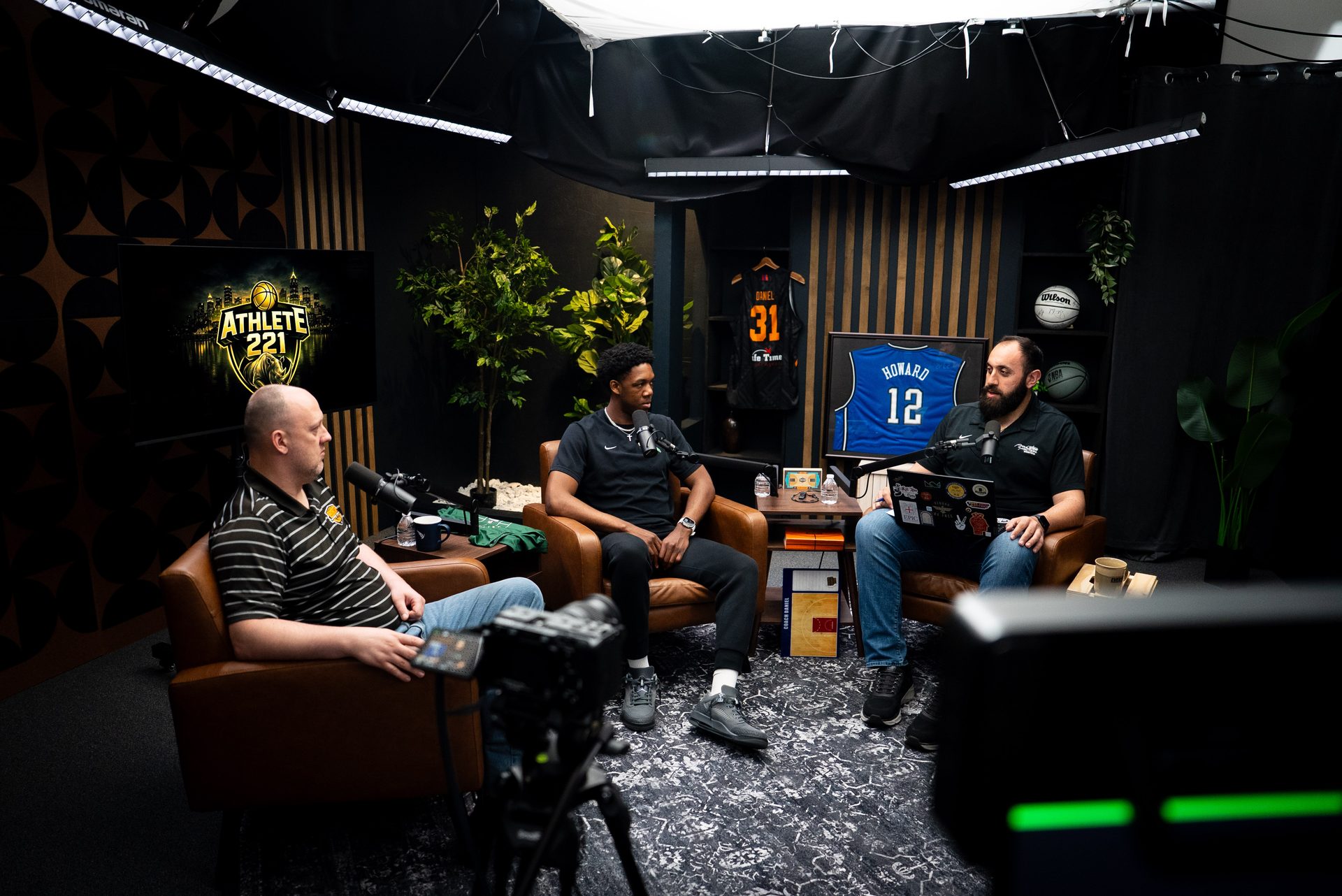
Our video podcasting services at Cincinnati Podcast Studio are built for exactly this. Professional 4K video, broadcast-quality audio, proper lighting, and a production workflow that delivers everything you need to publish and distribute — without the technical overhead on your end.
The Cincinnati Business Podcast is a good example of what this looks like in practice. Check out the Cincinnati Business Podcast to see how local B2B leaders are using this format to build real audience relationships.
Short-Form Video: Turning One Recording Into 30+ Monthly Assets
The most underutilized part of most B2B content strategies is distribution. Companies put real effort into recording a podcast or webinar, publish it once, and then move on. That's leaving most of the value on the table.
A single 45-minute video podcast episode generates:
- 10-15 short-form clips (60-90 seconds each) for LinkedIn, Instagram Reels, and YouTube Shorts
- A full-length episode for your podcast feed and YouTube channel
- An audiogram for audio-first distribution
- 3-5 quote graphics for social posting
- A written blog post or newsletter using the transcript as the base
That's 30+ distributable assets from one session. Over a month with two to four recording sessions, you have enough content to maintain a consistent daily presence across every major platform your buyers use — without any additional recording time.
Our short-form video production workflow is built into the standard production process. The clips are identified, cut, captioned, and formatted for each platform. You get a Dropbox folder with everything ready to post — or we can hand them to your marketing team for scheduling.
For B2B companies targeting decision-makers on LinkedIn, this is particularly valuable. LinkedIn's algorithm currently favors native video, and short-form clips from a professional studio perform significantly better than smartphone footage or talking-head selfie videos. The production quality signals credibility before the viewer even hears what you're saying.
The Presence System: Cincinnati's Repeatable Content Framework
The Presence System is Cincinnati Podcast Studio's framework for turning a professional content strategy into a sustainable operational habit. It's designed for founders and marketing leaders who need a repeatable process — not a creative sprint that burns out after six weeks.
Here's how it works:
- Record. Come into the studio 2-4 times per month. Have a planned conversation — an interview with a guest, a solo episode, a panel, or a training segment. The CPS team handles all the technical setup so you can focus entirely on the content.
- Produce. The CPS production team edits the full-length video, pulls short-form clips, generates captions, and delivers all assets to your Dropbox within the agreed turnaround window.
- Distribute. Your marketing team — or CPS's short-form team — schedules and posts the content across your target channels. Every piece routes back to a clear CTA.
- Repeat. Same process, next month. No production planning meetings, no scrambling for ideas, no missed weeks because someone was traveling.
The result is a content engine that generates pipeline without requiring your leadership team to become content creators. You show up, have a great conversation, and the system handles the rest.
If you're a B2B company in Cincinnati or Northern Kentucky and you're trying to figure out how to turn your leadership team's expertise into a consistent content presence, this is the model worth building. Podcast idea research is often a useful first step — it helps clarify what your audience actually wants to hear before you start recording.
What to Look for in a B2B Content Strategy Partner in Cincinnati
Not every production company thinks strategically about content. Here's what separates a strong B2B content strategy partner from a vendor who just presses record:
Strategic input before production. A real partner asks about your ICP, your sales cycle, your pipeline goals, and your distribution channels before any camera rolls. Production is the execution layer. Strategy is what makes the execution matter.
Turnkey workflow. If working with a production partner still requires hours of coordination from your team every week, the model is broken. The right partner removes production from your plate — you show up and talk, they handle everything else.
Local presence. In-person collaboration is faster, more natural, and produces better content than remote setups. Working with a Cincinnati-based studio means your leadership team is on-camera with professional lighting and audio — not on a Zoom call with a laptop camera and a home office background.
B2B track record. Consumer content and B2B content require different approaches. B2B content needs to speak to buyers who are evaluating trust, expertise, and fit — not just entertainment value. Look for a partner who has worked with professional services firms, consultants, tech companies, and operators.
If you're evaluating whether a content strategy partnership makes sense for your organization, start with a conversation. Our team works with organizations across Cincinnati and Northern Kentucky to scope the right approach before any commitment is made. We also offer webinar production and course creation for organizations that need a broader content mix beyond podcasting.
Frequently Asked Questions
What is a B2B content strategy?
A B2B content strategy is a planned approach to creating and distributing content that attracts, educates, and converts your target business buyers. For most B2B companies, this means long-form video or podcast content as the anchor, then short-form clips and written posts for distribution — all connected to a clear call to action like a discovery call or consultation.
Why does video work better than written content for B2B marketing?
Video builds trust faster. When a potential client sees you on camera, speaking confidently about your expertise, it creates a level of credibility that a blog post or LinkedIn text update can't match. For B2B companies where the decision-maker is buying expertise, showing up on video is one of the highest-ROI moves in your content strategy.
How many pieces of content can we get from one recording session?
A typical 45-minute video podcast recorded at Cincinnati Podcast Studio generates 10-15 short-form clips plus a full-length episode, audiogram, quote cards, and a written post — roughly 30+ distributable assets from a single session. That's the math behind a repeatable content engine.
Do we need a big team to run a B2B content strategy?
No. The Presence System is designed for lean teams and busy founders. You record 2-4 sessions per month; the CPS team handles production, editing, and delivery. Your leadership team shows up, has a conversation, and gets a month of content out of it.
What's the difference between a content strategy and just posting on social media?
Posting on social media is a tactic. A content strategy is the system that decides what you post, who it's for, what it should make them do next, and how you measure whether it's working. Without a strategy, social posting tends to be inconsistent, unmeasured, and disconnected from business goals.
Can Cincinnati Podcast Studio help with strategy, not just production?
Yes. Our consulting team works with B2B organizations to define the content strategy, choose the right format, identify your best angles and topics, and build the distribution workflow — before a single camera rolls. Production without strategy is just expensive noise.
Ready to Build a B2B Content Engine That Actually Runs?
If you're a B2B company in Cincinnati or Northern Kentucky looking to turn your leadership team's expertise into a repeatable content system, Cincinnati Podcast Studio is built for exactly that. We handle the production infrastructure so you can focus on the conversations that matter.
The first step is a conversation about where you are, what you want to build, and whether this model fits your business. Schedule a Discovery Call and we'll map out what your content engine could look like — no pressure, no pitch, just a useful conversation.
You can also explore the full range of CPS services at Cincinnati Podcast Studio or reach out directly through our contact page.