
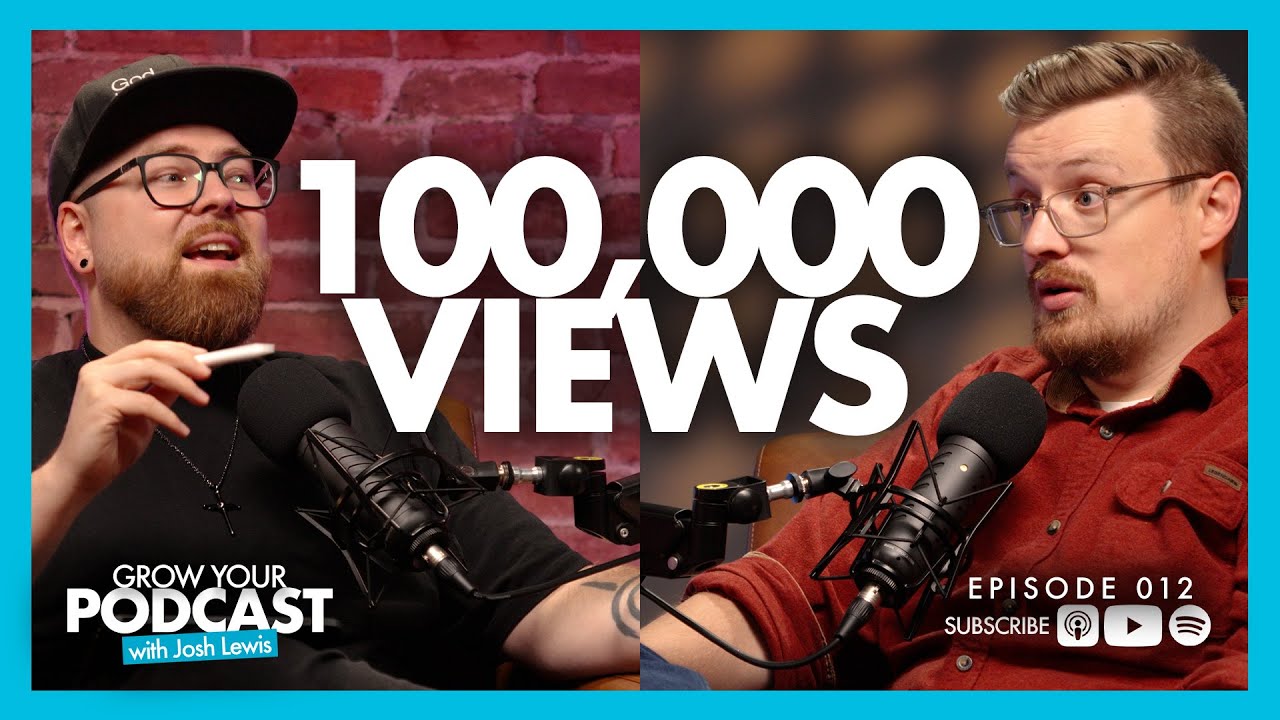
100k Views in 6 Months: Our Video Podcasting Playbook
How We Got 100,000 Views in 6 Months with Video Podcasting
Six months ago, we weren't sitting on a backlog of viral-ready content or chasing trending audio clips. We had a system — a repeatable, friction-free process for turning one recording session into a full month of content. That system is what carried us to 100,000 YouTube views, and it's the same framework we use with every client we work with at Cincinnati Podcast Studio.
This isn't a story about luck. It's a playbook.
If you're a founder, CEO, or marketing leader wondering whether video podcasting is worth the investment, this is the straight answer backed by real numbers.
Quick Answer
We reached 100,000 views in six months by building a consistent video podcast engine — not by chasing trends. The three core drivers: a professional 4K recording setup that made every episode worth watching, a short-form repurposing workflow that extended reach on LinkedIn, Instagram, and YouTube Shorts, and a publishing cadence we never broke. Consistency, not virality, is what compounds.
Why Video Podcasting Outperforms Audio-Only for B2B Growth
Audio podcasting built the medium. Video podcasting is building the business case.
When your guest or co-host is on camera in a professional setting, the content becomes shareable in ways audio can't match. A tight 60-second clip of a founder sharing a counterintuitive insight performs on LinkedIn, Instagram Reels, and YouTube Shorts simultaneously. The same moment, captured in 4K with pro lighting, earns trust in a way a thumbnail and waveform never will.
For B2B organizations specifically, video builds the kind of authority that shortens sales cycles. When a prospect has already watched three clips of your thinking before the first call, you're not starting from zero. You're starting from credibility.
That's why every client we work with through our full-service podcast production model publishes video-first, not audio-first.
The 6-Month System: What We Actually Did
Months 1–2: Foundation Over Frequency
The temptation in month one is to publish as often as possible. We ignored it. Instead, we locked in three non-negotiables before worrying about volume:
- Production quality that holds attention. 4K video, professional lighting, clean audio. If the visual presentation isn't strong, watch time suffers — and watch time is the metric that drives algorithmic reach.
- A defined guest and topic framework. We weren't recording random conversations. Every episode was built around a specific question our audience was already Googling.
- A short-form repurposing workflow on day one. Every long-form recording session was planned with 3–5 clip moments in mind before we hit record.
The first two months weren't about views. They were about building a machine that could generate views reliably.
Months 3–4: Publishing Velocity and Platform Fit
Once the foundation was solid, we increased publishing frequency without sacrificing quality. The key insight: YouTube rewards consistent publishing schedules, not occasional viral moments.
We also got serious about platform-native formatting. A 90-second clip that works on LinkedIn doesn't always work on YouTube Shorts. We stopped treating clips as one-size-fits-all and started formatting them specifically for each distribution channel.
Our short-form video production workflow is built around this principle — capture once, distribute intelligently.
Months 5–6: Compounding Returns
This is where the system paid off. Older episodes started picking up organic search traffic as YouTube's algorithm learned what our channel was about. Short clips were generating new subscribers who then watched long-form episodes. Each new episode benefited from the audience the previous ones had built.
Compounding content works exactly like compounding interest — slowly, then all at once.
The Recording Session Structure That Makes This Scalable
One of the most common questions we get is: how do you produce this much content without burning out your team or your guests?
The answer is structure. Every recording session at Cincinnati Podcast Studio follows the same framework:
- Pre-production. Topic framing, question prep, and clip-moment identification happen before the guest walks in.
- In-studio recording. 60–90 minutes of primary content, captured in 4K with up to four people on camera.
- Post-production handoff. Our team handles editing, captions, thumbnails, and clip extraction. The client shows up and talks. We handle everything else.
- Distribution scheduling. Long-form goes to YouTube; clips go to LinkedIn, Instagram, and YouTube Shorts on a pre-set calendar.
Two to four sessions per month. Approximately 36 content assets out the other side. That's the math behind a sustainable content engine.
Short-Form Video Is the Amplifier, Not the Strategy
Here's a distinction that matters: short-form video isn't a strategy on its own. It's an amplifier for a long-form foundation.
Clips drive people to full episodes. Full episodes build depth and trust. Depth and trust convert prospects into clients. The loop only works when the long-form anchor is strong — which is why we always start with the full-length recording and extract clips from real, substantive conversations.
If you're investing in short-form video without a long-form content source, you're spending time and budget on content that has nowhere to lead your audience.
Why This Matters for Cincinnati and Northern Kentucky Businesses
Cincinnati's B2B market is relationship-driven. Decision-makers here do their homework before they pick up the phone. A well-produced video podcast positions your leadership team as the clear authority in your category — before the first conversation even happens.
If you're a B2B team in the Greater Cincinnati or Northern Kentucky market, a video podcast isn't a vanity project. It's a business development tool with a distribution engine attached. The Cincinnati Business Podcast is one example of what this looks like in practice — local leaders sharing expertise that builds audience, authority, and pipeline simultaneously.
Common Mistakes That Slow Video Podcast Growth
- Starting with audio and treating video as an afterthought. If video is the goal, build the setup for video from day one.
- Publishing inconsistently. One episode a month won't build algorithmic momentum. Two to four sessions a month is the floor for meaningful growth.
- Ignoring titles and thumbnails. The content inside the episode earns the second view. The title and thumbnail earn the first.
- Skipping the clip workflow. Every long-form episode should generate 3–5 short clips. If you're not repurposing, you're leaving reach on the table.
- Trying to do it all in-house without the right setup. Consumer-grade cameras and bedroom acoustics communicate amateur, regardless of how strong the conversation is. Professional production signals professional credibility.
Frequently Asked Questions
How long does it take to see real results from video podcasting?
Most clients see meaningful traction between months three and six, assuming consistent publishing and professional production quality. The first two months are typically about building the foundation and training the algorithm. Results compound over time — patience and consistency are the variables that matter most.
Do we need a big audience to start?
No. Many of our most successful podcast clients started with zero subscribers. The audience builds around the content, not the other way around. Starting with a small but engaged niche is more valuable than a large but disinterested following.
What's the difference between a video podcast and just recording a YouTube video?
A video podcast is a repeatable format — structured conversations, consistent guests or hosts, a defined topic framework, and a publishing schedule. That repeatability is what builds audience loyalty and algorithmic reach over time. One-off YouTube videos don't compound the same way.
Can short-form clips really drive long-form views?
Yes — consistently. Clips on LinkedIn and Instagram Reels often reach audiences who aren't yet YouTube subscribers. When those clips link back to the full episode, they convert new viewers who then become subscribers. It's the primary cross-platform growth loop we rely on.
What does the full-service production process look like at Cincinnati Podcast Studio?
Clients show up, we handle everything else. That includes pre-production planning, in-studio recording in 4K, post-production editing, caption and thumbnail creation, short-form clip extraction, and distribution scheduling. The full breakdown is on our podcasting services page.
How do I know if a video podcast is right for my business?
If you want to build trust with decision-makers at scale, generate consistent content without a full media team, and turn your expertise into a distribution engine — a video podcast is a strong fit. The fastest way to find out if it's the right move for your specific situation is to book a Discovery Call with our team.
Ready to Build Your Content Engine?
A hundred thousand views in six months isn't a fluke. It's what happens when a clear system meets consistent execution and professional production. We've built that system, refined it with clients across industries, and we know what works.
If you're ready to turn your expertise into a content engine that builds authority and drives pipeline — let's talk. Schedule a Discovery Call and we'll map out what this looks like for your business.
You can also explore our full range of production services — from video podcasting and short-form video to webinar production and consulting — on the Cincinnati Podcast Studio website. Or visit our resources page for more guides like this one.