
Why Podcast Episodes Don’t Get Shared (And What to Fix)
Why Your Podcast Episodes Aren't Getting Shared — And How to Change That
You're putting out quality episodes. The conversations are good. The audio is clean. Your guests are real experts. And yet — the episodes sit there. A few hundred listens, a handful of likes, and almost no one forwarding it to a colleague or posting it on their feed. Sound familiar?
The problem usually isn't the content. It's the system — or the lack of one. Most business podcasters produce great episodes and then expect distribution to happen on its own. It doesn't.
This article breaks down the four most common reasons podcast episodes don't get shared, and exactly what to change in your production and post-production process to fix it.
Quick Answer
Podcast episodes don't get shared when they're hard to clip, don't give listeners a clear reason to share, or rely on passive distribution with no active push. The fix isn't better content — it's designing each episode for sharing: pulling short clips, building a distribution moment into every episode, and giving guests and listeners a specific, low-friction ask. Most business podcasters produce great conversations but never build the system that gets them to move.
The Real Reason Your Episodes Stay Stuck
The assumption most podcasters make is that sharing is a reward for quality. If the episode is good enough, people will share it. That's not how sharing actually works.
Sharing requires three things: a reason (this is relevant to someone I know), an asset (something easy to pass along), and a moment (a specific prompt that triggers the action). Most podcast episodes deliver the reason — a relevant topic — but miss the asset and the moment entirely.
Long-form audio is not a shareable asset. Asking someone to share a 60-minute conversation with a colleague is asking them to do real work on your behalf. It won't happen at scale. The episodes that get shared get shared as 60-second clips posted on LinkedIn, not as RSS feeds forwarded by email.
If you're in Cincinnati or Northern Kentucky and building a business podcast, this matters because your audience is local and professional — and they live on LinkedIn. A well-cut video clip from your episode will reach more of the right people in 48 hours than passive podcast distribution will in a month. The good news: if you're recording on video, you already have everything you need to fix this.
Your Episodes Are Hard to Clip
Here's the most practical version of the problem. Even if someone wants to share your episode, they usually can't without doing significant work. Clipping a 60-minute audio file, adding captions, finding a thumbnail, formatting it for LinkedIn — that's a part-time job. Nobody does it spontaneously.
The solution is to build clip production into your post-production process. That means recording on video (not audio-only), pulling 8-15 clips per episode ranging from 30 seconds to 3 minutes, and treating each clip as a standalone piece of content that delivers value without requiring the viewer to have heard the full episode.
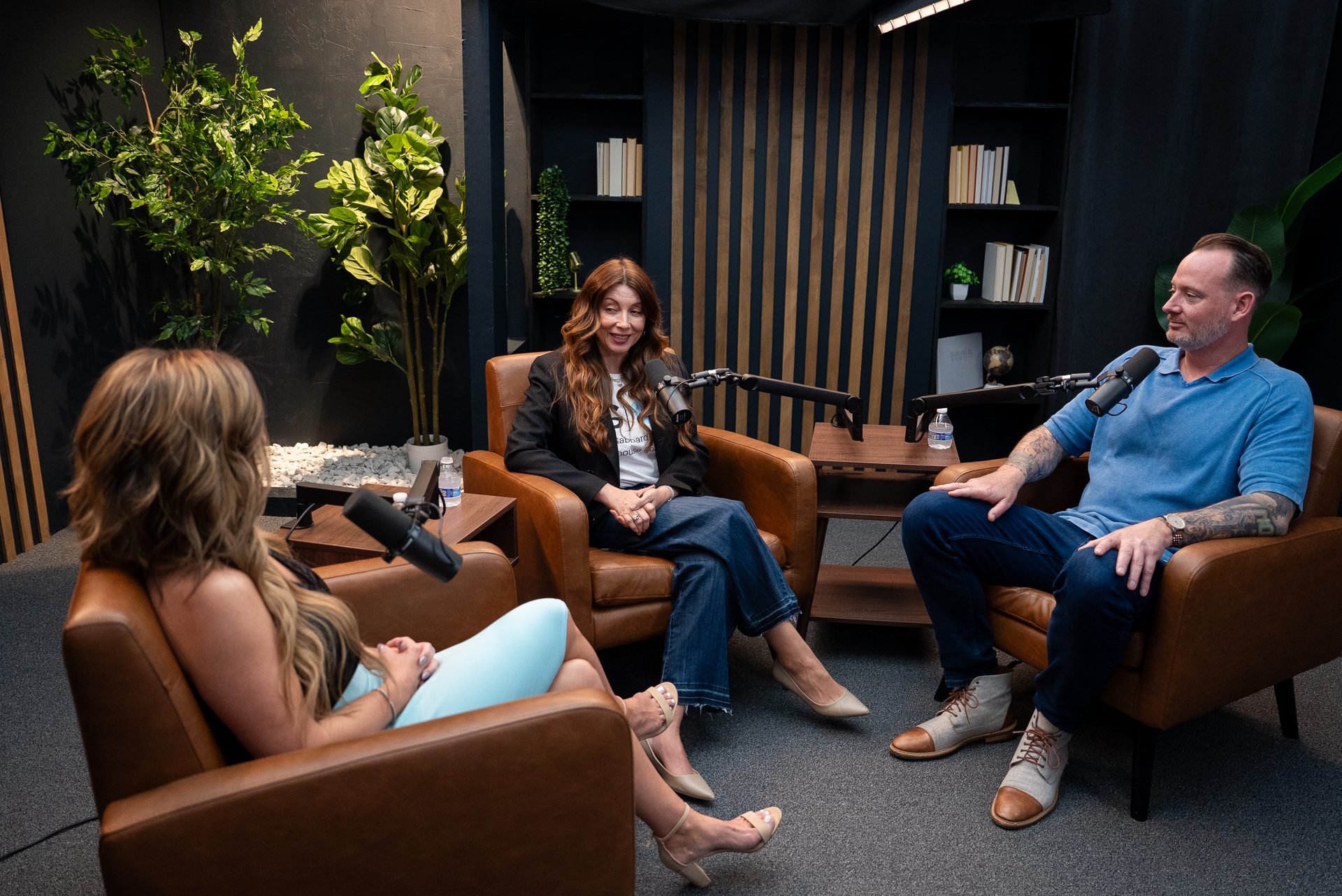
At Cincinnati Podcast Studio, a standard recording session produces the raw material for a full clip library — 4K video, dedicated audio per speaker, clean framing — so the clips come out ready for captions and posting without extra reshoots or production workarounds. That's not an accident. It's how the studio is built. Video podcast production designed this way gives you shareable assets as a natural byproduct of every episode.
Video also removes a second barrier: your guests can see themselves on camera, which makes them more likely to share. A guest who looks and sounds great is a motivated distributor. A guest who only has their voice in an audio file is much less so.
The short-form video clips you produce from each episode are the distribution engine. Without them, you're relying on passive discovery — search, word of mouth, platform algorithms. With them, you have an active push every time you publish.
You're Not Giving Anyone a Reason to Share
Even when clips exist, they don't always get shared — because no one asks. This is a behavioral problem, not a content problem. People share when they're given a specific, low-friction prompt at the right moment. They don't share because you mentioned "tell a friend" at the end of an episode.
The guest is your most powerful distribution channel, and most podcasters underuse them. After recording, send your guest 2-3 clips tagged with their name, formatted for LinkedIn, with a one-sentence ask: "This is ready to post — would you share it this week?" That's it. You're doing the work; you're just asking them to press post.
Guests share when it's easy and they look good doing it. A professional clip from a professional studio checks both boxes. A rough screenshot of a Zoom call doesn't. This is one reason production quality matters beyond vanity — it directly affects whether your guest becomes a distributor or just a source.
The Distribution Moment Most Podcasters Skip
There's a 48-hour window after publishing when an episode has the best chance of gaining momentum. Most podcasters don't treat it as a window at all. They publish and move on to recording the next one.
What should happen in those 48 hours: clips go live on LinkedIn, guests are contacted with their specific sharing ask, a short post goes out pointing listeners to the new episode, and at least one clip is actively promoted rather than just organically posted. That's not a complicated operation — it's a checklist. But it requires setting up the system before you need it, not improvising each time.
The businesses that use podcast consulting to structure their content engine before they record don't scramble in the 48 hours after publishing. They have a post-production workflow: clips edited, captions on, guest delivery kit ready, posting schedule set. The episode goes live and the machine starts running on its own.
This is what separates a podcast that grows from one that flatlines. The Cincinnati Business Podcast is one local example worth studying — consistent output, consistent clip distribution, consistent growth over time. It's not magic. It's process.
If you're at the stage of trying to figure out whether your podcast concept has legs before investing in the full system, podcast idea research is worth doing first. Knowing your audience and positioning before you record changes how you design every episode for sharing.
How to Fix Your Podcast Sharing Problem
Here's the five-part fix, in order of priority:
1. Record on video. If you're still audio-only, this is the first and most important change. Video produces clips. Clips produce sharing. The production gap between audio-only and video-first is also where most business podcasters lose credibility with potential guests who have a professional brand to protect.
2. Pull 8-15 clips per episode. Don't wait for a "highlight" to emerge. Pull clips from every section of the episode: the opening question, a counterintuitive point, a practical tip, a story, the close. Give each clip a standalone headline. Treat the clip library as a product, not an afterthought.
3. Build a guest sharing kit. Every guest should receive 2-3 clips, their headshot (if relevant), a suggested caption, and a specific ask within 5 days of publishing. Automate what you can. The kit should take you 10 minutes to assemble, not an hour.
4. Make the sharing ask specific. "Would you share this with your audience?" is too vague. "Here's a clip of your segment — ready to post on LinkedIn, would you share it this week?" is specific and low-friction. Specificity closes.
5. Treat distribution as a standing process, not a one-time event. This is the part most podcasters skip. Document the steps. Run them every episode. The cumulative effect of 20 or 30 episodes with a real distribution push is what builds audience. The CPS podcast team runs this same system — and it compounds.
If you want to build this from scratch or retrofit it onto an existing show, the podcast resources section is a good starting point, or book a Discovery Call to work through what your specific show needs.
Frequently Asked Questions
Why does my podcast have listeners but no shares?
Having listeners and having shares are different outcomes. Sharing requires effort from the listener — they need a reason, a specific ask, and a shareable artifact (like a clip). Without those, even engaged listeners rarely share on their own.
What makes a podcast episode shareable?
Shareable episodes have clear, memorable moments that can be extracted into short clips, a guest with their own audience who's motivated to share, and a specific sharing ask delivered at the right moment — not just a generic "leave a review."
How many clips should I pull from each episode?
For a typical 45-60 minute business podcast episode, aim for 8-15 clips ranging from 30 seconds to 3 minutes. Each clip should work as a standalone piece — meaning a viewer who's never heard your podcast gets value from it without needing context.
Does video make a podcast more shareable?
Yes, significantly. Video gives you ready-made visual content to clip and post on LinkedIn, Instagram, and YouTube Shorts. Audio-only podcasts require extra production work to create shareable graphics or audiograms; video produces clips as a natural byproduct of recording.
What should I ask my podcast guests to do?
Give them 2-3 specific clips tagged with their name and a simple ask: "Post this on LinkedIn this week." Don't ask for a general repost or a review — give them the asset and a low-friction action. Guests share when it's easy and they look good doing it.
How long does it take to build a shareable podcast audience?
Most business podcasters see meaningful sharing and referral behavior between episodes 20-40, assuming they're actively working the distribution system — not just publishing and waiting. The consistency of your clip output matters more than any single episode's quality. See Edison Research's Infinite Dial data on podcast listener behavior for a broader picture of how audiences grow.
The Bottom Line
If your podcast episodes aren't getting shared, the problem isn't the quality of your conversations. It's the packaging, the ask, and the system you have (or don't have) for getting clips out the door and into the hands of people who will share them.
The fix is practical and repeatable: record on video, produce clips from every episode, give your guests a specific and easy sharing ask, and treat the 48 hours after publishing as your distribution window — not a passive waiting period.
If you're a B2B team in Cincinnati or Northern Kentucky building a podcast that's meant to generate real business results, the production setup matters more than most people realize. Professional video, dedicated audio, and a studio that's built for batch recording gives you the raw material for a real distribution system — not just a well-produced episode that sits in a feed.
Ready to build a podcast people actually share? Schedule a Discovery Call with the Cincinnati Podcast Studio team and we'll walk through what your show needs.