
Why Video Podcasts Beat Audio-Only for B2B Growth
Why Video Podcasts Outperform Audio-Only for B2B
If you're weighing a video podcast against an audio-only show for your B2B company, the format choice matters more than most teams expect. It affects how fast prospects trust you, how much content one session produces, and where that content can actually compete for attention.
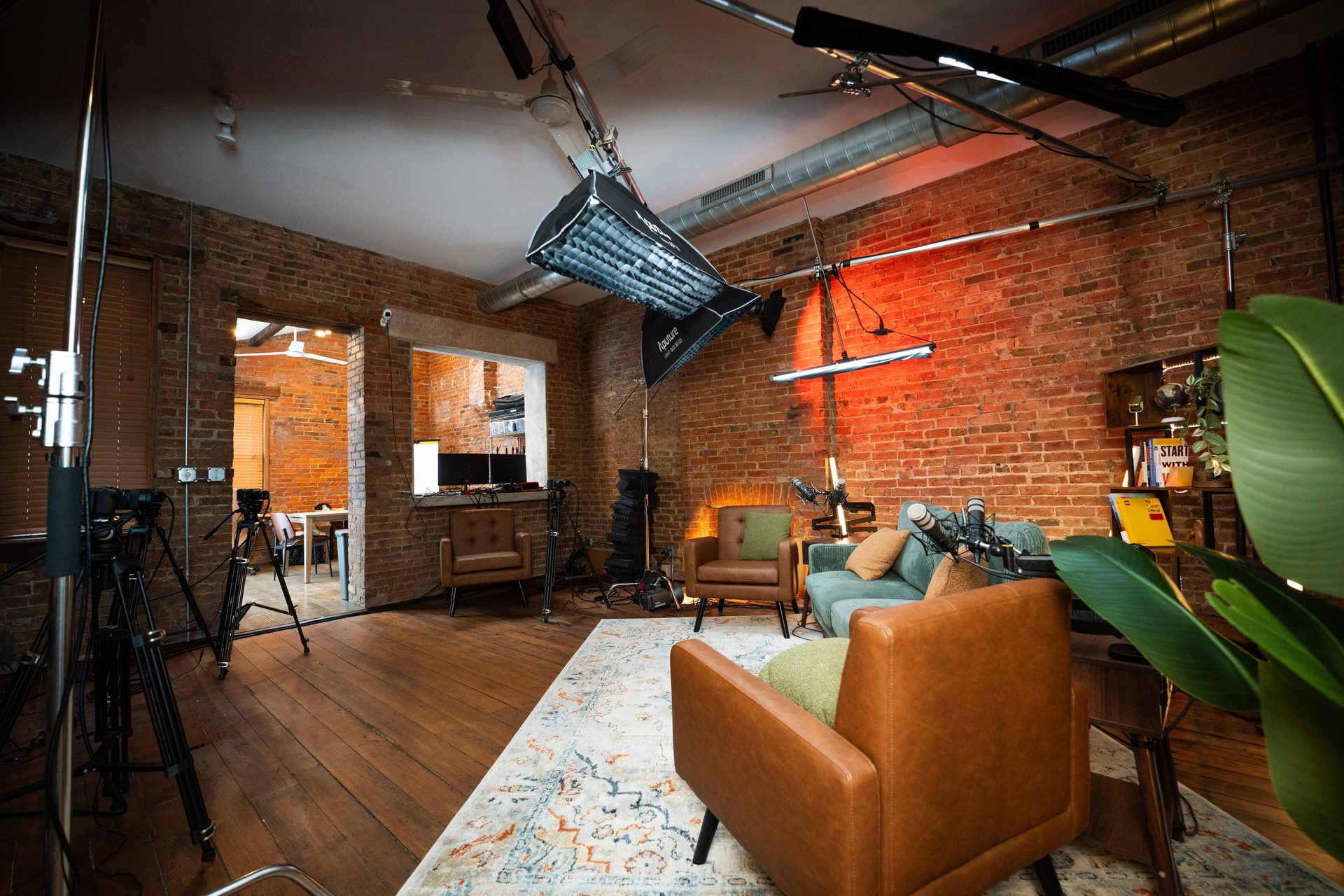
At Cincinnati Podcast Studio, we build every show video-first for exactly this reason. Audio-only still has a place, but for B2B teams trying to build pipeline, video consistently wins.
Quick answer: Video podcasts outperform audio-only shows for B2B because video builds trust faster, repurposes into far more content, and performs better on the platforms where buyers actually spend attention, like LinkedIn and YouTube. Audio-only still works, but it leaves most of the growth and content value on the table.
The Real Difference Between Video and Audio-Only Podcasts
Audio-only podcasts ask listeners to trust a voice. Video podcasts let them see tone, body language, and facial expression, the same credibility signals people rely on in any face-to-face business conversation. For B2B buyers deciding who to trust with a meaningful purchase, that difference is not cosmetic.
Format also determines where a show can live. An audio-only episode is largely confined to podcast apps. A video episode can run on those same apps while also competing on short-form video platforms, LinkedIn, and YouTube, three places B2B buyers already spend time researching vendors.
Why B2B Buyers Trust Video Faster
Seeing a founder, operator, or subject-matter expert speak builds authority faster than hearing a voice alone. Prospects can read confidence, expertise, and tone in a way audio simply can't carry. That matters most in B2B sales cycles, where the buyer is often evaluating a person or team as much as a product.
Video also lets a prospect "meet" a company before ever booking a call. Shows like the Cincinnati Business Podcast work this way: by the time a guest's audience reaches out, they already feel like they know the people behind the business.
If you're a B2B team in Cincinnati or Northern Kentucky, this matters because local buyers often choose vendors they recognize from the community first, and a video presence builds that recognition far faster than an audio feed ever could.
The Content Multiplication Advantage
A single well-run video episode can produce 15 to 25 pieces of usable content: short clips, quote graphics, carousel posts, email snippets, and articles like this one. An audio-only session produces a fraction of that, mostly because there's no visual footage to cut into clips.
That gap compounds fast. A company recording two video episodes a month can build a near-daily content cadence across short-form clips and social posts, all sourced from footage that was already captured during the session. An audio-only team doing the same volume of recording ends up with far fewer assets to show for it.
Where Video Wins on Distribution
LinkedIn, YouTube, and Instagram all prioritize video in their algorithms, and B2B buyers spend meaningful research time on all three. According to the Edison Research Infinite Dial studies, video consumption continues to climb across age groups and platforms that matter for B2B marketing, not just entertainment.
Short-form clips extend an episode's reach well beyond the people who ever listen to the full show. A 60-second clip of a sharp answer can reach thousands of potential buyers who will never open a podcast app, but will stop scrolling for a compelling 60 seconds on LinkedIn. Video also strengthens a company's presence on YouTube search, a discovery channel audio-only shows can't touch at all.
Common Mistakes When Choosing a Format
Teams sometimes pick audio-only to save setup time, then lose the entire repurposing upside that makes a podcast worth the investment in the first place. Others record video with poor lighting or inconsistent sound, which damages credibility more than skipping video would have.
The other common mistake: not planning for short-form clips during the session itself. Without a clear sense of what a good standalone clip looks like, teams miss their best moments and end up with raw footage that's harder to repurpose after the fact.
When Audio-Only Still Makes Sense
Audio-only can make sense for early-stage testing, before a company commits to a full production workflow, or for a founder who isn't yet comfortable on camera. That second issue is usually solvable with a short coaching session rather than a permanent format decision.
For most established B2B brands focused on pipeline growth, though, N/A doesn't really apply here, video is worth the investment. The trust and content advantages are too large to leave on the table once a company is serious about using a podcast to drive business.
Frequently Asked Questions
Is video podcasting really better than audio-only for B2B?
For most B2B companies, yes. Video builds trust faster and produces far more repurposable content per session, which drives more visibility across LinkedIn, YouTube, and other channels.
Do I need expensive equipment to start a video podcast?
No. What matters most is clean lighting, clear audio, and a consistent setup. A professional studio handles all of this, so you show up and talk.
Can I convert an existing audio-only podcast to video?
Yes. Many B2B shows add a video component to an established audio podcast and see an immediate lift in content output and reach.
How much content can one video podcast episode produce?
A single well-run session can generate 15 to 25 pieces of content, including short clips, quote graphics, carousels, and blog posts like this one.
Is video podcasting worth it for a small business?
It depends on your growth goals. If building trust and pipeline with B2B buyers matters, video pays off through credibility and content volume that audio-only can't match.
Make the Switch to Video
If your B2B podcast is still audio-only, you're leaving trust-building and content volume on the table every time you record. Explore our video podcasting services, browse studio rental options, or get consulting and strategy support to plan the switch. Curious what this looks like for your business? Start with podcast idea research, then book a Discovery Call or get in touch with our team to get started.