
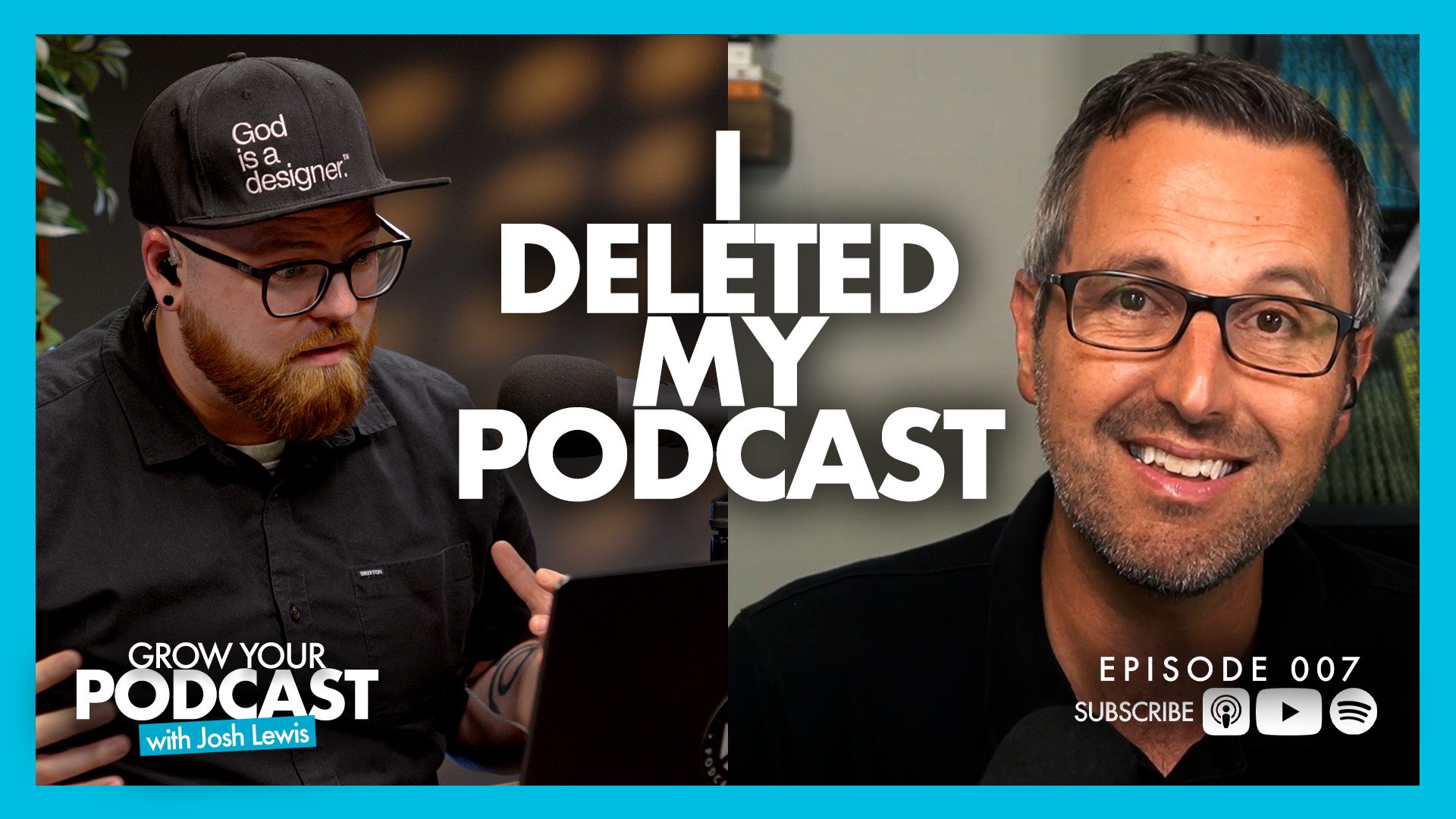
Why Todd Henry Deleted His Podcast and Started Over
Why Todd Henry Deleted His Podcast — And What Smart Business Podcasters Should Learn From It
Most podcasters think the goal is to keep publishing forever. This episode challenges that idea. In Josh Lewis’s conversation with Todd Henry, the more useful question isn’t “How do I keep my podcast going?” It’s “Is this show still aligned with the value I want to create?”
That’s a better question for any serious business podcast.
Todd Henry’s decision to delete his podcast archive wasn’t about failure. It was a strategic reset. For business leaders, the lesson is simple: if your show no longer matches your message, audience, or business model, consistency alone is not a virtue.
Todd Henry deleted his podcast because he wanted to realign the show with a clearer purpose, a better listener experience, and a more sustainable model. Public episode descriptions say he removed his archive, dropped ads, and rebuilt from the ground up after two decades of podcasting. For business podcasters, the takeaway is clear: don’t protect an old format just because you’ve invested in it. Protect alignment.
If you’re trying to figure out whether your own show is built on the right foundation, start with Podcast Idea Research. It’s the fastest way to pressure-test the strategy before you waste another quarter producing the wrong thing.
Why this episode matters
Josh frames the conversation around a striking question: what would make a podcaster with more than 20 million downloads delete everything and start over? Todd Henry’s answer appears to be bigger than platform tactics. It’s about purpose, sustainability, and growth.
That matters because a lot of business podcasts are built on momentum, not design. They start with energy. Then they drift.
The show becomes too broad. The archive becomes cluttered. Ads start shaping the listening experience. The host evolves, but the content model doesn’t. Before long, the podcast still exists, but it no longer helps the business the way it should.
The real lesson: your archive is not sacred
A lot of creators treat old episodes like untouchable assets. That sounds responsible, but it can actually create drag.
An archive can become a liability when it no longer reflects your positioning. Old intros, outdated offers, weak interviews, irrelevant themes, and legacy branding can all send mixed signals to new listeners. That problem gets worse when your podcast is part of your authority strategy.
For a business, every public-facing asset is doing one of two things: building trust or creating confusion.
That’s why this conversation is so useful. Todd Henry’s reset suggests a principle more business leaders need to hear: your content library should serve your current strategy, not your past identity. The point isn’t to be reckless. The point is to be intentional.
If your show feels misaligned, Consulting is the right next step. Sometimes the problem isn’t production. It’s positioning.
Why “starting over” can be the smarter move
Starting over sounds dramatic, but sometimes it’s the most disciplined option.
A restart can make sense when:
the audience has changed
the host’s expertise has matured
the business model has shifted
the show format no longer creates trust
the archive no longer supports the current offer
What smart operators understand is that content is not the product. Clarity is the product. Trust is the product. Relevance is the product.
That’s why a clean restart can outperform a long-running but unfocused show. A smaller library with sharper intent often does more for pipeline than a huge archive built without a real content thesis.
This is where a structured Podcasting strategy matters. The goal isn’t to “have a podcast.” The goal is to build a business asset that earns attention, compounds trust, and creates useful downstream content.
What deleting the archive says about podcast ROI
Most people measure podcast ROI too narrowly. They ask how many downloads they got. They ask whether sponsors paid enough. They ask whether the audience grew fast enough.
Those aren’t useless questions. They’re just incomplete.
A better business question is this: did the show create the right kind of trust with the right kind of people?
Public descriptions of the episode say Todd Henry also ditched ads as part of the reset. That’s a strong reminder that monetization is not always the same thing as value. In some cases, ads create friction. They interrupt the experience. They dilute focus. They train the host to optimize for inventory instead of impact.
For many B2B leaders, the best podcast ROI doesn’t come from sponsorship revenue at all. It comes from authority, relationships, sales enablement, recruiting, referrals, and repurposed content.
That’s one reason a video-first model matters. A strong conversation can also feed Short-form, support a Webinar, or become the raw material for Course Creation. One recording session should do more than produce one episode.
The business mistake most podcasters make
The mistake is thinking consistency is the goal.
Consistency matters, but only when it’s attached to the right strategy. Publishing the wrong show for three years is not discipline. It’s expensive drift.
If your show is underperforming, there are usually only a few root causes:
the topic is too broad
the audience problem isn’t clear enough
the format doesn’t create enough depth
the host is talking to the wrong people
the podcast is disconnected from a real business outcome
That’s why this Todd Henry conversation lands. It reframes “deleting a podcast” as a strategic decision, not an emotional one.
What business leaders should do before they restart a show
Before you rename the show, wipe the archive, or redesign the format, answer these questions in order.
First, what exact audience are you trying to serve now?
Second, what business function should the podcast support? Brand authority? Sales conversations? Client education? Recruiting? Community?
Third, what kind of episodes actually create the best response from the right people?
Fourth, what parts of the current show are still worth keeping?
Fifth, what is confusing, outdated, or no longer true?
This is where most teams need outside perspective. They don’t need more gear advice. They need someone to help them separate sentimental attachment from strategic value. That’s exactly what a Discovery call or strategy conversation should uncover.
Common mistakes to avoid
One common mistake is assuming old content deserves permanent shelf space just because it took effort to make. Effort is not the standard. Relevance is.
Another is forcing ads or monetization tactics too early. If the show is meant to build trust, don’t sabotage the listening experience to make a tiny amount of revenue.
The third is building a podcast as if it lives alone. It should connect to your broader content system, your website, your email strategy, and your sales conversations.
A fourth mistake is chasing volume over resonance. A podcast that deeply serves 200 right-fit listeners can be more valuable than one that casually entertains 20,000 random people.
If you’re a Cincinnati/NKY business, this matters even more
If you’re a B2B team in Cincinnati/NKY, this matters because your podcast probably doesn’t need mass-market attention. It needs the right local and industry credibility. A focused show with strong positioning can do far more for trust than a generic content stream.
That’s especially true if you’re building a content engine around a Cincinnati video podcast studio model or looking for a podcast studio in Cincinnati that helps connect strategy to execution. In a regional business market like Greater Cincinnati and Northern Kentucky, clarity compounds faster than hype.
You can also study how CPS builds authority through the Cincinnati Business Podcast and the broader content ecosystem in the Resources hub.
FAQs
Why would someone delete a successful podcast?
Because “successful” on paper doesn’t always mean aligned in practice. A show can have reach, history, and downloads but still stop serving the host’s current message, audience, or business goals. In those cases, keeping it alive may preserve momentum while weakening clarity.
Should business podcasters ever remove old episodes?
Yes, when the archive actively creates confusion. If old episodes no longer reflect your positioning, quality standard, or offer structure, pruning or resetting can be smarter than keeping everything public. The decision should be strategic, not emotional.
Is ad revenue the wrong goal for a business podcast?
Usually, yes. For most B2B brands, the bigger value comes from trust, authority, relationship-building, and repurposed content. Ads can make sense in some models, but they often distract from the real business case behind the show.
How do I know whether to restart my podcast or improve the one I have?
Look at alignment. If the audience, message, format, and business purpose are still right, improve the current show. If those core pieces are off, a restart may be cleaner and more effective than trying to patch a misaligned format.
Conclusion + CTA
Todd Henry’s decision is a useful wake-up call for business podcasters. Don’t confuse longevity with leverage. Don’t confuse output with alignment. And don’t keep protecting a podcast structure that no longer serves the business.
The smartest move is not always to publish more. Sometimes it’s to simplify, refocus, and rebuild around what actually creates trust.
If your current show feels scattered, outdated, or harder to sustain than it should be, start with a conversation. Book a Tour to see how CPS helps business leaders build podcasts that work as real business assets, or reach out through Contact if you already know the strategy needs to change.