
Why Professional Recording Studios Sound So Much Better
Why Professional Recording Studios Sound So Much Better Than DIY Setups
You've heard it — the difference between a professionally recorded podcast and a Zoom call recording is immediate and obvious. One sounds authoritative and clean. The other sounds like someone talking in a closet. But why, exactly? And is the gap really as hard to close as it seems?
The answer isn't just about gear. It's about physics, infrastructure, and the compound effect of three systems working together. Here's what actually separates professional studio audio from everything else — and why understanding it matters for your business content.
Professional recording studios sound better because of acoustic treatment, broadcast-grade signal chains, and physical isolation from noise — three things most home or office setups can't replicate without significant construction and investment.
Quick Answer
Professional recording studios sound better because of three core elements: acoustic treatment that eliminates echo and room noise, broadcast-grade microphones and preamps that capture clean signal, and physical separation from background noise sources. A home office or conference room can't replicate these conditions without significant investment — which is exactly why a rented professional studio produces noticeably cleaner audio on day one.
The Hidden Enemy: Room Acoustics
Most people assume audio quality is mostly about the microphone. It isn't. The room is the single biggest variable in how your recording sounds — and it's the one most DIY setups completely ignore.
When sound waves leave your mouth, they don't just go into the microphone. They bounce off every hard surface in the room — walls, ceilings, windows, desks — and those reflections arrive at the mic milliseconds after the direct signal. The result is a smeared, hollow quality that no amount of post-production can fully correct.
Parallel walls are especially problematic. They create what's called flutter echo — a rapid, repetitive reflection that makes voices sound thin and harsh. Conference rooms are some of the worst recording environments because they're designed to bounce sound around for easy hearing, not to capture clean audio.
Professional studios address this with three acoustic tools:
- Acoustic panels — absorb mid and high frequencies, reducing reflections and reverb tail
- Bass traps — placed in corners to absorb low-frequency buildup that muddies vocal recordings
- Diffusers — scatter remaining reflections so the room feels natural without going dead
The result is a controlled acoustic environment where the microphone captures your voice — not your voice plus the room. That's a fundamental difference that no plugin or AI noise filter can replicate after the fact.
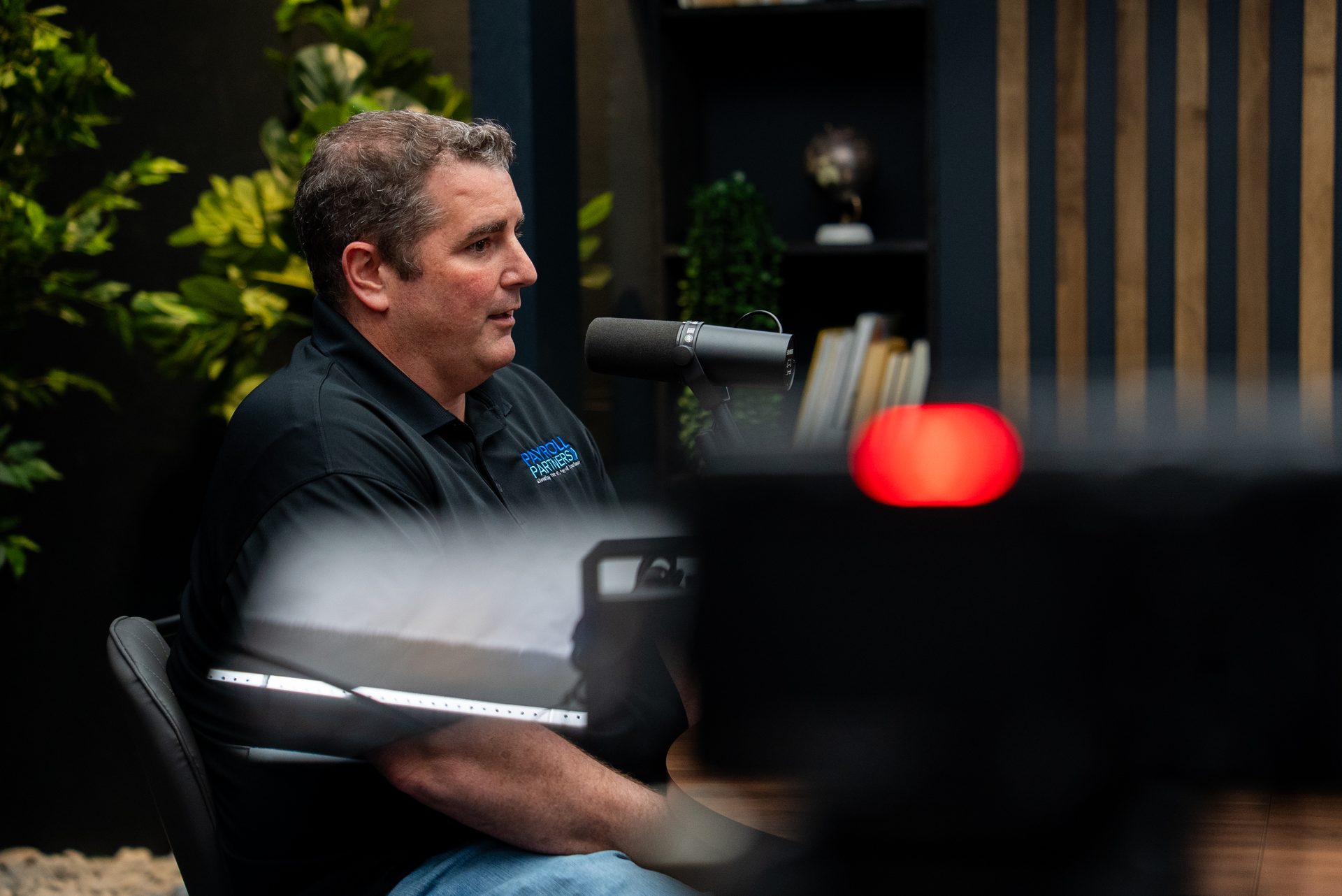
For video podcast production at CPS, our studio was purpose-built with this in mind. The acoustic treatment isn't an afterthought — it's the foundation everything else is built on.
Why Microphone Quality Only Gets You Halfway There
Here's the counterintuitive truth: a better microphone in a bad room often sounds worse than a cheaper microphone in a good room. Why? Because better microphones are more sensitive. They capture more detail — including every room reflection, HVAC hum, and ambient noise your space produces.
Large-diaphragm condenser microphones are the workhorses of professional recording studios. They capture a wide frequency range with impressive detail. But they pick up everything — which is exactly why they require an acoustically treated room to perform correctly.
Broadcast dynamic microphones (like the Shure SM7B, widely used in professional podcasting) are more forgiving in less-than-perfect rooms because they have tighter polar patterns — they primarily capture sound directly in front of them and reject off-axis sources. But even these benefit significantly from acoustic treatment and proper mic placement.
The other variable most DIY setups miss is mic placement. The distance between your mouth and the capsule, the angle, the height — all of it affects the proximity effect (bass buildup as you get closer) and off-axis rejection. Professional studios have purpose-built boom arms and consistent positioning guidelines so every session sounds the same.
Whether you're recording a studio rental session, a webinar, or an online course, consistent mic placement means consistent audio — session after session, without having to re-dial anything in.
Signal Chain: The Often-Overlooked Factor
Even with a great microphone in a treated room, the path from microphone to recording file matters. That path is called the signal chain — and it's where a lot of DIY setups silently lose quality.
The microphone captures analog audio. That signal gets amplified by a preamp before it's converted to digital. The quality of both steps directly affects what ends up in your recording.
Consumer audio interfaces (the kind you plug into a laptop) include built-in preamps that work adequately for basic recording. But they're designed for price efficiency, not headroom and transparency. At higher gain settings — which you need for dynamic microphones — they introduce noise and compression artifacts that degrade the recording.
Broadcast-grade preamps add clean gain with a much lower noise floor. They preserve the transient detail (the initial snap and attack of consonants) that makes voices sound present and articulate rather than muddy and distant. It's the difference between audio that sounds like you're in the room and audio that sounds like a recording of a recording.
Analog-to-digital converters (built into professional audio interfaces) determine how faithfully the analog signal is translated to digital. Better converters preserve dynamic range — the difference between quiet and loud moments in your speech. That dynamic range is what gives professional audio its depth and natural feel.
Most business owners don't need to understand every piece of this chain. What they need to know is: in a professional studio, this is already handled correctly. You show up and talk. Book a Discovery Call to see how a session at CPS works.
What a Professional Studio Eliminates That DIY Can't
Acoustic treatment, microphones, and signal chain all matter — but there's a fourth category that's harder to solve with gear: the ambient environment itself.
HVAC systems are one of the most common culprits in DIY recordings. The low-frequency rumble of air moving through ducts sits right in the frequency range of human voice. Noise gates can remove it during silence, but they can't remove it while you're speaking. In a professional studio, HVAC is either isolated from the recording space entirely or uses a whisper-quiet system designed specifically for studio use.
External noise — traffic, neighbors, hallway foot traffic, construction — is the other constant problem with home and office recording setups. Some days are quieter than others. But content production doesn't work around unpredictable noise events. If you're in the middle of a recording and a truck pulls up outside, you stop and wait, or you deal with it in editing, or you just live with it in the final file.
Professional studios have physical mass separation — thick walls, decoupled floors, weather-stripped doors — that blocks external sound from entering the recording environment. This isn't something you can replicate by closing a window or putting up a blanket. It's structural.
The third thing professional studios eliminate is session-to-session inconsistency. When you record from multiple locations — your home office one week, a conference room the next, a hotel room when you're traveling — every recording sounds different. That inconsistency erodes the professional impression your content creates over time, even if each individual session seems acceptable.
For B2B video content — short-form video clips, podcast episodes, training videos — consistency is a professionalism signal. Your audience notices the difference even if they can't explain why.
If you're in Cincinnati or Northern Kentucky, this is one of the practical reasons local businesses use CPS studio rentals rather than investing in a permanent in-house setup. A few sessions per month at a professional studio produces dramatically better and more consistent results than a converted conference room with foam panels on the walls.
How Better Audio Directly Affects Your Business Results
Audio quality isn't just a production preference. It affects whether people actually listen, trust you, and take action.
Research from researchers at USC and the University of New South Wales has demonstrated that listeners rate speakers as less intelligent and less credible when audio quality is poor — even when the content itself is identical. Audio quality functions as a proxy for professionalism and authority in the listener's mind.
For podcasts specifically, poor audio is the single most-cited reason listeners stop an episode early. It's not topics, it's not pace, it's not length — it's audio quality. You can have the most valuable content in your industry, but if the recording sounds like a phone call from 2009, you'll lose the audience before they ever get to your point.
For course creators and L&D teams, the stakes are even higher. Learners associate production quality with content quality. A training video that sounds amateur signals that the content might be too — regardless of the actual expertise behind it. Investment in professional audio is, in part, investment in how your knowledge is perceived.
For B2B sales cycles, video podcasts and webinars are often the first extended exposure a prospect has to your team's thinking and expertise. A professional recording environment ensures the signal — your ideas, your authority, your clarity — comes through cleanly. A distracting acoustic environment puts the listener's brain to work processing the noise instead of absorbing the content.
The Cincinnati Business Podcast is a good example of what's possible when content is produced in a purpose-built environment consistently. The quality of each episode isn't accidental — it's the result of the same acoustics, same signal chain, same setup every time.
If you're working with a content strategy or consulting team and producing video content as part of your business development, audio quality should be a core part of the production conversation — not an afterthought. And podcast idea research can help you design a show that's positioned to grow from day one.
Frequently Asked Questions
What makes professional studio audio so much cleaner than home recordings?
Three things: acoustic treatment that stops sound from bouncing off walls, high-end microphones and preamps that capture clean signal, and physical isolation from external noise. Most home setups lack all three.
Can you fix bad audio in post-production?
To a degree — noise reduction and EQ help. But they degrade the audio slightly with every correction. It is far easier to record it clean the first time than to repair it in editing.
Do I really need a professional studio if I already have a good microphone?
A good microphone captures your voice clearly — and everything else in the room. Without acoustic treatment, even a $500 mic sounds muddy in a reflective space. The room is usually the problem, not the mic.
How long does it take to soundproof a home recording space?
True soundproofing (blocking external noise) requires construction — decoupled walls, mass, and air gaps. Acoustic treatment (controlling reflections inside the room) is faster but still takes significant time and investment to do right. Most business owners find renting a professional studio is faster and more cost-effective for their content volume.
What kind of microphone does a professional podcast studio use?
Professional podcast studios typically use large-diaphragm condenser or broadcast dynamic microphones mounted on boom arms, routed through dedicated preamps. The specific setup varies, but the goal is always the same: clean, consistent, on-axis pickup with minimal room noise.
How does CPS handle audio for video podcast sessions?
We use broadcast-grade microphones and preamps in an acoustically treated studio, with dedicated audio per speaker. Clients get clean, consistent audio every session without touching a single audio setting.
The Bottom Line
Professional recording studios sound better because every layer of the system — the room, the microphone, the signal chain, and the physical environment — is designed to work together. Remove any one of those layers and the quality degrades. DIY setups almost always solve one or two of them but leave the others unaddressed.
For Cincinnati and Northern Kentucky businesses producing video podcasts, webinars, course content, or short-form clips, the question isn't whether professional audio matters. It's whether it's worth building in-house versus booking a professional studio as needed. For most teams, the answer is clear: rent the infrastructure, own the content.
Ready to hear the difference for yourself? Book a Discovery Call with our team and we'll walk you through how a CPS session works. Or contact us directly with questions about studio availability and what a session produces.