
Why Business Podcasts Fail (And How to Fix It)
Why Most Business Podcasts Fail — And What to Do Instead
Every year, thousands of business leaders launch podcasts with real intentions and solid ideas. Most are dark within three months. Not because the hosts ran out of things to say — but because the production side collapsed under them.
The topic wasn't the problem. The system was.
If you've started a show that stalled, or you're about to launch one and want to avoid the common traps, this breakdown is the practical look at what actually goes wrong — and what a sustainable podcast operation looks like instead.
Business podcasts fail for predictable reasons: no production system, inconsistent publishing, poor audio/video quality, and no clear audience strategy. Each one is fixable — but only if you catch it before the show goes dark.
Quick Answer: Why Do Business Podcasts Fail?
Most business podcasts fail because they lack a repeatable production system. Without a defined process for recording, editing, and distributing content consistently, episodes get delayed, quality suffers, and hosts burn out. The solution is a structured workflow — or a production partner — that removes the friction and keeps the show moving on schedule.
The Real Reason Most Business Podcasts Die Before Episode 10
There's a well-documented drop-off point in podcasting: most shows don't survive their first ten episodes. The hosts who quit aren't quitting because they lost interest in their topic. They're quitting because running a show turned out to be a second job nobody budgeted for.
Here's what the workflow looks like without a system in place:
- Record an episode (straightforward enough)
- Spend three to five hours editing in software you half-know
- Design a thumbnail, write show notes, upload to a host, write a description
- Repeat every week, indefinitely, on top of running an actual business
That math doesn't work. And most hosts figure that out around episode seven.
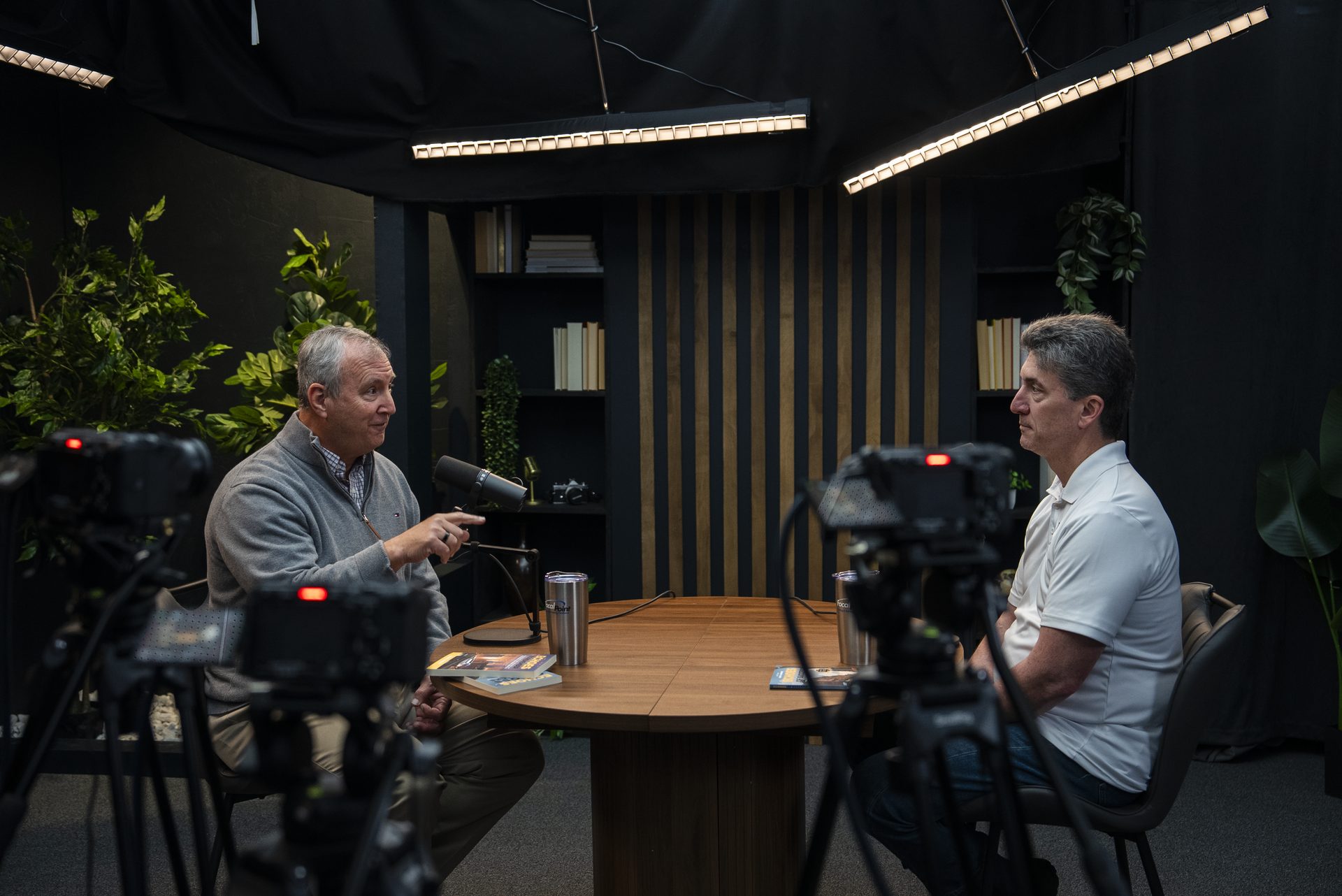
The businesses that sustain a podcast have one thing in common: they outsourced the production side. They show up to a professional video podcast studio, record their conversation, and hand it off. Everything after the conversation — editing, mixing, show notes, publishing, short-form clips — happens without them.
That's not cutting corners. That's the only model that scales.
Low Production Quality Erodes Credibility Faster Than You Think
Audio quality is not a vanity metric. It's a trust signal.
When a listener hears echo, background noise, or mic handling artifacts, they don't think "that host is authentic and relatable." They think "this show isn't serious." That impression forms in the first fifteen seconds — and it's very hard to walk back.
Video podcasting raises the stakes even further. Poor lighting, shaky framing, or a cluttered background undermine on-camera authority before you've said a word. B2B buyers are making subconscious quality assessments the moment they press play.
The fix isn't expensive gear purchased without knowing how to use it. It's a controlled environment built for this specific purpose: proper acoustic treatment, camera angles set for interviews, lighting that makes guests look credible, and audio capture that doesn't require hours of cleanup in post.
If you're in Greater Cincinnati or Northern Kentucky, that environment doesn't have to be your office. It can be a purpose-built studio where every recording looks and sounds the way it should — without you managing a single piece of equipment.
Inconsistency Trains Your Audience to Stop Showing Up
Podcast algorithms — whether on Spotify, Apple, or YouTube — reward consistency. Regular publishing tells the platform your show is active and worth surfacing. Irregular publishing does the opposite: it signals low engagement and tanks your discoverability over time.
But the algorithm problem is secondary to the audience behavior problem. Listeners build habits. They subscribe to a show because they expect it to be there on Tuesday morning, or Friday afternoon, or whenever your publishing rhythm says it will be. When episodes go dark for two or three weeks, that habit breaks. Most listeners don't come back.
Momentum in podcasting is fragile. It takes months of consistent publishing to build an audience, and it takes about three missed weeks to lose that audience's trust. Consistency isn't a best practice — it's the foundation everything else is built on.
The businesses that publish reliably aren't more disciplined than the ones that don't. They've removed the friction points that cause delays. When editing isn't your problem and publishing is handled by someone else, you can hold a weekly cadence without white-knuckling it.
No Clear Purpose or Audience — Just Content for Content's Sake
The second most common failure pattern: a show with no defined reason to exist beyond "we should have a podcast."
A business podcast should do at least one of the following:
- Build trust and authority with a specific buyer type
- Generate pipeline — direct conversations with prospects and referral partners
- Create a content library that powers social media, email, and sales follow-up
- Establish the founder or team as the recognized experts in their space
When none of those are the explicit goal, every episode is a guess. Topics drift. Guests don't align with the audience. The show starts to feel like a marketing obligation rather than a business tool — and it shows in the content.
Before you record a single episode, the strategic questions need answers: Who is this show for? What problem does it solve for them? What does a listener do after they finish an episode? If those answers aren't clear, the show will feel it.
If you're unsure where to start, podcast idea research can help you validate the concept before you invest in production. It's a faster way to find out whether your show has an audience — and what that audience actually wants to hear.
The Fix: A Production System That Does the Heavy Lifting
The businesses running successful podcasts aren't necessarily better at content than the ones who quit. They have better systems.
Here's what a functional podcast production system looks like in practice:
- You show up to a professional studio — no setup, no equipment management, no acoustic troubleshooting.
- You record your conversation — the studio team handles camera, audio, and any technical issues in real time.
- You leave. Editing, mixing, show notes, publishing, and short-form video clips are handled without you.
- Content arrives in your inbox — ready to approve, schedule, and distribute across your channels.
That workflow produces roughly 36 assets per month from two to four recording sessions. A full-length video episode, a podcast audio version, short-form clips for LinkedIn and Instagram, edited show notes — all from a single conversation you were already having.
The Cincinnati Business Podcast is one example of what this model looks like when it's running well: consistent publishing, professional production, and content that builds on itself over time.
If you're a B2B team in Cincinnati or NKY, the infrastructure for this kind of operation is accessible without building it yourself. Studio time, a production crew, editing, and a repeatable framework are available through our consulting and content strategy services — or you can book a session directly through our studio rental options and bring your own workflow.
The right starting point depends on where you are. A Discovery Call is the fastest way to figure out which setup matches your business goals and current capacity.
Frequently Asked Questions About Business Podcast Failure
How many episodes does the average business podcast last?
Studies suggest most podcasts don't make it past seven episodes. The dropout rate is highest in the first three months — before any audience momentum has built.
Is production quality really that important for a business podcast?
Yes. Listeners will forgive minor imperfections, but echo-heavy audio or shaky video signals that you don't take your own content seriously. First impressions in audio are immediate and lasting.
How often should a business podcast publish?
Consistency matters more than frequency. A weekly show that publishes every week beats a daily show that goes dark for a month. Pick a cadence you can hold, then build systems to protect it.
What's the difference between a podcast that grows and one that stalls?
A podcast that grows has a clear audience, a consistent production schedule, and a content strategy tied to a business goal. A podcast that stalls usually has none of those three things — it exists because someone thought they should have one.
Can I outsource my podcast production and still sound authentic?
Absolutely. Production outsourcing handles the technical work — editing, mixing, publishing, clip creation — not the conversations. You still show up and talk. The studio handles everything else.
How does CPS help businesses avoid common podcast failure points?
Cincinnati Podcast Studio provides a full production system: professional studio, editing, short-form clip creation, and a repeatable workflow called the Presence System. Clients show up, record, and leave — we handle the rest.
Related Resources
- Video Podcast Production at CPS
- Podcast Idea Research
- Short-Form Video Services
- Webinar Production
- Course Creation Services
- Content Strategy Consulting
- Cincinnati Business Podcast
- Resources Hub
Ready to Build a Podcast That Sticks?
The businesses that sustain a podcast aren't doing more — they're doing less, because the right infrastructure handles the rest. If you want a show that publishes consistently, sounds professional, and actually moves the needle for your business, book a Discovery Call and we'll show you exactly how it works.
Or if you have questions before you're ready for that step, contact the CPS team — we're happy to talk through what a sustainable content operation looks like for your specific situation.