What Is a Creator Studio? What Cincinnati Businesses Get
What Is a Creator Studio — And Why Cincinnati Businesses Are Using One
The term "creator studio" gets used loosely. You'll see it applied to everything from a basement setup with a ring light to a full broadcast facility. But for businesses — particularly B2B companies that need professional video at scale — a creator studio means something specific.
This article explains what a real creator studio includes, who uses one, and why more Cincinnati and Northern Kentucky businesses are making it part of their content strategy.
A creator studio is a professionally equipped space — cameras, lighting, acoustics, and on-site production support — designed specifically for businesses to produce video content efficiently at a professional level.
Quick Answer
A creator studio is a professionally equipped space — cameras, lighting, acoustics, and production support — designed specifically for businesses and professionals to record video content efficiently. Unlike a traditional recording studio focused on audio, a creator studio is built for video-first output: podcasts, short-form clips, webinars, courses, and social content. In Cincinnati, creator studios give businesses a way to produce weeks of content in a single day without owning or managing any equipment.
Creator Studio vs. Recording Studio: What's the Difference?
The terms sound similar but serve different purposes.
A recording studio is engineered for audio — specifically music, voice-overs, or narration. Soundproofing is extreme. The room is treated to remove reflections. The focus is on what you hear.
A creator studio is engineered for video-first content. Yes, the audio has to be professional. But the camera is the primary tool. Lighting is designed so your face looks intentional on screen. The backdrop or set is built to look like a real environment, not a blank wall. The workflow is designed to capture both polished video and clean audio simultaneously — because the modern content engine runs on both.
If you're recording a podcast that will live on Spotify as audio-only, a recording studio works. If you're recording video episodes, short clips for LinkedIn, a webinar series, or training modules for your team — you need a creator studio. The distinction is the camera.
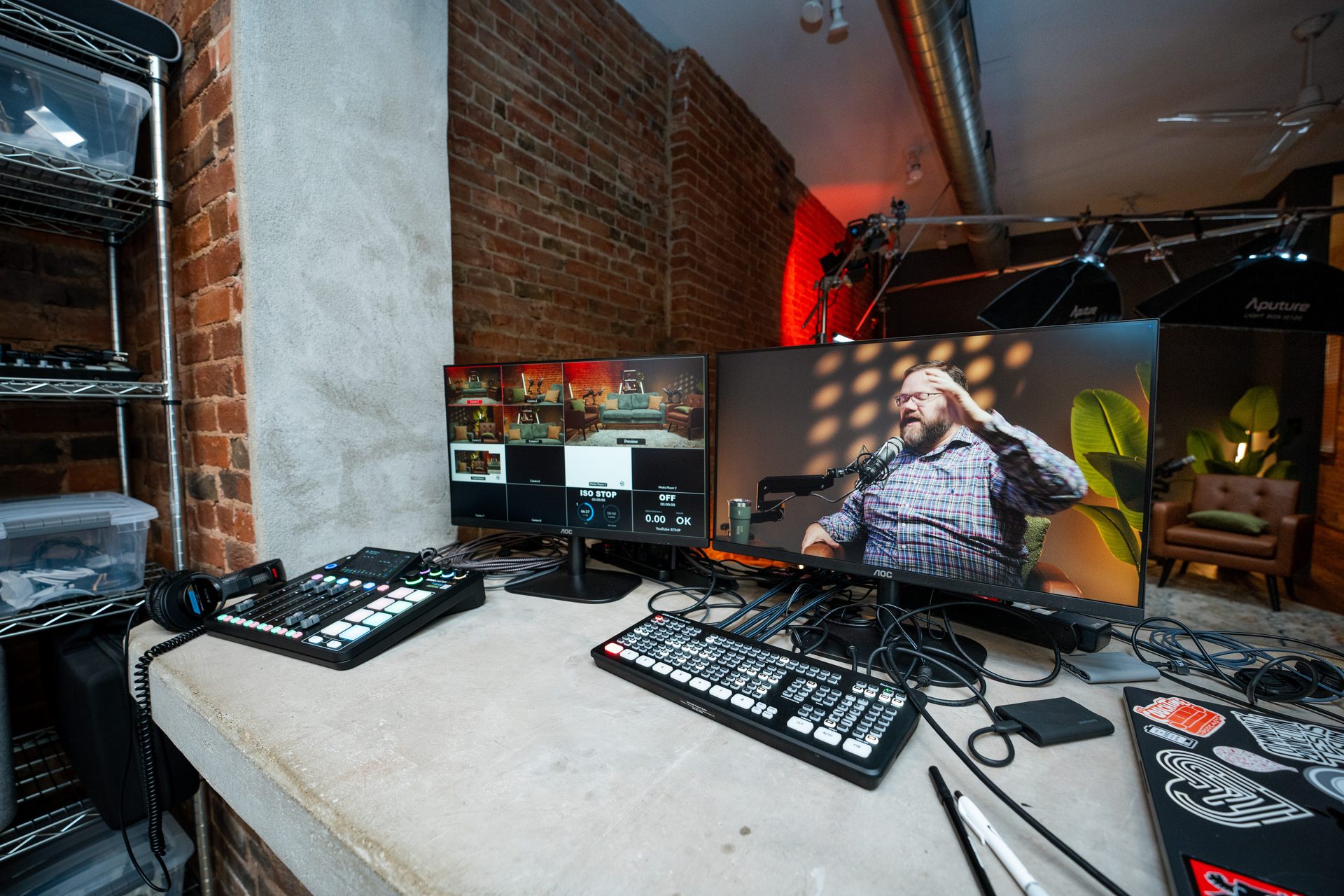
At Cincinnati Podcast Studio, everything we do is video-first. Our video podcasting services are built on the same creator studio model: 4K cameras, professional lighting, acoustic treatment, and an on-site production team — all designed to let you focus on the conversation while we handle the technical execution.
What You'll Actually Find Inside a Professional Creator Studio
Not all creator studios are built the same. But a professional setup built for business clients typically includes:
- 4K camera setup with professional framing. Multiple angles, clean compositions, and consistent framing — not a laptop on a stack of books.
- Acoustic treatment. Panels, baffles, or purpose-built room treatment so your audio sounds clean and controlled, not like a conference room or living room.
- Professional lighting. Softboxes, key lights, fill lights — designed to eliminate shadows, even out skin tones, and make the frame look intentional. No harsh overhead fluorescents.
- A set or backdrop that looks designed. Whether it's branded, natural, or minimal — the background is part of the production, not an afterthought.
- On-site production support. A team member handling cameras, audio, recording, and any live adjustments so you're not managing gear while trying to have a conversation.
- Post-production workflow. Edited episodes, short-form clips, show notes, and transcripts — delivered after the session, not left for you to figure out.
The sum of these parts is what separates a creator studio from a "room where someone has a camera." If you're producing content that represents your brand — in front of clients, prospective hires, or a broader audience — every one of these elements matters.
Who Uses Creator Studios (And Why)
Creator studios aren't just for professional content creators or media companies. The businesses getting the most value from them tend to fall into a few categories:
CEOs and founders building thought leadership. A weekly or biweekly video presence — whether that's a podcast, LinkedIn video series, or YouTube channel — requires consistent, professional output. A creator studio makes that sustainable without requiring a full internal production team.
B2B companies building internal training libraries. HR teams, L&D departments, and operations leaders use creator studios to record training modules, compliance content, onboarding videos, and internal briefings. The quality matters because employees judge the credibility of the content by how it looks and sounds.
Consultants and coaches recording courses. If your expertise lives in your head and you want to package it as an online course or evergreen training program, a creator studio gives you the production environment to make it look as credible as the knowledge it contains.
Marketing teams producing short-form clips. The most efficient way to fill a social media calendar is to record long-form content and extract clips. A creator studio session produces both at once — the long-form anchor and 10-20 short clips from the same recording. Our short-form video production process is built around exactly this model.
If you're a B2B team in Cincinnati or Northern Kentucky, the math is straightforward: one session in a professional creator studio can produce more usable content than a month of DIY recording at your office. The difference is the environment, the equipment, and the people handling the production so you don't have to.
How Much Content Can You Produce in One Creator Studio Session?
This is where the economics of a creator studio become clear.
A typical 2-4 hour session can produce:
- 1-2 long-form video episodes (30-60 minutes each)
- 10-20 short-form clips (60-90 seconds each) extracted from those episodes
- Transcripts and show notes ready for blog or email repurposing
- Optionally: a webinar recording or course module recorded in the same session
The model is called batch recording, and it's the most efficient content production approach for businesses that don't want to treat content as a full-time job. You show up once or twice a month, record several episodes worth of material, and hand it off. The studio handles everything else.
Compare that to the DIY alternative: setting up your own camera, adjusting your lighting, testing audio levels, recording, tearing down, and then editing — every single time. Most business owners do that math once and stop.
If you're evaluating whether this model is right for your business, our podcast idea research process is a good starting point — it helps you define what you're building before you start recording.
What to Look for When Choosing a Creator Studio in Cincinnati
Not every "creator studio" lives up to the label. Here's what actually matters when evaluating a space:
Is it video-first or audio-first? Some spaces are recording studios that added a camera as an afterthought. If the lighting is overhead fluorescent and the backdrop is a blank wall, it's not designed for video. Ask to see examples of what content looks like coming out of the space.
Does it come with production support? A room with equipment and no one to run it is just gear rental. A real creator studio includes someone handling the technical side so you can focus on the content. This is the difference between a session that goes smoothly and one where you spend the first 45 minutes troubleshooting audio.
What does post-production include? The session is only part of the value. What gets delivered after — edited video, clips, transcripts, show notes — determines whether the content actually gets used. Clarify this before you book.
Can it support multiple formats? A versatile creator studio can handle a podcast interview, a solo presentation, a panel discussion, a webinar, or a course module. If the space only works for one format, it limits what you can produce as your content needs evolve.
At Cincinnati Podcast Studio, we offer webinar production, course creation services, and full podcast production from a single facility. Everything produced in our studio is 4K video with professional audio, regardless of the format.
If you want help thinking through what format fits your goals, our content consulting team can walk through it with you before you commit to anything.
Common Questions About Creator Studios
What is a creator studio?
A creator studio is a professionally equipped space designed for businesses and professionals to record video content — podcasts, short-form clips, webinars, courses, and social media content. It includes cameras, lighting, acoustics, and usually an on-site production team.
How is a creator studio different from a recording studio?
A recording studio is optimized for audio — music, voice-overs, podcast audio. A creator studio is optimized for video-first content. The camera is central, lighting is engineered for on-screen quality, and the setup is designed to make you look and sound professional on screen simultaneously.
How much does it cost to use a creator studio in Cincinnati?
Pricing depends on what's included — equipment, production support, editing, and content volume. The best approach is to schedule a Discovery Call to get pricing based on your specific goals and output needs.
How much content can I produce in one creator studio session?
Most clients produce 1-2 long-form episodes and 10-20 short-form clips in a single 2-4 hour session. With batch recording, some teams produce a full month of content in one day.
Do I need experience to use a creator studio?
No. The production team handles the technical side — cameras, audio levels, lighting, and recording. You show up, talk, and leave with professional content. The studio is built to make the process frictionless for first-timers and experienced clients alike.
What kind of content can I create in a creator studio?
Video podcasts, short-form social clips, webinars, online courses, training videos, panel discussions, and internal communications content. Most creator studios can support multiple formats in a single session.
Is a Creator Studio Right for Your Business?
If you're producing video content — or planning to — the question isn't really whether to use a creator studio. It's whether you want to build and manage one yourself or use one that's already set up for you.
The DIY path works when you have the time, equipment, and technical expertise to manage it. For most business owners and marketing teams, it's a persistent drain on time that would be better spent on the actual content.
The creator studio model flips that: you show up prepared to talk, the studio handles everything else, and you leave with weeks of professional content ready to distribute.
The Cincinnati Business Podcast is one example of what a consistent creator studio practice looks like over time — a video-first show that's been running on a professional production system since day one.
If you want to understand what this looks like for your specific content goals, the best next step is a conversation. Schedule a Discovery Call and we'll walk through your format, your audience, and what a realistic content engine looks like for your business. Or reach out to contact the CPS team directly with any questions.