
Video Podcasting for Realtors: Win More Listings
Quick answer
Video podcasting gives realtors a repeatable way to build trust before a client ever books a showing. By interviewing lenders, inspectors, contractors, and past clients on camera, agents create a steady stream of authority content that ranks on search, fills their social feed, and lets prospects get to know their personality and expertise long before the first phone call.
In a market where buyers and sellers can screen five agents online before picking up the phone, video is the fastest way to prove you know the neighborhood, the process, and the people involved in getting a deal done.
Why video podcasting works for real estate
Real estate is a trust business. Clients are handing an agent one of the largest financial decisions of their life, and most of that trust gets built before the first meeting — through what a buyer or seller sees online. A video podcast gives realtors a format built for exactly that job.
Unlike a single listing video or a one-off market update, a podcast is a recurring show. Every episode adds to a library that search engines index, that social algorithms can pull short-form clips from, and that a prospect can binge in a weekend to get comfortable with an agent before ever calling.
It compounds instead of resetting to zero
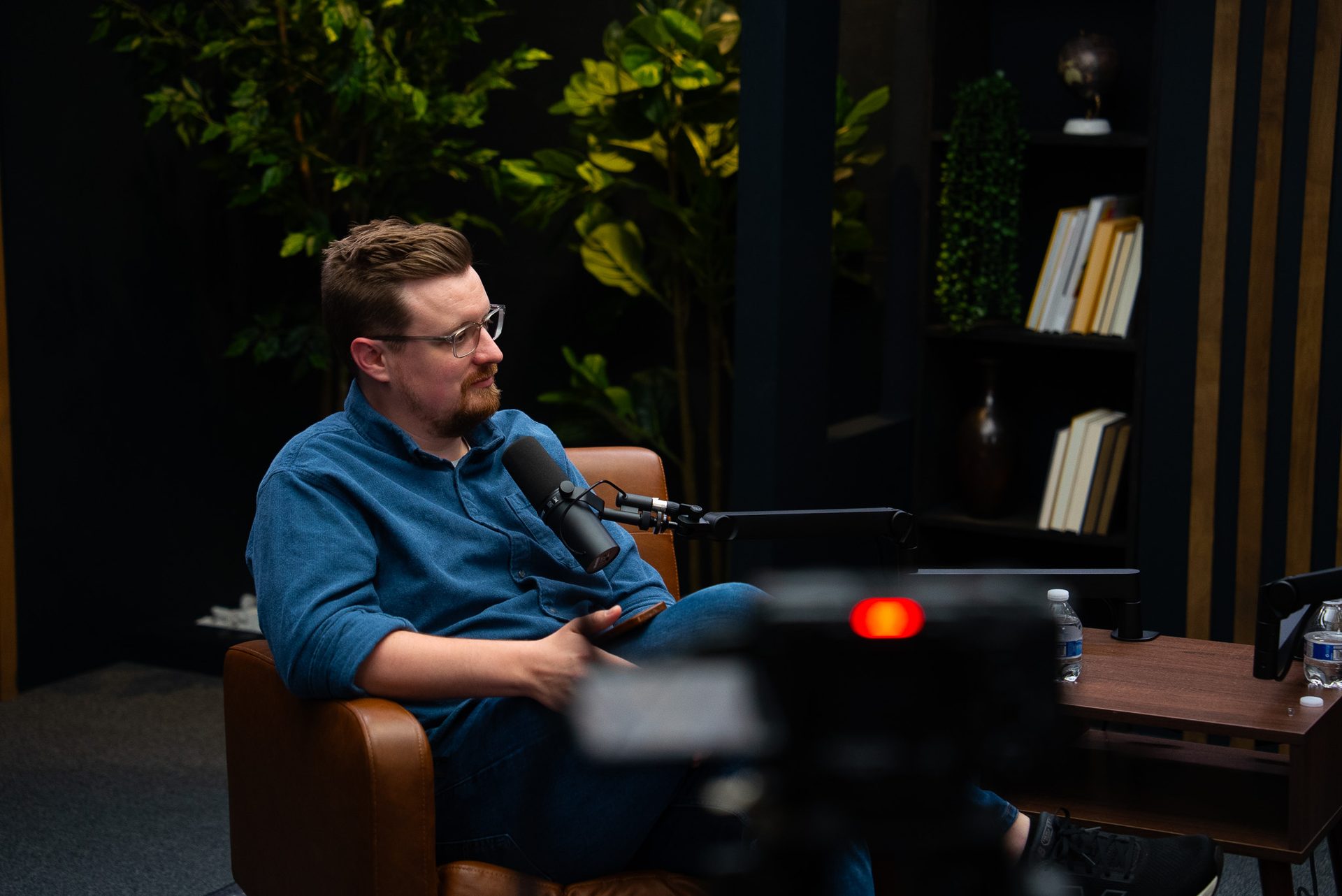
A Reel or TikTok has a short shelf life. A podcast episode keeps working through its show notes, its YouTube listing, its transcript, and every short-form clip pulled from it. One recording session in a Cincinnati video podcast studio can produce a full episode plus a dozen pieces of short-form video that trickle out for weeks.
It shows the agent, not just the listings
Buyers do not fall in love with a headshot and a bio paragraph. A podcast lets an agent's personality, negotiation philosophy, and neighborhood knowledge come through in a way that a listing photo never will — which is exactly what turns a cold lead into a referral-worthy relationship.
What to talk about on a real estate podcast
The best-performing episodes usually fall into a handful of repeatable formats:
- Local market updates — inventory, days on market, and rate trends broken down for a specific Cincinnati or Northern Kentucky neighborhood.
- Lender and inspector interviews — co-branding with local professionals who will also share the episode, doubling the reach for free.
- Buyer and seller myth-busting — the questions every client asks in the first meeting, answered once and reused forever.
- Neighborhood spotlights — walking a buyer through what it is actually like to live somewhere, not just what is listed there.
- Client success stories — a past client on camera talking through their experience is a testimonial with far more weight than a written review.
Turning one episode into a month of content
The biggest objection agents raise is time. In practice, one studio session replaces weeks of separate content shoots. A single 30 to 45 minute conversation, recorded professionally, can be cut into a full episode for YouTube and podcast platforms plus a set of vertical clips sized for Instagram, TikTok, and LinkedIn.
That is the model CPS built short-form video production around: record once, publish for weeks. For a realtor juggling showings and closings, that ratio is what makes consistent content realistic instead of one more thing that quietly stops after episode three.
Common mistakes realtors make with video content
Most agents who try video and quit made one of a few avoidable mistakes:
- Treating it as a listing tool only. Videos that only show houses rarely build the personal trust that generates referrals. The agent needs to be on camera, not just the property.
- Inconsistent publishing. A burst of five videos in one week followed by three months of silence does not build authority. A sustainable, lower-frequency cadence beats a burnout sprint.
- Recording on a phone in a car. Audio and lighting quality directly affect how trustworthy an agent looks on camera. A professional setup removes that risk entirely.
- No distribution plan. Recording content and posting it once to one platform wastes most of its value. Every episode should be repurposed into clips, quotes, and show notes across every channel a prospect might find it on.
If you are a realtor or brokerage in Cincinnati or Northern Kentucky, this matters because your competition for a listing is rarely just the agent down the street — it is every agent a seller can find online in the ten minutes before they call you back.
Getting started without adding to your workload
The fastest path is working with a team that handles production end to end: recording, editing, short-form clips, and scheduling. That is what a content strategy built around your business looks like — the agent shows up, has the conversation, and everything downstream is handled.
CPS works with Cincinnati-area professionals, including real estate teams, to build a repeatable monthly content engine instead of a one-time video project. If you want to see what a session looks like before committing to anything, a Discovery Call is the easiest next step.
FAQs
Do I need real estate experience to host a podcast?
No. Most successful realtor podcasts are built around conversations with lenders, inspectors, contractors, and local business owners. Your job is to ask good questions and let your market knowledge come through naturally.
How often should a realtor publish video content?
Weekly or biweekly is enough to stay visible. A single studio session can be edited into several weeks of short-form clips, so you do not need to record constantly to keep a consistent presence.
What should a realtor talk about on a podcast?
Local market updates, buyer and seller myths, interviews with lenders and inspectors, neighborhood spotlights, and client success stories all perform well because they answer real questions buyers and sellers already have.
Can video podcasting replace traditional real estate marketing?
It works best alongside your existing marketing, not instead of it. Video content builds the trust and visibility that make your listing presentations, open houses, and referral asks land harder.
How long does it take to see results from a real estate podcast?
Most agents notice referral conversations and warmer leads within the first two to three months of consistent publishing, once a backlog of episodes and clips is live across search and social.
Ready to build your show?
Explore how the Cincinnati Business Podcast approach works for local professionals, or browse the full resources hub for more on getting started. When you are ready, book a Discovery Call and we will map out a content plan built around your listings, your market, and your schedule.