Video Podcast Strategy for Dayton Businesses | CPS
Video Podcast Strategy for Dayton Businesses: What Actually Works
More Dayton businesses are asking the same question: what does it actually take to build a video podcast that moves the needle? The format has proven itself for B2B — it builds trust, creates searchable content, and generates clips for LinkedIn and YouTube without adding more to the production calendar. But a podcast is not a strategy on its own. What you record, who you record it for, and how you turn it into a library of content is where most teams get stuck.
This article breaks down what a practical video podcast strategy looks like for Dayton-area businesses, what one well-planned recording session can produce, and how to avoid the most common mistakes before you spend a single hour in front of a camera.
Quick Answer
A video podcast strategy for a Dayton business starts with a clear audience, a consistent format, and a production system that makes it repeatable. Dayton teams drive to Cincinnati Podcast Studio to record multiple episodes in a single day, leaving with 30+ content assets — clips, show notes, thumbnails — ready to distribute across LinkedIn, YouTube, and email. The strategy is what determines whether that content builds pipeline or just fills a feed.
Why Dayton Businesses Are Investing in Video Podcasts
B2B trust is not built in a single interaction. It builds through sustained presence — your name and face showing up in a buyer's feed, inbox, and search results over time. Video podcasts create that presence in a format decision-makers actually consume. A 30-minute episode earns more attention than a 30-second ad, and the content compounds: every episode adds to a searchable archive that keeps working after publish day.
Video matters specifically because it adds a credibility layer audio alone cannot deliver. When a prospect sees a founder or subject-matter expert on camera, in a professional environment, speaking directly to a topic the buyer cares about, the trust transfer happens faster. That's why the format resonates in B2B sales cycles where the relationship still drives the decision.
Dayton businesses are well-positioned to take advantage of this. The Dayton market shares a buyer ecosystem with Cincinnati — executives attend the same regional events, read the same regional business media, and often consider vendors in both metros interchangeably. A video podcast built on video podcast consulting with that regional angle reaches both markets without needing separate content tracks.
The practical reason Dayton teams use CPS specifically: the studio is about 60 miles away, and a full batch recording session — recording a quarter's worth of episodes in one day — makes that drive worth it. You leave with four to six episodes and 20 to 40 short-form clips ready for distribution. No weekly logistics. No gear ownership. No post-production bottleneck.
The Five Elements of a Video Podcast Strategy That Works
A video podcast strategy is not a content calendar. It is the system that determines what you record, who it is for, how it gets made, where it goes, and what it produces beyond the episode itself. Most teams skip straight to recording and wonder why the show stalls out by episode eight.
These are the five elements that hold a video podcast strategy together:
- A defined audience and positioning statement. Who is this show for, specifically? Not "B2B decision-makers" — that is not specific enough. A Dayton manufacturing executive, a regional HR leader, a mid-size law firm partner. The more specific the audience, the more useful every episode becomes.
- A consistent format. Solo episodes, interview episodes, panel discussions, or a hybrid of all three — pick a format and commit to it long enough to build an audience. Interviews are the most common for B2B because they bring built-in distribution: guests share their episode with their own networks.
- A production system that removes friction. If producing an episode requires three tools, four approvals, and a week of back-and-forth, you will not stay consistent. The production system should make the next episode easier than the last one.
- A distribution plan tied to where your buyers actually are. For most B2B Dayton businesses, that means LinkedIn first, then YouTube for discoverability, then email for depth. Short-form clips, not full episodes, are usually what drives the first interaction.
- A content multiplication framework. Every episode should produce more than an episode. That means clips, show notes, email content, and timestamps at minimum. See short-form video clips for what that looks like in practice.
Most of the teams that abandon their podcast after a few months are missing one of these five elements. Usually it is the production system or the distribution plan — they recorded good content and had no clear path to getting it in front of buyers.
How to Define Your Audience and Positioning
The most common mistake in podcast strategy is starting with a topic list instead of an audience definition. Topics can always be added. But if the underlying audience is vague, every episode feels slightly off-target and no episode feels essential to the people you most want to reach.
Start with the buyer title and the problem they are actively trying to solve. A useful diagnostic: what question does your ideal client ask you in the first meeting that they could not easily Google? That question is often the seed for your most valuable episode ideas.
Positioning is the second layer. It answers why someone should listen to your show instead of the dozen others in your space. For a Dayton B2B business, positioning often comes down to local relevance — you understand the market, the relationships, the regional dynamics — combined with a specific point of view that is not just repeating conventional wisdom.
CPS offers podcast idea research specifically to validate this before you commit to a format. It covers audience sizing, competitive landscape, topic positioning, and format recommendations. Teams that do this work before their first recording session typically stick with the show longer because the foundation is solid.
What One Recording Session Can Actually Produce
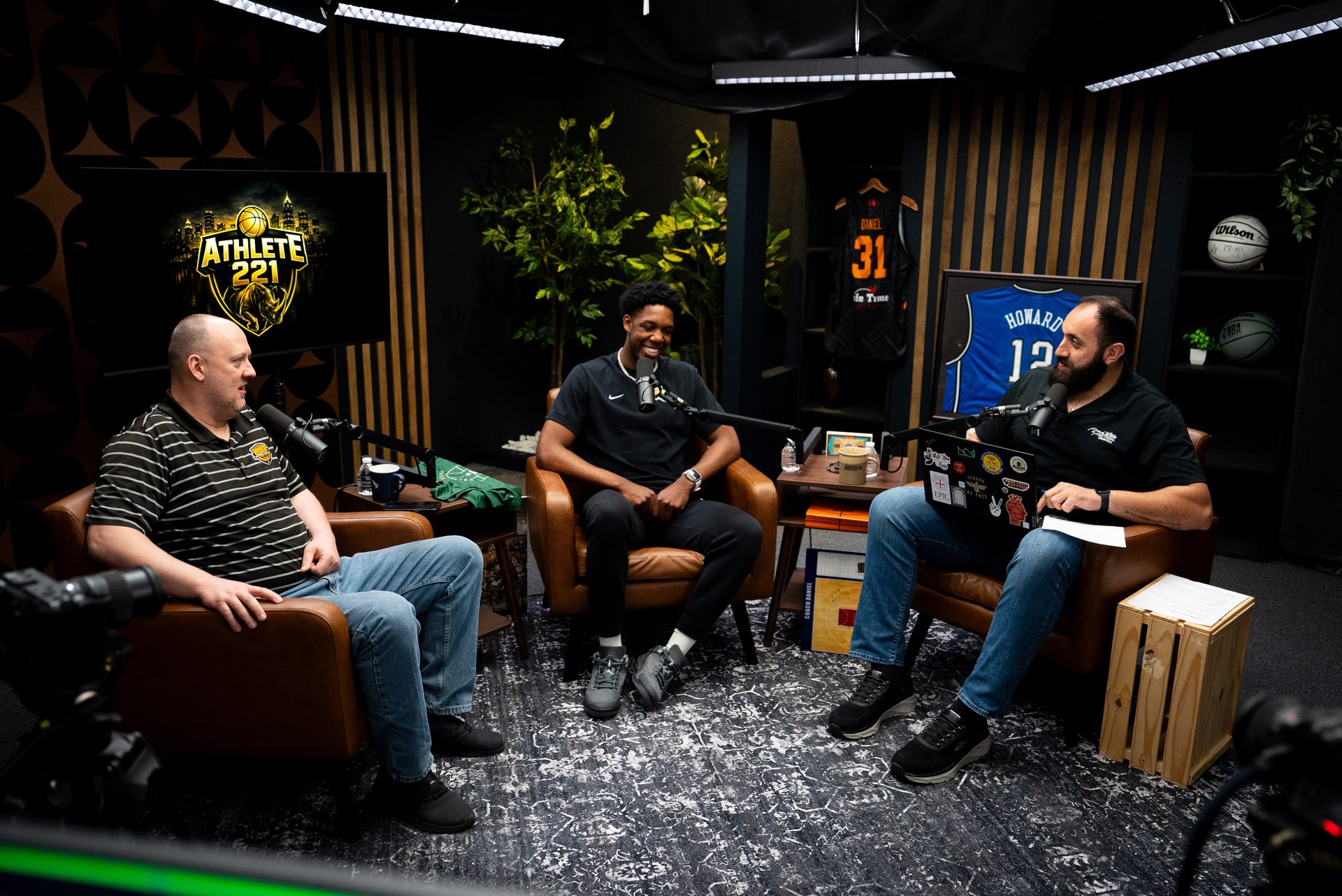
One of the reasons Dayton businesses drive to Cincinnati to record is the output math. A full-day batch recording session at CPS typically produces four to six full-length episodes, which is a quarter of content for a biweekly show. From those episodes, the clip team pulls 20 to 40 short-form clips for LinkedIn, YouTube Shorts, and Instagram. Transcripts, show notes, and thumbnails are part of the same production run.
For a team that was previously trying to record and produce one episode per week on their own, this changes the operational model entirely. You show up, you record, you leave. CPS handles the rest — camera, audio, lighting, production support, and post-production coordination. The video podcasting services page has more on what a full production engagement includes.
The content output from one session also covers formats beyond the podcast itself. Many Dayton clients use the same recording day to capture webinar content, course modules, or training material — turning the drive into a multi-format production day. That is especially useful for professional services firms, consultancies, and B2B teams with an education or training component.
If your organization produces webinars or training content in addition to podcast episodes, it is worth asking whether a combined session makes sense. The webinar production services and course creation studio at CPS are designed to run in the same facility, same day.
The Cincinnati Business Podcast is a working example of what consistent batch production looks like in this region. The Cincinnati Business Podcast has been produced at CPS and gives a clear picture of the format, production quality, and content depth that is achievable for a regional B2B show.
Common Video Podcast Strategy Mistakes
These are the patterns that show up repeatedly in teams that start strong and fade out before the show builds real traction.
Treating each episode as one-off content. An episode is not a standalone piece — it is a module in a growing library. Teams that think episodically end up with a scattered archive that does not reinforce a clear positioning. Teams that think in terms of a library plan episode topics so they build on each other and create internal linking opportunities.
Starting with gear instead of positioning. The camera does not matter if the audience and topic are unclear. Investing in a production setup before you know what you are making and who it is for is the most expensive way to figure out that the positioning was wrong.
Recording without a clip strategy built in. If you are not thinking about clips during the recording session, you will miss the moments that make the best short-form content. A good clip strategy starts before you walk into the studio — knowing what soundbites you want to create and engineering the conversation to produce them.
Publishing inconsistently and calling it a podcast strategy. Consistency is the actual product. The algorithm rewards it. The audience expects it. A show that publishes four episodes, disappears for two months, and then releases two more is not a podcast — it is a collection of recordings. The bar for a strategy is a system that makes consistency the default, not the goal you are always chasing.
If your team is based in Dayton or anywhere in the Greater Cincinnati region and you are evaluating whether a video podcast belongs in your content plan, the right first step is a conversation. Book a Discovery Call and we will talk through your audience, your format options, and what a realistic production system looks like for your team.
Frequently Asked Questions
Do I need a studio to build a video podcast strategy for my Dayton business?
You do not need to own a studio. Most Dayton businesses that produce video podcasts use a rented professional studio, which gives them 4K cameras, acoustic treatment, lighting, and on-site production support without the capital cost. CPS is about 60 miles from Dayton and Dayton clients typically record a full quarter of content in a single day.
How often should a Dayton business publish video podcast episodes?
Biweekly — every two weeks — is a practical starting cadence for most B2B teams. It is consistent enough to build audience familiarity without requiring weekly recording sessions. Batch recording two to four episodes in a single studio session makes that cadence much easier to sustain.
How do I get guests for a business podcast in Dayton?
Start with clients, referral partners, and vendors who already trust you. A strong initial guest list is usually in your existing network — LinkedIn connections, chamber contacts, industry peers. Once you have four to six published episodes, outbound guest recruitment becomes significantly easier because you have social proof to point to.
How much content can one recording session generate for a Dayton business?
A full-day recording session at CPS typically produces four to six full-length episodes and 20 to 40 short-form video clips, plus transcripts, show notes, and thumbnails. For a Dayton business, that is often an entire quarter of content from a single drive to Cincinnati.
When does a video podcast strategy start paying off?
Most B2B teams see meaningful audience growth and inbound interest between episodes 20 and 40 — typically six to twelve months of consistent publishing. The compounding effect of a content library is the actual mechanism: every episode adds to a searchable, shareable archive that works without additional promotion spend.
The Right Foundation Makes the Difference
A video podcast strategy is not complicated, but it does require getting the fundamentals right before you start recording. Audience clarity, a repeatable format, a production system that removes friction, and a distribution plan tied to where your buyers actually spend time — those four things, done well, are what separate a show that builds pipeline from one that fades out after ten episodes.
For Dayton businesses, the logistics have never been easier. Batch recording at a professional studio close enough for a day trip, with full production support on-site, means the operational barrier is gone. What remains is the strategy — and that is worth thinking through carefully before you book your first session.
If you are ready to figure out what your video podcast strategy should look like, book a Discovery Call with the CPS team. Or if you want to validate the idea first, start with our podcast idea research service — it is built specifically for teams that want to get the positioning right before they invest in production. You can also contact the CPS team directly with questions.