
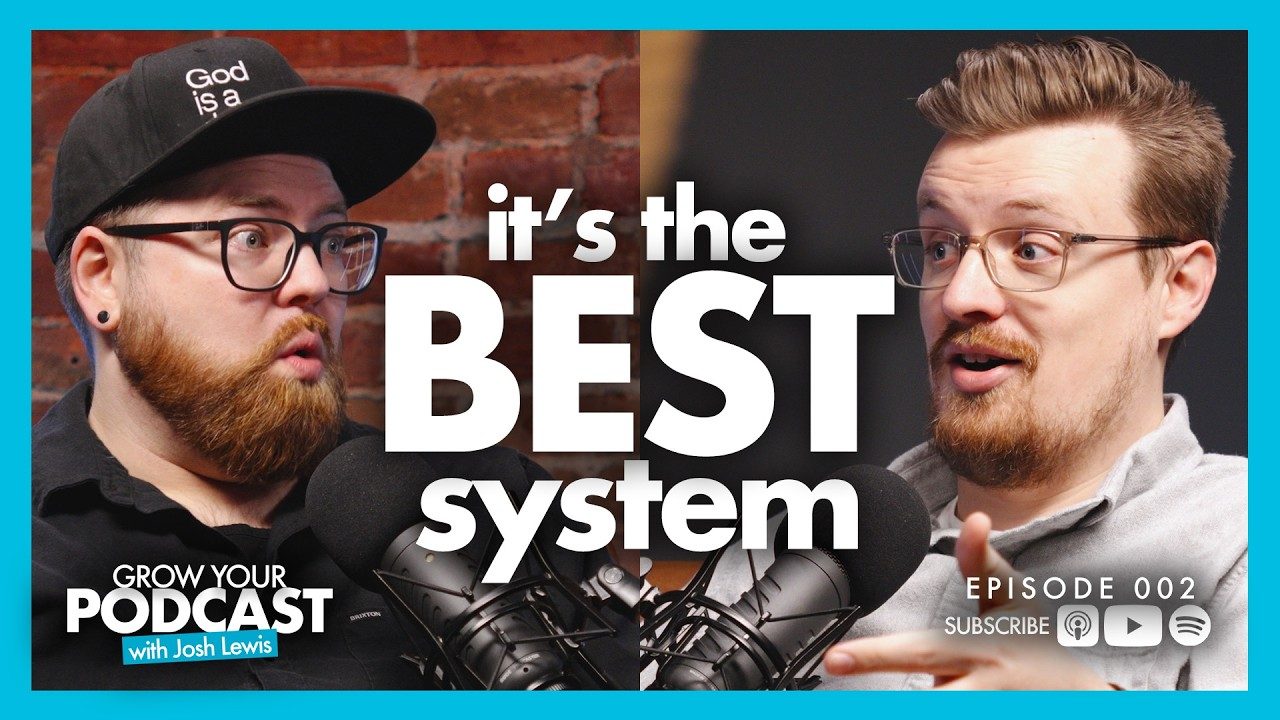
Trust Is the Secret Weapon of Video Podcasting
Most businesses approach video podcasting like a content project. This episode frames it correctly: it’s a trust system. When trust goes up, sales cycles shorten, referrals increase, and your content stops feeling like “marketing” and starts feeling like credibility you can compound.
Trust is the multiplier in video podcasting—because long-form, face-to-face content lets your market feel your expertise, not just read it.
Trust is the secret weapon of video podcasting because it compresses the time it takes for a buyer to believe you’re credible. A consistent, conversation-based show proves competence, reveals how you think, and reduces perceived risk—especially for high-ticket B2B services. The win isn’t views; it’s the confidence your prospects build before they ever talk to you, which increases conversions across your entire funnel.
Watch the episode here:
Title: Why TRUST is the SECRET WEAPON of Video Podcasting | #GrowYourPodcast Ep. 2
If you want to build this as a repeatable business asset (not a one-off recording), start with a book a discovery call so we can map your show to your pipeline.
What “trust” actually means in video podcasting
Trust isn’t vibes. In B2B, trust is the buyer’s belief that:
you understand their world,
you can execute consistently,
and working with you won’t create headaches.
Podcasting earns trust because it’s a format where your audience hears your reasoning, your constraints, and your standards. Research consistently shows podcasts are perceived as a more trustworthy environment than many other channels, which matters when you’re trying to move a real decision-maker—not chase casual attention.
If you’re building a show for business outcomes, anchor it in a clear offer and format—then support it with the right production workflow. That’s what our video podcasting services are designed to do.
The three trust levers you can control immediately
1) Consistency beats intensity
Trust compounds when your show feels stable: same release rhythm, same level of clarity, same audio/video quality. Consistency signals operational maturity. The opposite—random releases, constantly changing formats, or uneven quality—signals “we’ll be hard to work with.”
If you need help locking the format before you commit, use our Podcast Idea Research tool to validate positioning, audience, and episode angles.
2) “Real” wins: presence, tone, and specificity
Video adds an unfair advantage: people can read confidence, clarity, and sincerity faster than they can from text. But that only works if you’re not performing. The best business podcasts feel like a focused conversation—specific examples, clear opinions, and practical next steps.
This is also why hybrid consumption is rising (people start watching, then keep listening). Your job is to be clear in either mode.
3) Production quality is not about being fancy—it’s about reducing friction
Overproduced can feel fake. Underproduced feels risky. The trust target is “effortless to consume.” Clean audio, stable lighting, good framing, and a calm room communicate professionalism without trying too hard.
If your team wants to multiply output without living in editing timelines, pair long-form with a repeatable short-form workflow. Our short-form recording sessions are built for that “one session → many assets” model.
A practical trust-building episode structure you can steal
Here’s a structure that builds credibility without sounding scripted:
Open: who it’s for + the problem you’re solving (not your bio).
Middle: one strong viewpoint + a real example + what you’d do differently next time.
Close: the decision criteria your buyer should use (even if they don’t pick you).
If you want your team to run this like a system—topics, guest strategy, repurposing, and distribution—this is exactly what podcast strategy consulting covers.
The trust-to-revenue connection (what most brands miss)
You don’t need a massive audience for a podcast to pay off. You need the right audience to believe you’re the safe choice. Podcasting supports that because it creates:
pre-sold conversations (prospects already “get” how you think),
warmer referrals (people share you because you sound credible),
and higher-performing sales content (your best objections get answered publicly).
Video Podcasting may not be your only form of sales video. You might also need to lean into webinars and training. If you’re ready to convert trust into a clearer offer, webinar production and course creation are natural extensions of a strong show.
Common mistakes that quietly erode trust
Most trust issues don’t come from what you say—they come from avoidable signals:
Launching without a clear “who this is for,” so episodes drift.
Treating guests like content props instead of real conversations.
Chasing clips that sound clever but remove the context that made you credible.
Inconsistent audio (people interpret it as “if this is sloppy, what else is?”).
No clear next step for the viewer who’s ready now.
If you need examples and templates to tighten this up, start in our Resources hub.
If you’re a B2B team in Cincinnati/NKY, trust is a local competitive advantage because your buyers can choose from plenty of “good on paper” vendors—what wins is the team that feels credible, stable, and easy to work with. A podcast studio in Cincinnati lets you produce that trust signal consistently without adding operational drag to your week.
FAQs
Do people really trust podcasts more than social media?
Often, yes—podcasts tend to score higher on trust and ad recall than many other channels because the format feels more authentic and context-rich. That’s why podcasting works so well for high-consideration B2B decisions where buyers want to understand how you think, not just what you claim.
What if I don’t want to sound “salesy” on a business podcast?
You shouldn’t. Trust comes from clarity, not pitching. Teach your buyer how to evaluate the problem, share real examples, and give decision criteria. The call-to-action can be simple: “If you want help implementing this, here’s the next step.” That approach preserves credibility while still generating pipeline.
How many episodes do I need before trust turns into leads?
There’s no magic number, but trust builds faster when your format is consistent and your topics match real buyer questions. You’re aiming for compounding credibility: a library that answers objections, demonstrates expertise, and makes prospects feel like they already know you before they reach out.
Conclusion
Trust is the asset. Video podcasting is the vehicle. When you build the show like a system—consistent, clear, and easy to consume—you stop renting attention and start compounding credibility.
If you want this produced in a calm, professional workflow at a Cincinnati video podcast studio, the simplest next step is to schedule a discovery call. If you already know you want to move forward and need logistics, go ahead and contact Cincinnati Podcast Studio.