Short-Form Video Studio Cincinnati: What Changes When You Shoot in a Pro Space
Why Most Business Short-Form Video Underperforms — and How a Dedicated Studio Fixes It
Most business short-form video doesn't fail because the ideas are bad. It fails because the production environment wasn't built for it. Conference room lighting, laptop webcams, and echo-prone offices produce clips that look self-conscious on any feed — and the algorithm treats low-quality production as a signal to bury the content before it has a chance.
A short-form video studio changes that equation. Purpose-built for clip production, it removes every technical variable that works against you so the only thing left is the message.
If you're a B2B team in Cincinnati trying to build a consistent short-form presence, here's what a dedicated studio actually gives you — and why the environment matters more than most teams realize.
Quick Answer
A short-form video studio provides the professional lighting, broadcast-quality audio, camera framing, and on-site production support that makeshift office or home setups simply can't match. For Cincinnati B2B teams, recording in a dedicated studio means clips look credible from the first frame — which is the only frame that matters when someone is scrolling.
What Is a Short-Form Video Studio?
A short-form video studio is a production space designed specifically for creating clips — the 30-to-90-second video segments that perform on LinkedIn, Instagram Reels, YouTube Shorts, and similar platforms. It's distinct from a traditional audio-only recording studio, and it's purpose-built in ways that a general office space or conference room isn't.
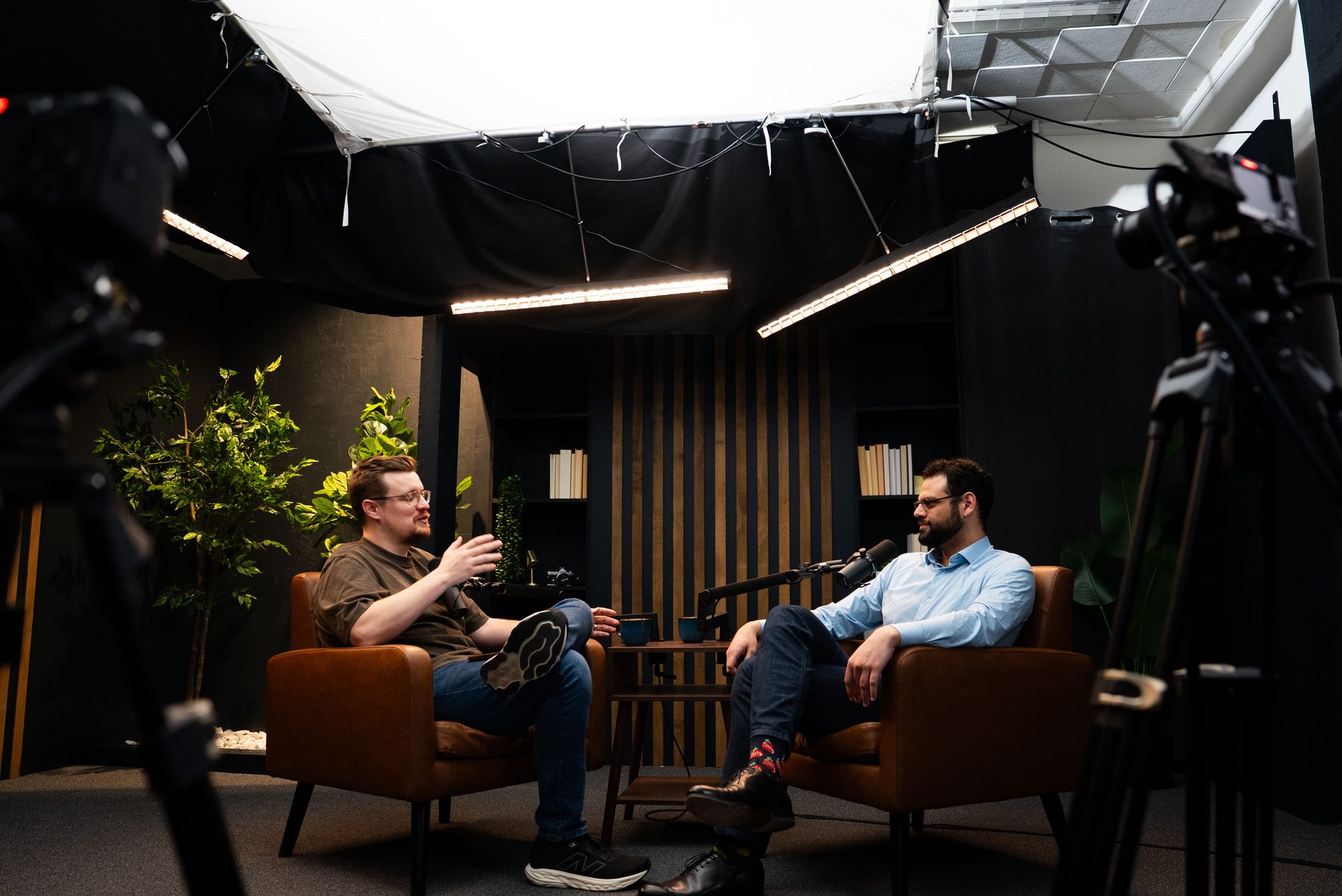
The key elements: consistent, professional lighting that holds the same look across every session; broadcast-quality cameras and lenses calibrated for close-up talking-head formats; acoustic treatment that keeps audio clean without reverb or echo; and a production team on-site to manage angles, timing, and playback in real time.
At Cincinnati Podcast Studio's short-form video production service, this isn't a separate setup — it's built into every session. You come in, you talk, and the studio handles the technical execution. The clips are identified and extracted from the recorded session as part of the workflow.
This matters because short-form video is not casual content. It's designed to compete for attention in a feed where every viewer has already developed a subconscious quality threshold. When a clip looks professional, that threshold is crossed before the viewer even processes the words.
Why Makeshift Setups Underperform for Short-Form Video
The problem with recording short-form video in a conference room or home office isn't effort — it's that the environment is working against you. Three things consistently kill short-form performance before the content even gets a chance to land.
Background inconsistency. When your background changes from clip to clip — different rooms, different times of day, different natural light — there's no visual brand continuity. Viewers notice inconsistency before they notice content. A studio background is controlled, stable, and intentional every single time.
Amateur audio. Bad audio is the fastest credibility killer in video. Reverb in a hard-floored conference room, HVAC noise, or laptop microphone buzz signals to the viewer that this content was made casually — even if the idea is excellent. Acoustic treatment and broadcast-quality microphones eliminate this entirely.
Bad lighting. Overhead office fluorescents create harsh shadows. Windows create exposure problems that shift throughout the day. Underlit setups make speakers look tired. A professional lighting rig with consistent color temperature makes the subject look sharp, awake, and authoritative from the first frame.
Each of these problems compounds. A clip with inconsistent background, muddy audio, and flat lighting isn't just less engaging — it actively undermines the message. The production environment is a signal. A poor signal tells the viewer this content isn't worth their attention.
If your team has been creating short-form video and struggling with reach or engagement, the content strategy may be fine. The production environment is the more likely culprit. Content strategy consulting at CPS can help you diagnose whether it's a production problem, a distribution problem, or a positioning problem — and solve the right one.
What a Professional Short-Form Video Studio Includes
When a short-form video studio is purpose-built for this kind of production, the difference isn't subtle. Here's what a professional setup actually includes — and what each element does for your content.
Broadcast-quality cameras and lenses. 4K resolution with cinema-grade glass captures detail and depth that separates professional clips from phone recordings. The focal length and framing are set for talking-head formats — tight on the subject, clean background, no distortion.
Professional lighting rigs. Consistent color temperature, soft diffusion panels, and multiple-point lighting setups eliminate shadows and make the subject look polished without looking over-produced. The same lighting profile is repeatable across every session, so your clips have visual brand consistency even when recorded weeks apart.
Acoustic panels and sound isolation. A treated room eliminates room reverb and outside noise, which means the audio captured is clean and broadcast-ready. Combined with professional microphones — lavalier and overhead options depending on the session — the result is audio that competes with anything your audience sees from major media brands.
On-site production team. This is the part that most teams underestimate. Having a production team in the room during recording means someone is watching the camera feed, managing audio levels, flagging moments worth keeping, and making real-time adjustments. You don't have to split your attention between presenting and producing. You just show up and talk.
The CPS team has run hundreds of these sessions. The process is efficient — most clients are surprised how much they get done in a single session, and how little they have to think about the technical side while they're in the room.
Who Benefits Most From a Dedicated Short-Form Studio
Short-form video isn't one-size-fits-all, but there are four types of B2B clients who consistently get outsized returns from a professional studio environment.
Founders and executives building a personal brand on LinkedIn. The authority transfer from a professional setting is immediate. When a founder is consistently showing up on LinkedIn in a clean, well-lit studio environment — not a cluttered home office — the brand equity compounds quickly. Viewers associate production quality with credibility. That association is worth more than any follower count metric.
B2B marketing teams managing ongoing clip production. Teams that need 10–20 clips per month can't afford to spend hours per clip in post-production fixing bad audio or re-shooting because the background shifted. A studio session eliminates those variables and delivers production-ready material that marketing can actually work with on a consistent timeline.
Consultants and professional service firms building visibility. The Cincinnati Business Podcast is built on this model — conversations with founders, operators, and advisors who want to be known in the market before a prospect ever reaches out. Short-form clips extracted from those conversations extend the reach of each session beyond the podcast audience.
Organizations repurposing long-form content. A video podcast production session or a course recording day can double as a short-form content batch. The same hour of recording that produces a full podcast episode also produces 10–14 usable short-form clips. That's the compounding math that makes studio time efficient — you're not creating more content, you're multiplying what you already created.
If you're based in Cincinnati, Northern Kentucky, or the Greater Cincinnati area and you're trying to figure out which production model fits your goals, a Discovery Call is the right first step. We'll tell you exactly what a session produces and whether it matches what you're trying to build.
How to Get 10–20 Clips From a Single Cincinnati Studio Session
The math on short-form video production in a studio environment is more favorable than most clients expect. Here's how the numbers typically work at CPS.
Start with the podcast or long-form conversation. A 45-to-60-minute recorded episode typically yields 8–14 natural clip moments — those moments where someone says something concise, quotable, or counterintuitive. The production team flags these in real time so nothing gets missed in post.
Add standalone short-form segments. Before or after the main recording, clients can record 4–6 standalone short-form segments. These are purpose-built for clips — a specific question, a framework explanation, a myth-busting take. They're filmed with short-form framing from the start, which means less post-production work to get them clip-ready.
Let the production team handle identification and extraction. The CPS production workflow includes clip identification as part of the session output. Clients don't have to watch hours of footage to find the good moments — that's handled as part of the production process.
The result: one session, one month of content. For most B2B clients, a single CPS session produces enough short-form clips to maintain a consistent 3-to-4-clips-per-week posting cadence for three to four weeks. That's the Presence System model — not more content sessions, but more output per session.
For teams exploring what this looks like in practice, the CPS resources hub has additional context on the production model and what to expect from a first session.
Frequently Asked Questions
What's the difference between a short-form video studio and a podcast studio?
A short-form video studio is optimized for vertical and square clips — tight framing, punchy lighting, and fast setups for standalone segments. A podcast studio is designed for longer-form conversations with multiple guests on camera. At Cincinnati Podcast Studio, both happen in the same space: a single session can produce a full podcast episode and a full batch of standalone short-form clips.
How many short-form videos can I film in one day at a studio?
Most clients leave a CPS session with 10–20 usable short-form clips. A 60-minute recorded conversation typically yields 8–14 natural clip moments. If you add standalone short-form segments at the start or end of a session, you can push that number higher.
Do I need a script for short-form videos recorded in a studio?
Not necessarily. Loose talking points tend to perform better than word-for-word scripts because they sound natural. A teleprompter option is available if you prefer structure. The CPS team can help you plan the format before you arrive.
What platforms does short-form video work best for B2B?
LinkedIn is the primary platform for most Cincinnati B2B teams. YouTube Shorts and Instagram Reels are secondary. The clips produced at a professional studio are formatted for all three — the quality that works on LinkedIn also works everywhere else.
How much does it cost to record short-form video at a professional studio?
Pricing varies by session type, clip volume, and production support level. Cincinnati Podcast Studio doesn't publish rates publicly — the right starting point is a Discovery Call where we can match a production model to your actual content goals.
What should I bring to a short-form video studio session?
Bring talking points or a rough content outline, dressed appropriately for camera (solid colors, avoid busy patterns), and ideally a list of topics or questions you want to cover. The CPS team handles the rest — setup, lighting, recording, and clip identification.
Ready to Build a Short-Form Video Presence That Actually Works?
The gap between business short-form video that gets ignored and short-form video that builds authority isn't the idea — it's the production environment. A dedicated short-form video studio in Cincinnati removes the technical friction that's been working against your content.
Cincinnati Podcast Studio runs short-form video production for B2B founders, executives, and marketing teams across Greater Cincinnati and Northern Kentucky. One session. One month of content. No wasted takes on bad lighting or echo-prone conference rooms.
Book a Discovery Call to see what a session produces and whether it's the right fit for your content goals. Or get in touch with any questions about how the process works.
If you're exploring content formats beyond short-form video, studio rental options are available for teams that want flexible access without a full production package.