
7 Podcasting Lessons I’d Give Any Business Leader Before They Hit Record
7 Podcasting Lessons I’d Give Any Business Leader Before They Hit Record
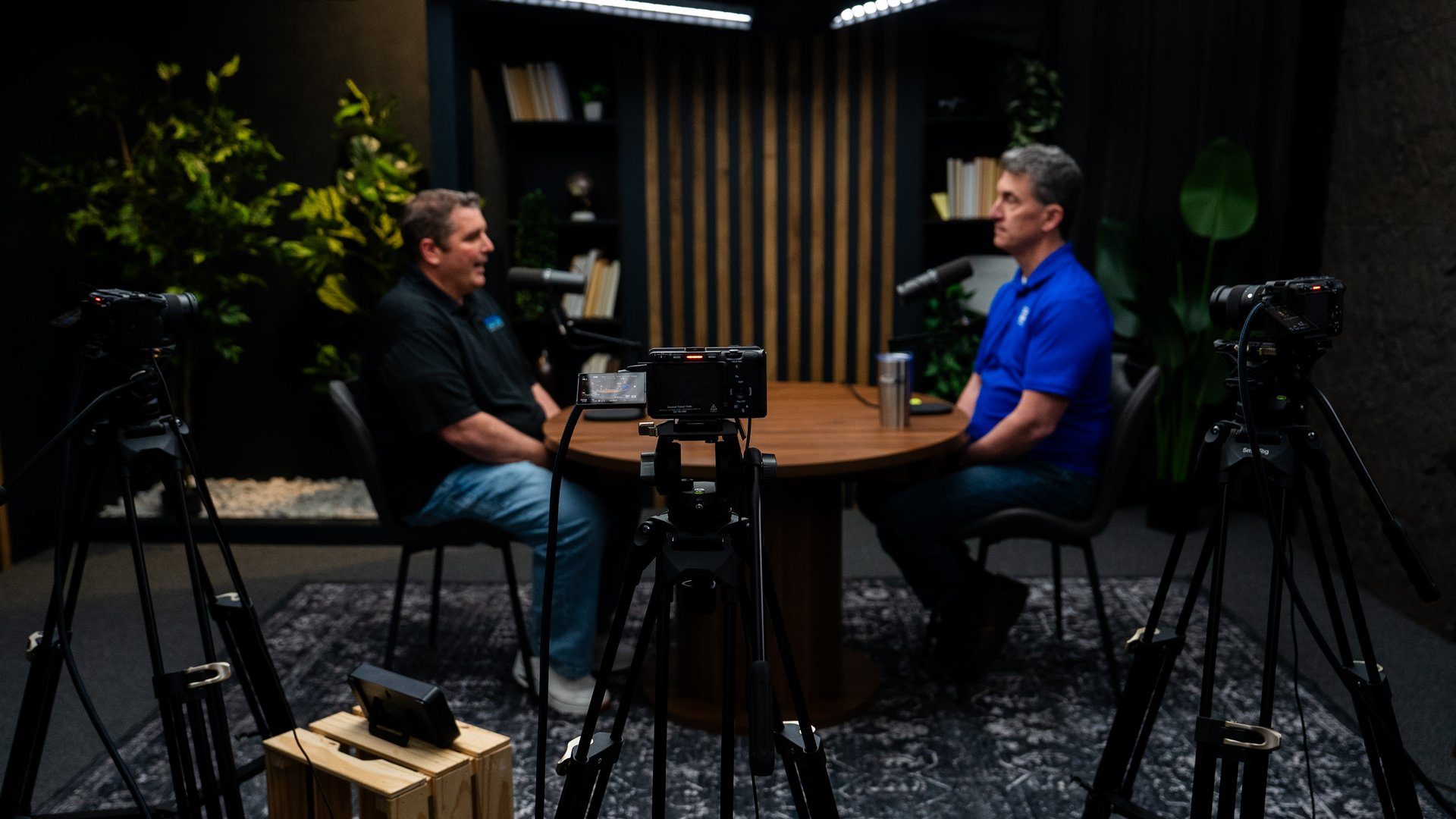
When we produced this episode on the seven lessons business leaders need to know about podcasting, it felt like the kind of conversation more companies should hear before they start a show.
Because most business leaders don’t struggle with having something valuable to say. They struggle with turning that value into a repeatable content system that builds trust, saves time, and supports real business goals.
A podcast can do that, but only when it’s built with the right expectations from the beginning.
A business podcast works best when it’s treated as a credibility system, not just a content channel. The strongest shows help leaders clarify their point of view, create reusable assets, build trust before sales calls, and make expertise easier for prospects to understand.
Quick answer
Business leaders should know that podcasting is not about chasing attention. It’s about creating trust at scale. A strong podcast gives prospects a way to hear how you think, understand your expertise, and become familiar with your company before they ever book a call. The best shows are focused, repeatable, strategic, and easy for the leader to sustain.
Before your team starts recording, it’s worth shaping the business case, audience, and format through podcast strategy consulting. That work makes production smoother and helps the show support the business instead of becoming another disconnected marketing task.
Lesson 1: A podcast is not the strategy
This is one of the first things I’d tell any business leader.
The podcast itself is not the strategy. It’s the vehicle.
The strategy is what you want the show to accomplish. Are you trying to build trust with prospects? Strengthen referral relationships? Create sales enablement content? Recruit talent? Educate your market? Stay top of mind with existing clients?
Those are different goals, and they should shape the show differently.
When we produce a business podcast, we’re not just thinking about cameras and microphones. We’re thinking about what the episode needs to do after it’s recorded. A strong episode should have a job inside the business.
That’s the difference between creating content and building an asset.
Lesson 2: Your audience does not need another generic conversation
A lot of companies start too broad.
They want to talk about leadership, entrepreneurship, marketing, culture, growth, or success. Those topics can work, but only when they’re made specific enough to matter.
The audience should feel like the episode was created for a real problem they recognize.
That’s why I like starting with buyer questions. What do prospects ask before they trust you? What objections come up in sales conversations? What do people misunderstand about your industry? What mistakes are they making before they reach out?
Those questions make better episodes because they’re already connected to demand.
If your team is still deciding what the show should be about, Podcast Idea Research can help identify angles that are more likely to connect with the right audience.
Lesson 3: The best business podcasts build trust before the first call
This is the part leaders tend to underestimate.
A podcast gives someone time with your thinking before they meet you. They hear your voice. They understand your point of view. They get a sense of how you explain problems, how you respond to ideas, and how you make decisions.
That familiarity matters.
By the time someone books a call, they may already feel like they know you. That changes the sales conversation. You’re not starting cold. You’re building on context that already exists.
For businesses that sell expertise, trust, or judgment, that’s powerful.
A polished website can explain what you do. A good podcast can show why someone should trust you to do it.
Lesson 4: Production should remove friction, not create it
Most business leaders are already busy.
If the podcast process feels complicated, it won’t last. That’s why production needs to be designed around removing friction.
The leader should not have to worry about camera settings, audio routing, lighting, file management, guest comfort, or what happens after the recording. They should be able to walk in, sit down, and have a strong conversation.
That’s the value of professional podcast production. It creates a repeatable environment where the leader can stay focused on insight instead of logistics.
The easier the process is, the more consistent the show becomes.
And consistency is where trust starts to compound.
Lesson 5: The episode is only the starting point
A lot of teams think the finished episode is the final deliverable.
It’s not.
The episode is the source material.
A strong recording can become short-form video clips, blog content, social posts, email topics, internal training, sales follow-up material, and future webinar ideas. That’s where the business value multiplies.
This matters because most leaders don’t need more one-off content. They need leverage.
One focused conversation can feed multiple channels when it’s planned correctly. But that only happens when the production team is thinking beyond the full-length episode.
The best podcast systems are built with repurposing in mind before the cameras turn on.
Lesson 6: Your show needs a clear point of view
Information alone is not enough.
People can get information anywhere. What they can’t get everywhere is your judgment.
That’s what makes a business podcast worth watching. The audience wants to know what you believe, what you’ve seen, what you recommend, and what you would avoid.
A clear point of view makes the show sharper. It gives the audience something to remember. It also makes the content more useful for sales because prospects can hear how you think before they talk with you.
This applies beyond podcasting too. A strong webinar recording or course creation project works for the same reason. The format matters, but the real value comes from making expertise easier to understand.
Lesson 7: The goal is not to become a media company
Business leaders do not need to turn themselves into full-time content creators.
That’s not the point.
The goal is to create a practical communication system that supports the business. A podcast should help the right people understand your value faster. It should make your expertise more visible. It should give your team content they can use in real conversations.
That’s why I like podcasting for B2B companies. It respects the fact that trust takes time, but it gives you a way to build that trust more efficiently.
You’re not trying to entertain everyone.
You’re trying to become more familiar, credible, and useful to the people who already need what you do.
Common mistakes business leaders make with podcasting
Mistake 1: Starting with equipment instead of strategy
The microphone is not the hard part.
The harder question is why the show should exist. If the audience, purpose, and content pillars are unclear, better gear will not fix the problem. Start with the business outcome, then build the production around it.
Mistake 2: Making the show too dependent on one person’s energy
A podcast should not require heroic effort every time.
If the show depends on a leader constantly inventing topics, chasing guests, and managing production, it becomes hard to sustain. The better approach is to create a repeatable format, a clear production rhythm, and a backlog of useful topics.
Mistake 3: Treating every episode like a standalone project
A podcast should build over time.
Each episode should connect to a larger content strategy. That might include sales objections, industry education, client questions, local authority, or thought leadership. When every episode is disconnected, the show becomes harder to position and harder to repurpose.
Mistake 4: Trying to sell too hard
The fastest way to weaken a business podcast is to make it feel like a sales pitch.
The audience should leave with value. They should understand something more clearly than they did before. When the episode is genuinely useful, credibility follows naturally.
For the locals
If you’re a B2B team in Cincinnati/NKY, this matters because local reputation still carries weight. Buyers often want to know who they’re dealing with before they commit to a conversation, referral, or partnership.
A Cincinnati video podcast studio gives business leaders a professional environment to build that familiarity without having to manage the production process themselves.
FAQs
Why should a business leader start a podcast?
A business leader should start a podcast when they need a repeatable way to build trust, explain their expertise, and stay visible with prospects, clients, referral partners, or their local market. The best business podcasts support real goals like sales education, brand authority, recruiting, and relationship building.
What makes a business podcast different from a regular podcast?
A business podcast should be tied to a clear business purpose. It may still be conversational and human, but the topics, guests, clips, and calls to action should support the company’s positioning. The goal is not just audience growth. The goal is trust, authority, and useful visibility.
How often should a company record podcast episodes?
The right recording schedule depends on the team’s goals and capacity. N/A for a universal answer. Many businesses benefit from batching episodes because it makes production easier to sustain and creates a more predictable content pipeline.
Do business podcasts need video?
Video is strongly recommended for most business podcasts because it creates more trust and gives the team more ways to repurpose the conversation. A video podcast can become a full YouTube episode, short-form clips, website content, social posts, and sales follow-up material.
What should we talk about on our first few episodes?
Start with the questions your buyers already ask. The first few episodes should clarify what you believe, what problems you solve, what mistakes buyers should avoid, and what your audience needs to understand before making a decision. That creates a stronger foundation than choosing random trending topics.
Conclusion: the best podcast is the one your business can actually use
Producing this episode was a good reminder that podcasting works best when it’s practical.
The goal is not to make content for the sake of content. The goal is to create conversations your business can use to build trust, educate prospects, strengthen relationships, and make your expertise easier to understand.
For business leaders, that starts before the recording.
It starts with knowing who the show is for, what trust gap it needs to close, and how each episode will support the business after it’s published.
To hear more conversations about how we think about podcasting, production, and business content, visit the Cincinnati Podcast Studio podcast.
And when you’re ready to build a podcast system that supports your business instead of adding more work to your plate, book a Discovery Call with Cincinnati Podcast Studio or contact Cincinnati Podcast Studio.