Podcast Studio vs. Video Production Studio: Key Differences
What's the Difference Between a Podcast Studio and a Video Production Studio?
If you've started researching where to record your next piece of content, you've probably noticed studios market themselves two different ways: "podcast studio" or "video production studio." The terms get used loosely, and plenty of facilities blur the line on purpose. But the two setups are built for different jobs, and picking the wrong one can mean paying for equipment and crew you don't need, or ending up in a room that can't deliver the look your project actually calls for.
Here's what separates them, how to tell which one your project needs, and why some studios are built to handle both without forcing you to choose a different vendor for each format.
In short: a podcast studio is optimized for repeatable, conversation-based recording. A video production studio is optimized for flexible, shot-by-shot video work. Knowing which one your content needs before you book saves time, money, and a lot of back-and-forth with a crew that isn't set up for what you're making.
Quick Answer
A podcast studio is built around conversation: fixed seating, close-up multi-camera angles, and audio tuned for dialogue. A video production studio is built for broader content: cycloramas or sets, lighting rigs that change by shoot, and camera setups suited to interviews, product video, or training content. Many facilities, including Cincinnati Podcast Studio, run both configurations under one roof, so the real question is which setup fits the content you're making.
The Core Difference: Conversation-First vs. Production-First
A podcast studio exists to make a conversation between two to four people look and sound great, repeatedly, with minimal setup time between sessions. Everything in the room is built around that one use case: cameras are positioned for natural eye lines, mics are dialed in for close dialogue, and the layout rarely changes week to week.
A video production studio exists to serve a much wider range of content: interviews, product demonstrations, training series, b-roll, and more. Nothing about the room is fixed in the same way. Lighting, backdrops, and camera blocking get reconfigured based on what's being shot that day.
That distinction matters more than the label on the door. A room marketed as a "studio" without specifying which kind can leave you guessing whether it's actually set up for your format.
How the Room Itself Is Built Differently
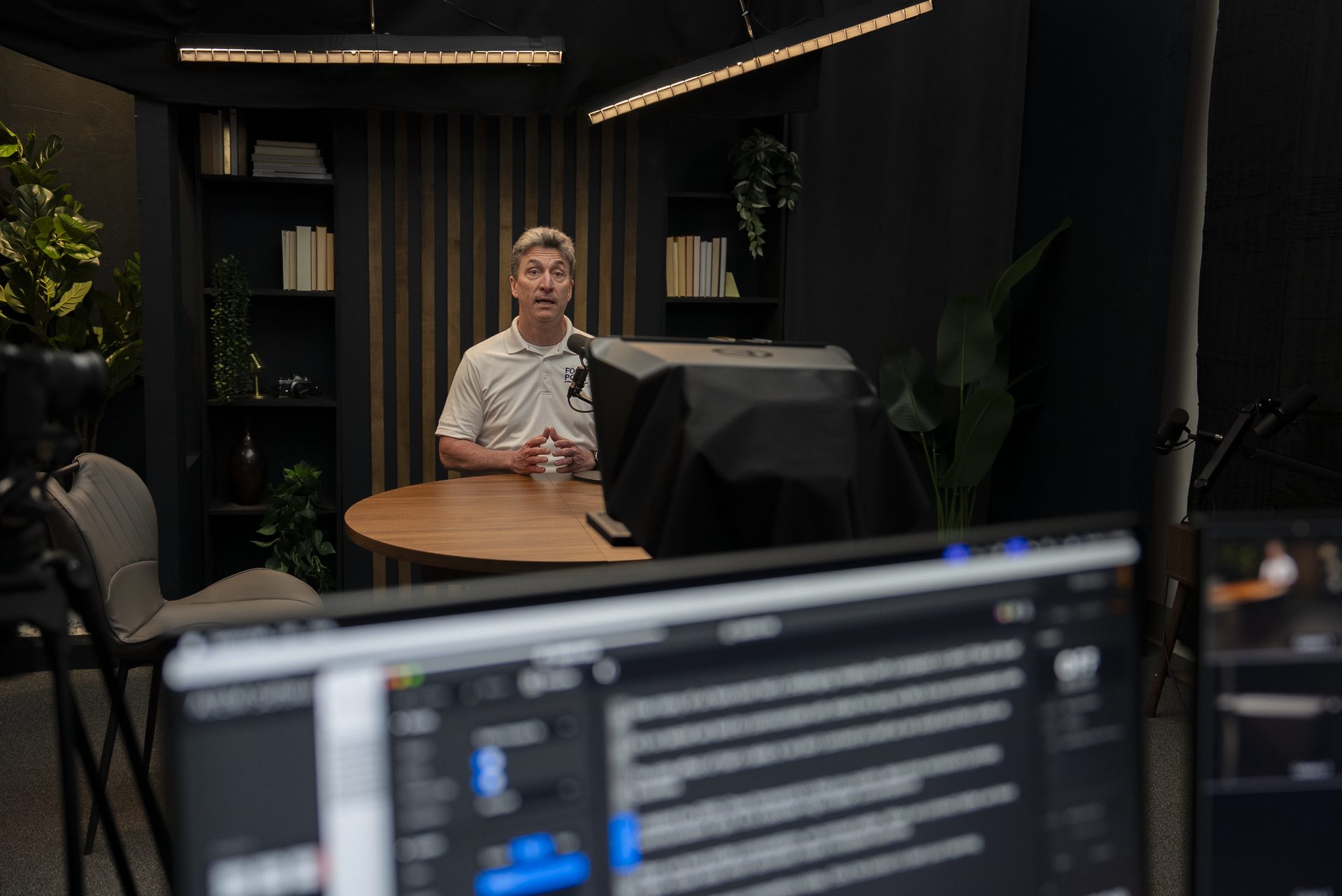
Podcast studios typically run a fixed multi-camera rig aimed at a consistent seating layout, with acoustic treatment tuned specifically for voice clarity. You walk in, sit down, and the room is already dialed in for conversation.
Production studios usually include a cyclorama or modular backdrop system, a lighting grid that gets reconfigured per shoot, and more open floor space to accommodate movement, multiple camera positions, or talent walking through a scene.
Audio handling differs too. Podcast rooms prioritize close-mic dialogue clarity above all else. Production studios often need to balance ambient sound, directional audio, and dialogue depending on the shot, which takes more technical judgment call by call.
Crew and Workflow Differences
Podcast sessions tend to run lean. A technical director manages a known, repeatable setup, which means less time spent on prep and more time spent actually recording. Episodes also move faster through editing since the format and camera angles stay consistent week to week.
Production shoots need more planning upfront. Shot lists, lighting changes, and multiple setups within a single session are normal, which means more crew coordination and a longer runway between booking and recording day. If you're producing course creation video content or a training series, expect this kind of structured planning to be part of the process, not an extra step.
Which One Do You Actually Need?
If your content is a recurring, conversation-based show, a podcast studio is the right fit. The repeatable setup is exactly what makes video podcasting production efficient week after week.
If your content is a single polished video, a training series, or anything requiring varied visuals and multiple setups, a production studio configuration makes more sense. The flexibility to change lighting and backdrop per shot matters more than a fixed conversational rig.
Hybrid formats land in between. Webinar production often needs the conversational clarity of a podcast setup combined with the lighting flexibility of a production studio, especially when a webinar includes multiple presenters or screen-share segments. The same is true for a lot of short-form video work pulled from longer sessions — the source recording needs to hold up whether it's getting cut into a 90-second clip or run in full.
Why Some Studios Do Both Well
A facility built to flex between a dialed-in podcast rig and a reconfigurable production setup gives teams more options without needing a second vendor for a different format. That matters most for B2B teams in Cincinnati and Northern Kentucky who are running a content calendar that mixes a recurring show with occasional one-off video projects — switching studios every time the format changes adds friction nobody has time for.
Cincinnati Podcast Studio runs both configurations, so clients don't have to choose a different vendor based on what they're recording that week. The real question to ask any studio before booking isn't "do you have cameras and lights" — it's whether the room's setup can actually change based on what you're filming, or whether it's one-size-fits-all.
Studios that specialize only in one format aren't wrong to do so — a dedicated podcast room can be excellent at exactly that. But if your content needs are mixed, a facility that handles both saves you from re-explaining your project to a new crew every time the format shifts. For teams weighing their options, external benchmarking from Descript's production research on studio setups echoes the same point: room design built around a single use case consistently outperforms a generic one-size-fits-all space.
Frequently Asked Questions
Can one studio handle both podcast recording and video production?
Yes, if it's built to flex. Look for a facility with a dedicated conversational setup plus a reconfigurable space for broader video work, rather than one fixed rig trying to do everything.
Is a podcast studio cheaper to rent than a video production studio?
Cost depends on crew, setup time, and equipment needed rather than the label. A simple two-person podcast session typically requires less setup than a multi-camera production shoot, which can affect pricing.
Do I need a video production studio for a webinar?
Usually a hybrid of both: the conversational clarity of a podcast setup with the lighting and camera flexibility of a production studio. Ask the studio how they handle webinar-specific needs.
What should I ask a studio before booking to make sure I get the right setup?
Ask whether their room configuration changes based on content type, what crew will be present, and whether they've produced the specific format you need before — not just whether they have cameras and lights.
Does a video production studio require more prep time than a podcast studio?
Generally yes. Multi-setup shoots need shot lists and lighting changes between scenes, while a podcast studio's repeatable rig means less prep per session.
Get the Right Setup for Your Next Project
Picking a studio shouldn't require guessing which format it's actually built for. If you're not sure whether your project needs a podcast setup, a production studio, or a hybrid of both, our team can help you figure it out before you book anything. Contact the CPS team with what you're trying to produce, or go ahead and schedule a Discovery Call to walk through your options. You can also browse episodes from the Cincinnati Business Podcast, recorded in our studio's conversational setup, to see the format in action, or explore consulting on your content setup if you're still mapping out your content strategy.