
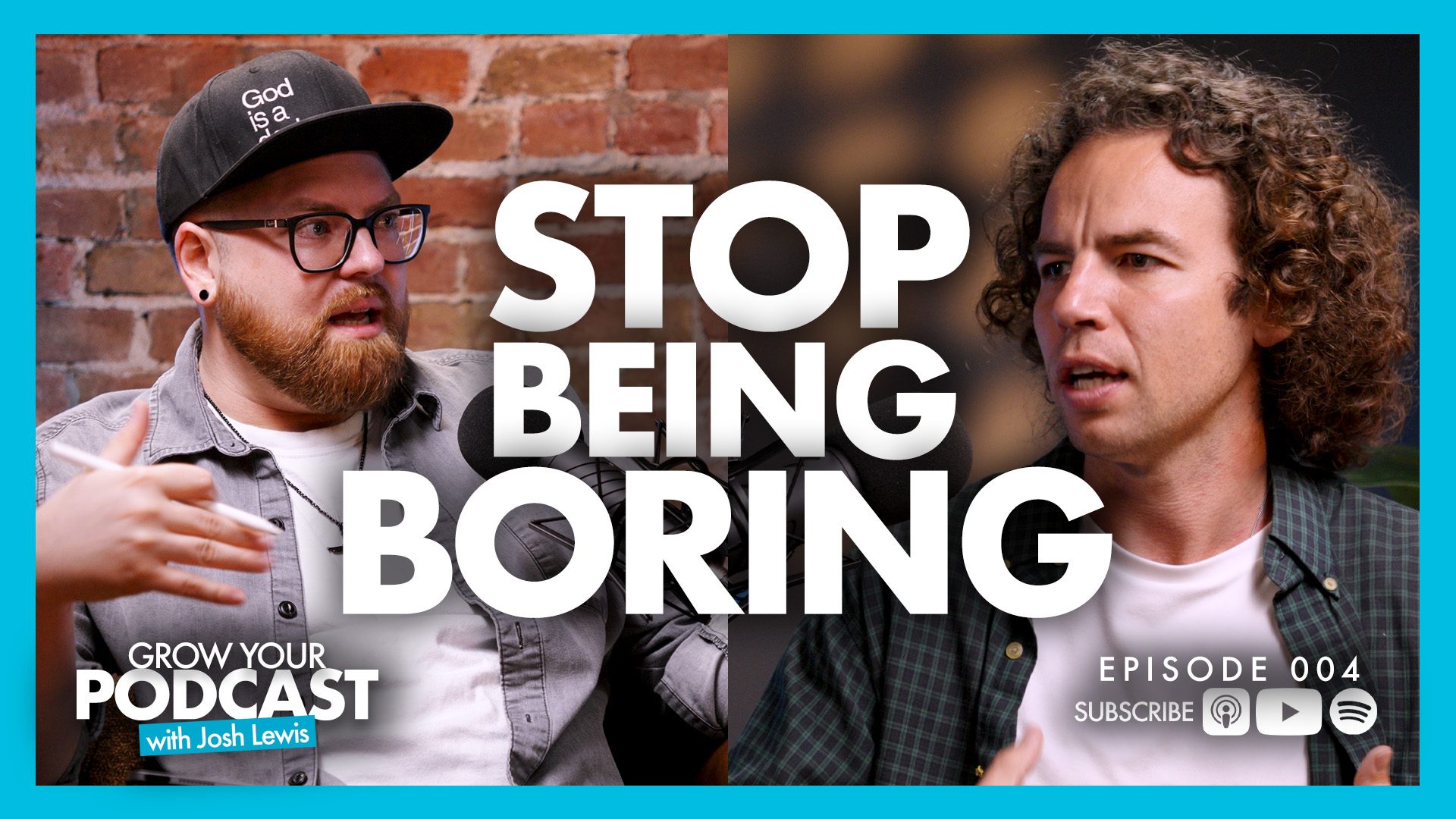
Are Your Podcast Interviews Boring? Journalist-Style Fixes
If your interviews feel “fine” but not memorable, it’s usually not your guest—it’s the structure. This episode tackles a problem most business podcasters run into: interviews that stay polite, surface-level, and instantly forgettable. The fix is simple and repeatable: prep with intent, ask cleaner questions, and pull real stories instead of generic opinions.
Better podcast interviews come from better constraints: clear audience intent, a tighter question style, and a story-first flow. When you guide guests into specific moments, decisions, and tradeoffs, the conversation gets sharper—and your content becomes easier to clip, publish, and use in sales.
Quick answer
To run better podcast interviews, stop collecting “thoughts” and start extracting “moments.” Prepare a one-page interview map, open with a specific tension (problem, decision, or bet), ask one clean question at a time, and follow up for examples, numbers, and turning points. Close with a practical takeaway and a clear next step for the listener.
Next step: If you want a tighter guest format (and a production workflow that makes this easy), book a studio tour + discovery call.
What this episode covers (and why it matters)
This episode is positioned around making interviews more engaging—specifically calling out “boring” podcast interviews and offering practical “hacks” from a former journalist (featuring Peter Kersting). The big idea: you don’t need louder energy—you need better questions and better follow-through.
In B2B, interview quality isn’t a creative preference. It directly impacts:
whether prospects trust you
whether clips get watched
whether sales can reuse the content
whether the show builds authority in your niche
If you’re still validating your show concept and guest strategy, start with Podcast Idea Research so your interview engine points at the right buyer.
The “journalist” approach that makes interviews actually listenable
1) Prep for outcomes, not trivia
Most hosts prep like this: “Tell me your background… now your business… now your advice…” That’s how you get a safe conversation.
Prep like a journalist instead:
What’s the most interesting decision this guest has made?
What’s the real tension they’ve lived through?
What did they believe early that turned out to be wrong?
What’s the “before/after” transformation the listener can learn from?
If you want help building a repeatable guest format your whole team can run, set up a call with us to do some Consulting.
2) Open with a hook that has stakes
A strong opening isn’t “Welcome back to the show.” It’s a concrete promise:
“Today we’re breaking down the decision that doubled pipeline… and what it cost.”
“Here’s the moment the strategy stopped working—and what changed next.”
Stakes create attention. Attention creates retention.
3) Ask one clean question at a time
If your question has three parts, your guest will answer none of them well.
Use this simple pattern:
One question
One follow-up
One example request
This makes the guest feel safe and makes the edit cleaner. Cleaner edits make better clips.
4) Follow up for specifics (the part most hosts skip)
When a guest says something like “We improved results,” your job is to slow down and pull the value out:
“What changed, specifically?”
“What did you stop doing?”
“What did you measure?”
“What would you do first if you had to repeat it?”
Those specifics become your episode title, your short-form clips, and your sales enablement snippets.
5 fixes for boring podcast interviews
Start with a tension (problem, bet, decision, or mistake)
Ask one clean question at a time
Follow up for examples, numbers, tradeoffs, and turning points
Cut generic “origin story” time and go deeper sooner
Close with a takeaway the listener can apply in 48 hours
A simple interview map you can copy/paste
Use this as a one-page structure for every guest interview:
1) Stakes opener (60–90 seconds)
What’s the real problem we’re solving today?
2) The “before” (3–5 minutes)
What was broken, unclear, or expensive?
3) The turning point (5–10 minutes)
What decision changed the trajectory?
4) The playbook (15–25 minutes)
3–5 moves the listener can repeat.
5) The tradeoffs (5 minutes)
What did this cost? What got worse before it got better?
6) The close (2 minutes)
Best next step + who this advice is for.
If you want this mapped to your actual sales process (so each episode supports revenue), start with Podcasting services or Consulting.
Common mistakes that make interviews feel flat
Mistake 1: Letting the guest stay in “expert mode”
Experts default to frameworks and platitudes. Your job is to pull them into lived experience: moments, decisions, mistakes, proof.
Mistake 2: Confusing “comfortable” with “good”
A great interview is respectful—but it still has tension. Tension comes from clear stakes and thoughtful follow-ups.
Mistake 3: Publishing the full episode but skipping distribution
If you don’t turn interviews into assets, you’re leaving value on the table. A high-quality conversation should fuel:
short clips
a written recap
a sales follow-up email
a webinar topic
If webinars are part of your funnel, pair interview insights with Webinar production. If you’re building enablement or training, consider Course Creation.
If you’re a B2B team in Greater Cincinnati or Northern Kentucky, interviews matter because trust travels through networks here. A consistent show recorded in a Cincinnati video podcast studio makes it easier to bring in local and regional guests, keep quality high, and build credibility that turns into referrals and sales conversations.
FAQs
How do I make my podcast interviews more engaging?
Start with stakes, not small talk. Ask one clean question at a time, then follow up for specifics—examples, numbers, tradeoffs, and turning points. The goal is to extract moments and decisions the listener can learn from, not collect generic opinions.
What should I ask podcast guests instead of “Tell us about yourself”?
Ask for a decision or moment: “What problem were you trying to solve?” “What changed your mind?” “What did you try first that failed?” These prompts move guests into story mode and produce answers that are easier to clip and reuse.
How long should a podcast interview be?
N/A. The right length is the shortest time needed to deliver a clear takeaway for your target listener. If you’re B2B, prioritize clarity and structure over duration. A tight 25-minute episode often outperforms a wandering 60-minute conversation.
Conclusion + CTA
This episode’s message is a relief: you don’t need to be “more charismatic” to run great interviews. You need a repeatable interview map, cleaner questions, and follow-ups that pull out real moments.
If you want to upgrade your guest interviews (and your production workflow) in a professional, friction-free setup:
Book a studio tour + discovery call
Or reach out via Contact and we’ll recommend the best path (podcast, short-form session, webinar, or course).
For an example of a Cincinnati-based authority ecosystem, see the Cincinnati Business Podcast. And for more templates, visit the Resources hub.