
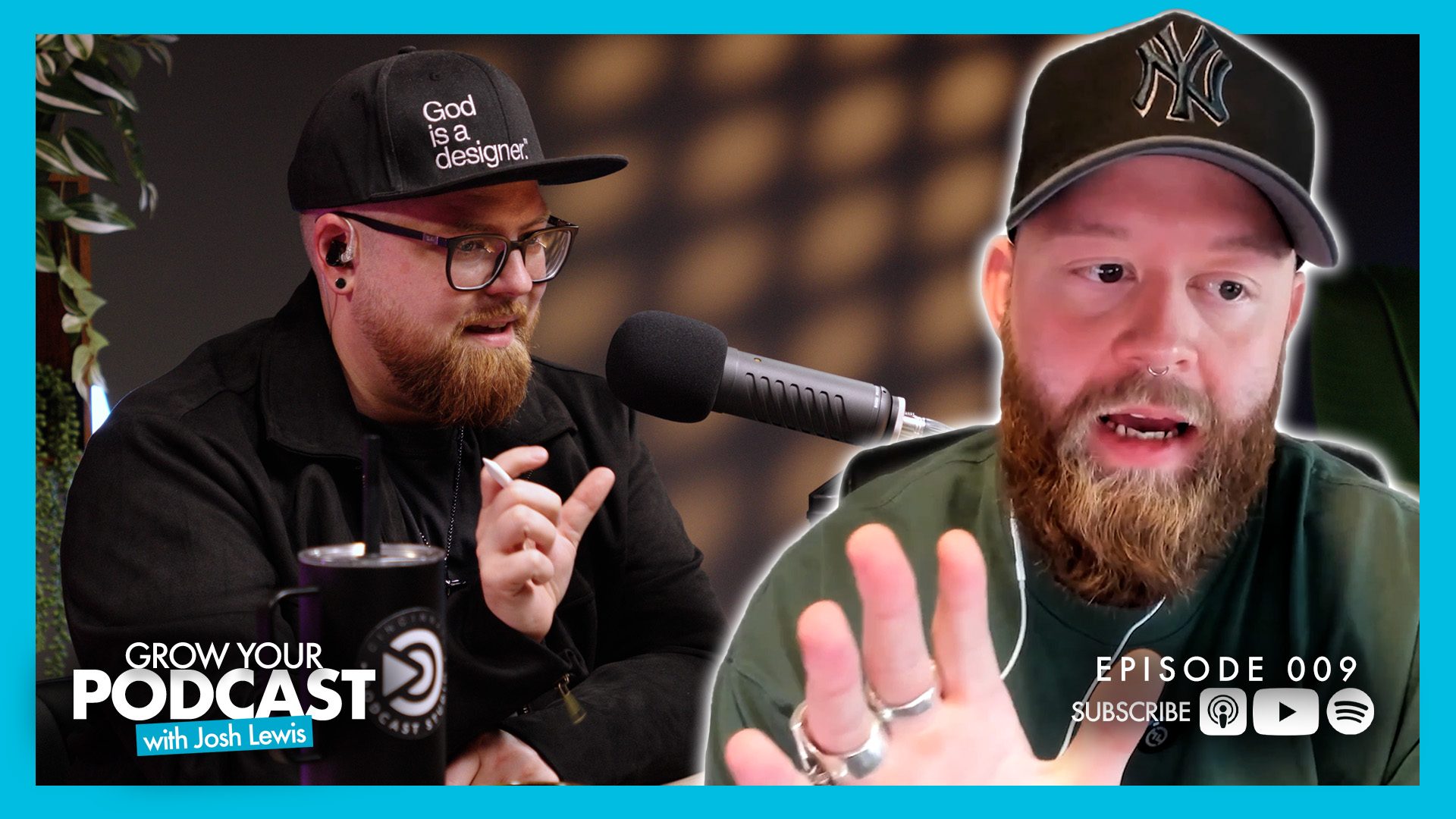
The #1 Reason Podcasts Fail, According to Caleb Ralston
The #1 Reason Podcasts Fail: What Caleb Ralston and Josh Lewis Got Right
Most podcasts don’t fail because the host isn’t smart enough, interesting enough, or “good on camera.” They fail because the show was never built to be sustainable. In Cincinnati Podcast Studio’s episode with Josh Lewis and Caleb Ralston, the core message is clear: podcasts break down when expectations are off and the format isn’t repeatable enough to keep going.
If you’re building a show for your business, that matters more than almost anything else. A podcast only works when it’s simple enough to produce consistently and strategic enough to build trust over time.
The number one reason podcasts fail is that most shows are built on bad expectations instead of a repeatable system. The fix is a format you can actually sustain, plus the right production and strategy support to keep the show moving.
The number one reason podcasts fail is that people start with the wrong target. They assume success comes from inspiration, gear, or one big burst of effort, when it actually comes from a repeatable format, realistic expectations, and enough support to stay consistent. Josh Lewis and Caleb Ralston’s conversation points back to the same truth: trust is built through execution over time, not random episodes when you “get around to it.”
What Josh and Caleb surfaced in this conversation
In the episode, Josh Lewis talks with brand-content strategist Caleb Ralston about why successful podcasts don’t start with fancy gear. They start with a strong idea and execution that builds trust. The episode also frames podcasting as a proximity tool: the more consistently people hear and see you, the more they feel like they know you.
That’s the real lens business owners should use.
A podcast is not just content. It’s a trust-building system. But that system only works when the show is designed to be repeated. If every episode feels like rebuilding the plane mid-flight, the podcast won’t last. It may launch. It may even look polished for a few weeks. But it won’t hold.
That’s why repeatable formats matter so much.
The real problem is usually “improper expectations”
One of the strongest ideas in the episode is the danger of “improper expectations” that create a false target.
That shows up in a few common ways.
A business owner thinks every episode needs a breakthrough idea. A marketing team assumes the host has to become a full-time creator overnight. A company launches a show expecting instant leads, instant audience growth, and instant clarity. Then real life shows up. Calendars get crowded. Topic planning gets sloppy. Nobody owns post-production. The team misses two recording days, and momentum dies.
That’s not a talent problem. It’s a systems problem.
The fix is to stop treating podcasting like a streak of motivation and start treating it like an operational process.
That’s why a smart first step is to book a tour or start with Podcast Idea Research before you commit to a format you can’t sustain.
Why repeatable formats save podcasts
A repeatable format removes friction. It gives you a structure your team can prepare for, your host can deliver inside of, and your audience can recognize.
That doesn’t mean every episode needs to feel identical. It means the framework should be stable enough that producing the next episode doesn’t feel heavy.
A repeatable format usually answers the same few questions every time:
What kind of episode is this?
Who is it for?
What outcome should the listener get?
How long should it be?
What clips or short-form assets should come from it?
Who handles prep, recording, editing, publishing, and distribution?
When those answers stay murky, podcasts stall.
When those answers become standardized, podcasts become easier to run and much more valuable to the business.
For some teams, the best repeatable format is founder-led interviews. For others, it’s a solo thought-leadership series. For others, it’s a client Q&A, a market update, or a structured teaching show that can also feed webinar or course creation efforts.
The point is not to pick the most creative format. The point is to pick the one you can keep producing.
A good podcast format should do three things
1. It should be easy to prepare for
If prep takes four hours every time, that’s a warning sign. Business podcasting works best when preparation is focused and repeatable. You want enough structure to sound sharp, but not so much structure that the show becomes a burden.
2. It should create multiple content outputs
This is another theme tied to the episode: video podcasting creates more content opportunities than audio-only production.
That matters because a strong long-form conversation should also fuel clips, social content, sales enablement, and authority-building assets. That’s where short-form recording and repurposing becomes part of the strategy, not an afterthought.
3. It should fit real life
The best format is the one your team can sustain during busy seasons, not just quiet ones. If your system only works when everyone has extra time, it’s not a system.
The help most podcasts actually need
A lot of business podcasts don’t need more ambition. They need more support.
That support usually falls into a few categories.
First, they need strategic clarity. What is the show about? Who is it for? What role does it play in the business? That’s where consulting helps. Good strategy prevents content drift and keeps the show tied to revenue, authority, recruiting, or relationship-building goals.
Second, they need production consistency. Recording, setup, lighting, audio, editing, file handling, publishing, titles, clips, and distribution create drag fast. That’s exactly why many teams use a partner for podcasting instead of trying to assemble a DIY process that breaks after a month.
Third, they need content discipline. Not every episode should reinvent the show. Not every guest should take the conversation off-course. The right team helps protect the format so the show stays useful and recognizable.
This is where Cincinnati Podcast Studio’s approach makes practical sense. You remove complexity, keep quality high, and make it easier for the host to do the one thing they actually need to do: show up and talk.
What a repeatable business podcast can look like
A simple business show can be more effective than an overly ambitious one.
You might record two episodes every month, on the same day, with the same set, same run-of-show, and same post-production workflow. One episode might be an interview with a customer, founder, or local operator. The other might be a solo or team-led teaching episode that answers a common buyer question.
That kind of rhythm compounds.
It builds familiarity. It sharpens your message. It creates reusable content. It gives your team a consistent marketing asset. It also creates the kind of proximity Caleb Ralston talks about, where listeners begin to trust you because they experience you repeatedly in a useful format.
If you want to see how local businesses are using podcasting to build authority, the Cincinnati Business Podcast is a strong example of content that creates visibility and trust around real business conversations.
Common mistakes that kill momentum
One mistake is building the show around energy instead of process. That works for three episodes, maybe five. It rarely works for thirty.
Another mistake is making the format too loose. Flexibility sounds good until nobody knows how to prep, what to record, or how to turn the episode into content the rest of the team can use.
A third mistake is refusing help for too long. A founder tries to host, produce, direct, review clips, manage uploads, and measure results alone. That’s not lean. That’s fragile.
A better move is to get the support you need early, whether that means strategic help through consulting, a clearer production system through podcasting services, or more examples and planning ideas through the resources hub.
If you’re a Cincinnati or Northern Kentucky business, this matters even more
If you’re a B2B team in Cincinnati/NKY, this matters because your podcast is rarely competing on entertainment alone. It’s competing on clarity, consistency, and trust.
A strong Cincinnati video podcast studio setup helps because it removes the production burden that usually causes local businesses to stop after a few episodes. Instead of trying to build a studio, train a team, and create a workflow from scratch, you can use a podcast studio in Cincinnati that already has the environment and process dialed in.
That’s often the difference between “we should start a podcast” and “we have a podcast that actually runs.”
FAQs
What is the number one reason podcasts fail?
The number one reason podcasts fail is that they aren’t designed to be sustainable. Most shows begin with unclear expectations, too much production friction, and no repeatable format. Over time, missed recordings and inconsistent execution kill momentum faster than a lack of ideas.
What is a repeatable podcast format?
A repeatable podcast format is a structure you can run again and again without rebuilding the show every time. It defines the episode type, audience, flow, length, and content outputs so your team can prepare, record, edit, and publish consistently.
Should I get help producing a business podcast?
Yes. If your team wants the podcast to last, support matters. Most businesses benefit from help with strategy, production, editing, and distribution because those are the parts that usually create bottlenecks. The right help makes the show easier to sustain and more useful to the business.
Is video better than audio-only for business podcasts?
For many businesses, yes. This episode highlights that video podcasting creates more content opportunities than audio-only production.
That means one recording session can support long-form content, short clips, brand visibility, and sales-enablement content across multiple channels.
Conclusion
Josh Lewis and Caleb Ralston’s conversation gets to the heart of why so many shows disappear: the failure usually happens long before the podcast stops publishing. It starts when the format is too heavy, the expectations are off, and nobody has built a repeatable way to keep the show moving.
The good news is the fix is practical. Build a format you can repeat. Set goals that match reality. Get the help you need before the friction stacks up.
If you want a podcast that actually supports your business instead of becoming another stalled project, book a tour to see the studio, or contact Cincinnati Podcast Studio to talk through the right format and support model for your team.