
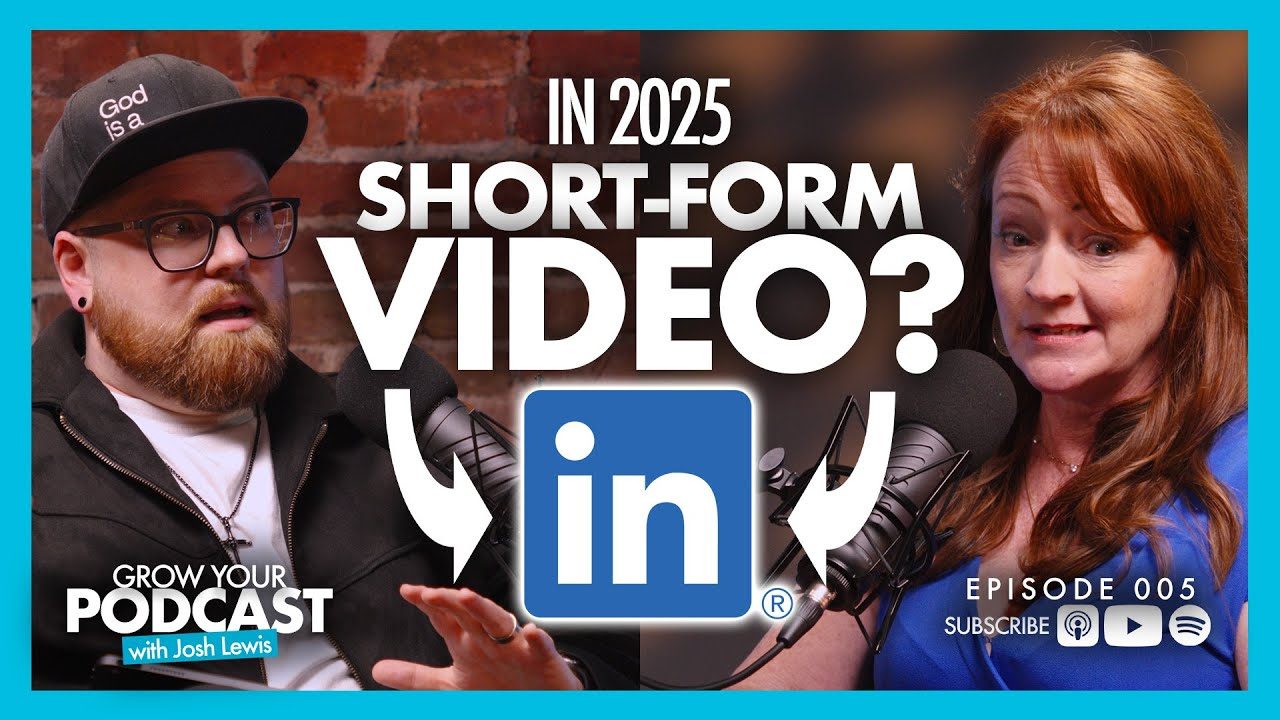
Why LinkedIn Video and Short-Form Content Matter More Than Most B2B Teams Think
If your team is still treating LinkedIn like a text-only platform, you’re leaving trust on the table.
In our recent conversation with Angie Snowball, the point was clear: LinkedIn works best when it feels human. For B2B brands, that means showing up in ways that create real conversations, not just more impressions. Video matters because it helps people understand your expertise faster, and short-form matters because it makes that expertise easier to consume consistently.
For most B2B companies, LinkedIn video is not a vanity play. It’s a trust-building tool. Short-form clips help prospects hear your point of view, understand your expertise, and decide faster whether they want to work with you.
LinkedIn video and short-form content matter because they make your expertise easier to believe. A written post can explain what you know, but video shows how you think, how you communicate, and whether someone trusts you. For B2B leaders, that matters because buyers don’t just choose the most informed company. They choose the team they believe can solve their problem with confidence.
If you want to build that kind of authority without turning content production into a second full-time job, schedule a discovery call.
Why LinkedIn video works better than most B2B teams expect
A lot of companies still assume LinkedIn rewards polished corporate messaging. In practice, the content that moves people is usually more direct, more conversational, and more human.
That’s one of the strongest takeaways from the Angie Snowball conversation. The goal isn’t to sound bigger. The goal is to sound real. When someone watches you explain a problem clearly on video, they can quickly decide whether you understand their world. That shortcut matters in B2B because buyers are evaluating judgment, not just information.
This is where video has an advantage over text. Text can communicate expertise. Video communicates expertise and delivery. Prospects can see whether you’re clear, credible, and worth talking to. That removes friction.
Why short-form is the practical format, not just a trend
Short-form content matters because it fits how people actually consume LinkedIn.
Most buyers are not sitting down to watch a full 30-minute episode during the middle of the workday. They are scanning. They are deciding quickly. They are looking for a strong point of view, a useful takeaway, or one sharp insight they can apply immediately.
That’s why short-form clips work so well. They let you package one good conversation into a format your audience will actually see. CPS’s own positioning reflects that same model: one recording session can fuel a full episode plus multiple short clips for LinkedIn and other platforms. The studio also offers short-form sessions designed to create a month of shorts in one sitting, which is exactly the kind of operational simplicity most teams need.
If that’s the bottleneck for your team, start with short-form video creation instead of waiting until you have a full publishing machine figured out.
What short-form video actually does for your brand on LinkedIn
The real benefit is not “more content.” The real benefit is faster trust transfer.
A short video clip can do three jobs at once. First, it introduces your expertise in a format people will actually watch. Second, it creates familiarity through face, voice, tone, and delivery. Third, it gives your sales process better air cover because prospects often arrive already feeling like they know you.
That matters more than most teams realize. By the time a buyer reaches out, they’ve already formed opinions about whether you seem clear, thoughtful, and credible. Short-form content helps shape that opinion earlier.
For a lot of B2B companies, that’s the shift: stop treating content like a publishing exercise and start treating it like pre-sales trust building.
Why video on LinkedIn is especially strong for experts, founders, and client-facing leaders
Some people should be on video sooner than others.
If you are a founder, CEO, advisor, consultant, salesperson, subject matter expert, or relationship-driven marketer, video gives the market something it cannot get from a PDF or generic company page. It gives your audience a feel for your thinking.
That’s why this works so well for leadership-driven brands. Buyers want to know what it would be like to work with you. Video answers that question before the first meeting.
When that video is pulled from a longer conversation, the content also feels more natural. You’re not forcing yourself into “content creator mode.” You’re talking through real ideas, then turning the strongest moments into clips that are easier to publish consistently. That’s one reason video podcast production is such a strong content engine for B2B teams.
The mistake most companies make with LinkedIn content
They optimize for activity instead of connection.
Angie’s point about conversations beating connection counts is important because it reframes the job. LinkedIn is not just a distribution channel. It’s a relationship platform. If your content gets attention but doesn’t make people want to talk to you, it’s not doing enough.
The second mistake is publishing generic content that sounds like everyone else. That includes low-effort AI posts that say technically correct things with no real point of view. Buyers can feel that instantly. It doesn’t create trust. It creates distance.
The better move is to publish fewer, stronger pieces built around opinions, experience, and clear business relevance. That’s where a good producer or strategist helps. If your team needs help shaping the message, not just recording it, podcast consulting is the right next step.
How to make LinkedIn video sustainable without overcomplicating it
The answer is not “make more.” The answer is “record smarter.”
One strong conversation can create a surprising amount of useful content when the session is planned correctly. You can pull clips around buyer objections, common mistakes, industry myths, founder perspective, and strong one-liners that are made for short-form distribution.
That model works because it reduces the hardest part of content: context switching. Instead of asking your team to invent a new idea every day, you capture expertise once and repurpose it intentionally.
That’s also why the studio model matters. CPS is built around removing production friction so teams can show up, talk, and leave with usable assets rather than another unfinished marketing project. The main site explicitly positions video podcasts as “content machines” and emphasizes repurposed clips for LinkedIn and other social channels.
If your team is still unsure what topics would actually be worth recording, start with podcast idea research.
What this means for B2B teams in Cincinnati and Northern Kentucky
If you’re a B2B team in Cincinnati/NKY, this matters because local trust still compounds.
You’re not just competing for clicks. You’re competing for familiarity, referrals, and remembered expertise in a regional business community where relationships still drive a lot of decisions. A consistent video presence helps people recognize your team, understand your value faster, and feel more confident referring you.
That’s especially relevant if you want a professional setup without building an in-house studio from scratch. CPS positions itself as a Cincinnati video podcast studio for B2B brands and also offers consulting for teams that want help with strategy, training, or buildout decisions.
A better way to think about ROI from LinkedIn video
A lot of teams ask the wrong ROI question.
They ask whether one post generated immediate revenue. A better question is whether your content is making the sales process easier over time. Are prospects coming in warmer? Are discovery calls moving faster? Are buyers referencing clips they’ve seen? Are more people reaching out with better context?
That’s the real value. LinkedIn short-form content works because it creates repeated proof of expertise. Not hype. Not empty awareness. Proof.
And when that proof is built from real conversations, it tends to age better than trend-based content. You’re not chasing the algorithm. You’re documenting your thinking in public.
FAQs
Should B2B companies really prioritize video on LinkedIn?
Yes. For most B2B brands, video is one of the fastest ways to communicate expertise and build familiarity. It gives buyers more context than text alone and helps them evaluate whether your team feels credible, clear, and worth talking to.
Do we need a full podcast to make short-form LinkedIn content work?
No. A full podcast can be a strong content engine, but it’s not the only path. Some teams should start with a focused short-form session built around specific talking points, customer objections, or founder insights, then expand into long-form once the system is working.
What kind of LinkedIn video performs best for service businesses?
The strongest videos are usually clear, opinionated, and tied to real business problems. Buyer questions, common mistakes, industry myths, and practical takes tend to perform better than broad motivational content because they show judgment and make your expertise easier to trust.
How often should a company post short-form video on LinkedIn?
Consistency matters more than volume. Most B2B teams do better with a realistic cadence they can maintain than an aggressive plan that dies after two weeks. That’s why batching works so well. You record once, then release strategically over time.
Conclusion
LinkedIn video matters because buyers want more than information. They want confidence.
Short-form matters because it makes that confidence easier to deliver, easier to consume, and easier to repeat. If your brand has real expertise but your content still feels inconsistent, flat, or too hard to produce, the fix usually isn’t more hustle. It’s a better recording and repurposing system.
You can see how CPS approaches that process through the Cincinnati Business Podcast, explore more examples in the resources hub, or go straight to the next step and schedule a discovery call. For pricing, deliverables, or fit questions, the best move is to contact the team.