
How to Turn Your Expertise Into Content That Builds Trust
How to Turn Your Expertise Into Content That Builds Business Trust
You've spent years building deep expertise in your field. But if that knowledge lives only in your head—or buried in sales decks and client proposals—you're leaving pipeline on the table. The leaders and organizations winning business today aren't necessarily the most skilled. They're the most visible, specific, and trusted.
Turning expertise into content isn't about going viral or posting every day. It's about creating a clear, consistent signal that tells the right buyers: this is the team that understands my problem.
Most B2B leaders have far more expertise than content. This guide covers a straightforward system for turning what you know into video, podcast, and written content that builds authority and drives discovery calls—without hiring a media team.
Quick Answer
To turn your expertise into content, start by identifying the three to five problems your best clients face before they find you. Build a content format—video podcast, webinar, or short-form clips—around those real problems. Record in a professional environment so production quality matches your credibility. Distribute consistently. And route interested buyers directly to a discovery call, not a generic contact form.
Why Most Experts Stay Invisible Online
The gap between what you know and what the market perceives isn't a knowledge problem—it's a communication and consistency problem. Most B2B leaders fall into one of two traps:
- Trap 1: Nothing goes out. Content creation gets deprioritized, feels awkward, or never makes it past a half-written LinkedIn draft.
- Trap 2: The wrong things go out. Generic tips, company announcements, or promotional posts that don't demonstrate your actual thinking.
Neither builds the kind of trust that shortens a sales cycle. What does? Consistent, specific content that shows buyers how you think about their problems—before they ever contact you. That's exactly what content strategy consulting at CPS is designed to unlock.
Step 1: Get Clear on What You Actually Know
Before you open a camera or launch a podcast, spend 30 minutes on this exercise. Ask yourself:
- What questions do your best clients ask before they hire you?
- What do most people get wrong about your industry?
- What hard-won lessons have you learned that your buyers haven't?
- What decisions do your clients struggle with most?
Those answers are your content. Not polished, scripted talking points—your real perspective on real problems. That specificity is what separates authority content from noise.
If you're unsure which of your ideas will actually resonate with your audience, podcast idea research is a structured way to validate topics before you invest time and production budget into them.
Step 2: Choose a Format That Fits How You Think
The best content format is the one you'll actually sustain. Here's a plain-language breakdown of the primary options for B2B experts:
Video Podcast
If you think best in conversation—interviewing clients, exploring ideas with industry peers, or sharing perspective through dialogue—a video podcast is your strongest format. It's long-form, distributable, and generates clips, show notes, blog posts, and social content from a single recording session.
Short-Form Video
If you want to build platform presence faster, short-form video clips can be pulled from longer recordings or created as standalone content. These work well for LinkedIn, YouTube Shorts, and Instagram Reels—and give your audience a consistent reason to follow you between longer episodes.
Webinar or Training Format
If your expertise is better demonstrated through teaching rather than conversation, a recorded webinar or training session is a strong starting point. These can be gated for lead generation or repurposed into evergreen content that works long after the live event.
Online Course
If you have a full methodology or process that clients pay for, packaging it as an online course creates a scalable revenue stream while building authority at scale. One recording session can become a product that generates value for months.
Step 3: Record in an Environment That Matches Your Credibility
Your ideas are only as persuasive as your presentation environment allows. A cluttered background, inconsistent audio, or flat lighting sends a signal—even when viewers can't fully articulate why they don't trust what they're watching. Professional production isn't vanity. It's message delivery.
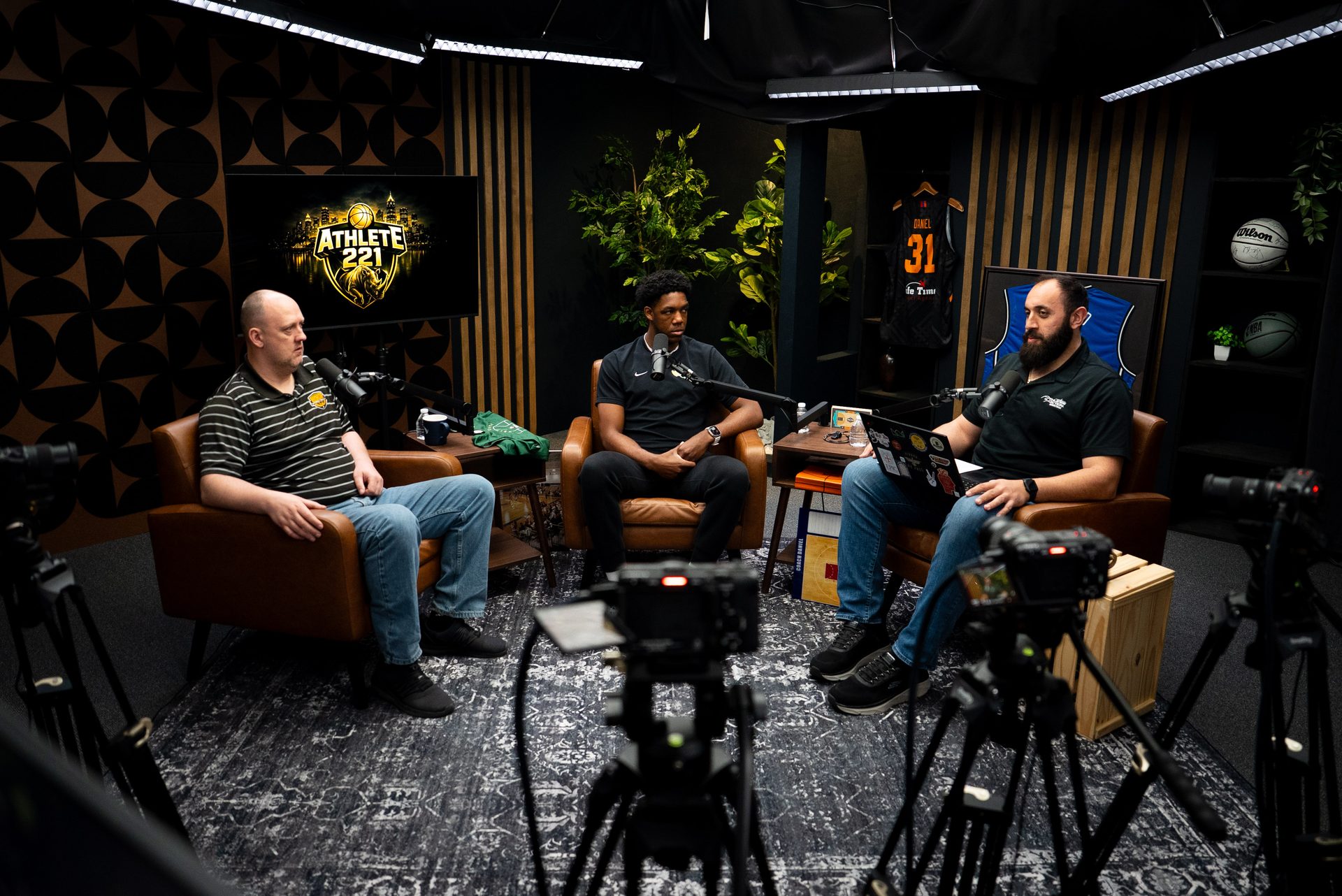
That's why many of Greater Cincinnati and Northern Kentucky's most active B2B content creators use CPS as their production home base. You show up, talk through your expertise, and leave with content your team can distribute for weeks. The studio handles cameras, lighting, audio, and recording logistics so your attention stays on what you actually know.
If you want to see what that looks like in practice, the Cincinnati Business Podcast is a live example of CPS-produced B2B content—the format, quality, and positioning that comes out of a structured recording environment.
Step 4: Build a Simple Distribution Routine
Content that doesn't get distributed doesn't build trust. A practical minimum for a B2B expert building authority:
- One long-form episode (video podcast, webinar, or training) per month
- Four to eight short-form clips per month pulled from that session
- One or two LinkedIn posts per week
- Blog coverage of the topics you address on camera
This isn't a content calendar for a media company. It's a sustainable signal for a B2B team that has a business to run. You don't need to post daily. You need to post consistently enough that the right buyers find you when they're looking—and recognize you as the relevant expert when they do.
Step 5: Route Buyers to a Clear Next Step
Content without a call to action is brand awareness at best. Content with a clear next step is pipeline. Every piece of expert content should make it easy for an interested buyer to take one specific action: schedule a discovery call, download a resource, or watch the next relevant piece of content.
Don't send buyers to a generic homepage. A discovery call conversation is where real trust-building happens—and where you can qualify fit before either party invests more time. All of CPS's content strategy work routes toward that same structure: schedule a discovery call to talk through your content goals before committing to a format or production investment.
What This Looks Like as a System
When these five steps work together, you have a repeatable content engine:
- Monthly recording session at the studio (podcast, webinar, or training format)
- Clip extraction and distribution across LinkedIn, YouTube, and Instagram
- Blog and show note coverage for ongoing SEO
- Clear CTA routing warm leads to a discovery call or consulting conversation
CPS provides the production infrastructure—and the content strategy consulting layer to help you build this system from scratch or sharpen what you already have in motion.
A Note for Cincinnati and NKY Teams
The strategy applies regardless of geography. But if you're a B2B team in Greater Cincinnati or Northern Kentucky, there's a real practical advantage: you can be physically in the studio. No shipping equipment, no home-office compromises, no friction around remote production logistics. You book time, show up, and leave with content your competitors likely don't have.
Frequently Asked Questions
How do I know if my expertise is interesting enough to build content around?
If your clients ask you the same questions more than twice, that's a content topic. The bar isn't "interesting to a general audience"—it's "useful to the specific person searching for answers to this problem." Specific, practical expertise from someone with real experience consistently outperforms generic thought leadership.
Do I need to be on camera to make expert content work?
Not exclusively, but video accelerates trust in ways that written content alone can't. If camera discomfort is the barrier, a professional studio environment—proper lighting, clean audio, an experienced crew—typically resolves it faster than people expect. The environment does a lot of the work.
How long does it take to see results from a content strategy?
Most B2B content strategies show meaningful pipeline impact at three to six months of consistent output. SEO compounds over a longer horizon. But direct referral acceleration and brand recognition can happen within weeks when content is specific, relevant, and tied to a clear audience.
Can CPS help me figure out what content to create, not just record it?
Yes. The consulting engagement starts with strategy—topic selection, format decisions, audience clarity, distribution planning—before a single camera turns on. Production follows strategy, not the other way around.
What if I've tried content before and it didn't produce results?
The most common reasons content doesn't work: a mismatch between format and buyer behavior, or inconsistent output over too short a time horizon. A discovery call conversation can help diagnose which challenge you hit and what a more effective approach looks like for your specific business and audience.
The Bottom Line
Expertise that isn't communicated doesn't build trust, attract buyers, or shorten sales cycles. The good news: you don't need to become a content creator. You need a clear strategy, a reliable production environment, and a consistent publishing routine that turns what you already know into content buyers can find and act on.
CPS works with B2B teams across Greater Cincinnati and Northern Kentucky who want to show up professionally, build authority in their market, and generate pipeline from content—without the overhead of building a media operation from scratch.
Start with a discovery call to talk through your content goals and how CPS can help you build a system around them. Or reach out directly if you have a specific question about a format or production approach.