How to Start a Video Podcast That Builds Trust and Clients
How to Start a Video Podcast: A Practical Guide for Business Leaders
Video podcasting is one of the highest-leverage content investments a business can make. One recorded conversation becomes a podcast episode, short-form clips, a blog post, and months of social content—without your team building from scratch every week.
This guide walks you through exactly how to start a video podcast, what you need, and how to avoid the mistakes that kill most shows before they gain traction.
Starting a video podcast requires four things: a clear topic, the right format, a reliable recording setup, and a system for turning each episode into content. Get those four right and everything else is execution.
Quick Answer: How Do You Start a Video Podcast?
Define your show's topic and target audience. Choose a format—interview, solo, or panel. Record in a professional space with good lighting, clear audio, and at least one camera. Publish to a podcast host and distribute video to YouTube. Then repurpose each episode into clips and written content. The fastest path: book a Discovery Call and show up ready to talk—a professional production system handles the rest.
Step 1: Define Your Show Before You Record Anything
Most shows fail because they start with equipment before they start with strategy. Before you book a studio or buy a microphone, answer three questions:
- Who is the show for? Your ideal client, your industry peers, or both?
- What problem does the show solve? Not just "we share insights"—what specific gap does each episode fill for the listener?
- What does success look like? Pipeline? Brand authority? Recruiting? The answer shapes your format and publishing cadence.
If you're still validating the idea, CPS offers a structured Podcast Idea Research process that stress-tests your concept before you invest in production.
Step 2: Choose the Right Format
Video podcasts work in three main formats. Each has a different use case for business:
Interview Format
Host brings in guests—clients, industry voices, vendors, thought leaders. Best for building a network, generating trust by association, and giving guests a reason to share your content. This is the most common format for B2B shows.
Solo / Commentary Format
Host speaks directly to camera—opinions, frameworks, how-tos. Best for building personal brand and authority quickly. Requires confidence on camera but no guest coordination.
Panel Format
Two to four people discussing a topic. Works well for co-hosted shows or roundtable episodes. Requires more production coordination but creates strong conversation energy on screen.
Most business podcasts start with the interview format and add solo episodes once the host gets comfortable on camera. CPS's video podcasting service is built around all three formats with full production support.
Step 3: Decide Where You'll Record
This is where most business owners make their first big mistake: they try to DIY the production setup and spend more time troubleshooting than recording.
Home or Office Recording
Possible, but the variables are hard to control—lighting changes, background noise, inconsistent sound treatment. You'll spend time managing the setup instead of managing the conversation. The result usually looks like a Zoom call, not a show.
Professional Studio
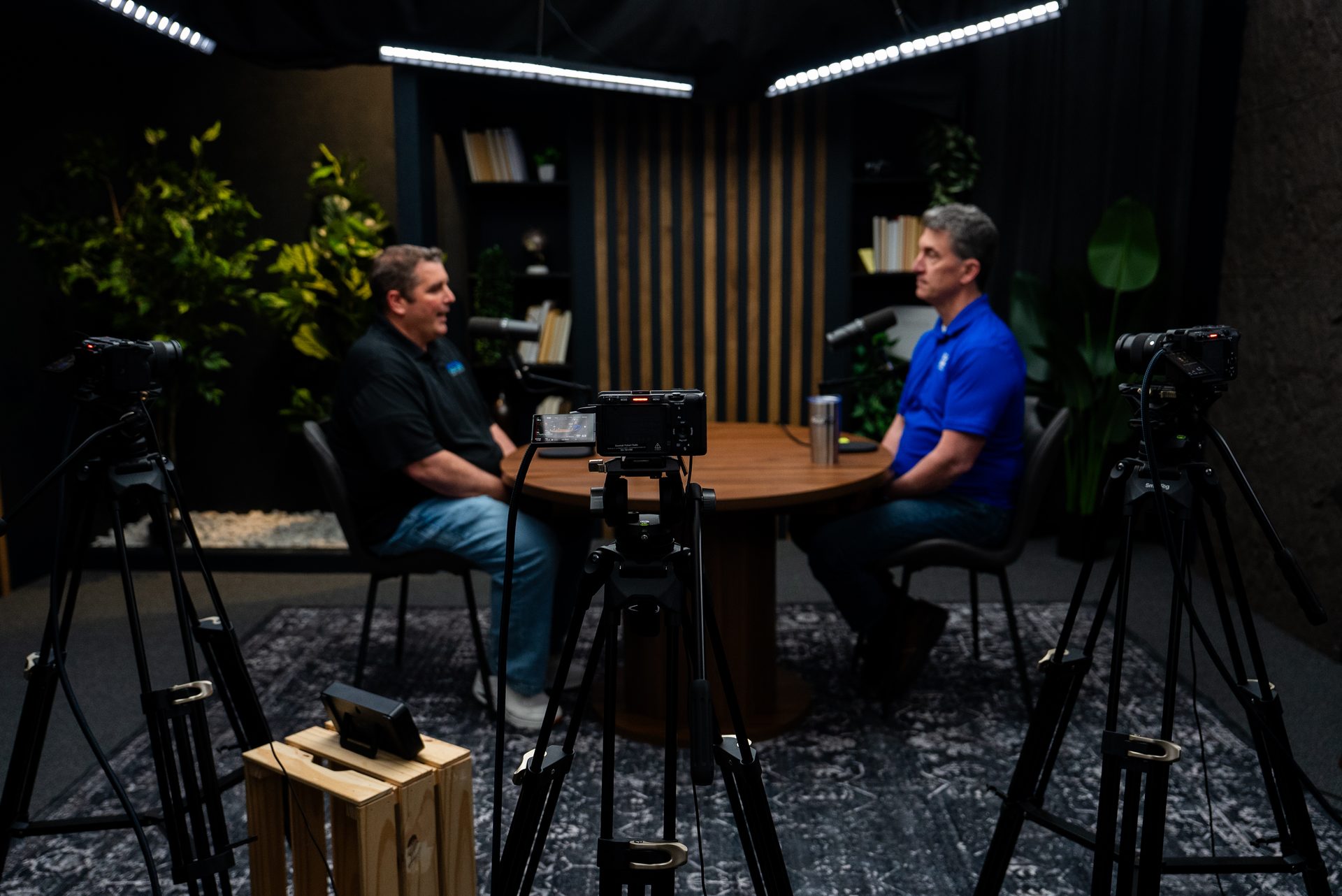
A purpose-built podcast studio removes every production variable. Lighting, audio, cameras, and the recording environment are dialed in before you arrive. You show up, have the conversation, and leave. The episode is handled.
For Cincinnati and Northern Kentucky business leaders, Cincinnati Podcast Studio at 1776 Mentor Ave is designed specifically for this: up to four seats on camera, 4K video, professional audio and lighting, with a production team managing every detail so you're focused entirely on the conversation.
Step 4: Set Up Your Recording Essentials
Whether you record in a studio or your own space, these four elements determine whether your show looks and sounds professional:
- Camera: At minimum, a dedicated camera pointed at the host—not a laptop webcam. Multiple cameras create dynamic editing options.
- Microphone: Each person on camera needs their own dedicated mic. A shared room mic picks up too much ambient noise.
- Lighting: Even, intentional lighting is what separates a professional production from a Zoom recording. Soft, diffused key lighting removes shadows and makes the video look finished.
- Recording environment: Sound treatment matters more than most first-time podcasters realize. Hard surfaces create echo. A treated space sounds like a studio, not a conference room.
Step 5: Build Your Publishing and Repurposing System
The episode is the raw material—what you do with it afterward determines your ROI. A single video podcast episode should produce:
- A full-length video episode for YouTube
- An audio episode for Spotify and Apple Podcasts
- 3–6 short-form clips for LinkedIn, Instagram, and YouTube Shorts
- A show notes page or blog post
- Social copy for each clip and the main episode
That's 20–30 assets from one recording session. This is what CPS calls The Presence System—a repeatable framework for consistent content output without constant creative overhead. See how it works on our short-form video page.
Step 6: Choose Your Publishing Platform
Video podcast episodes live in two places: a podcast host for the audio feed, and YouTube for the video. Both matter.
Podcast hosts like Buzzsprout, Transistor, or RSS.com distribute your audio to Spotify, Apple Podcasts, and every other directory automatically. YouTube is the second-largest search engine in the world and the primary destination for video podcasting growth. Distribute to both from day one.
Common Mistakes When Starting a Video Podcast
- Perfecting the setup before shipping the show. Equipment anxiety kills more shows than bad audio does. Get one episode recorded and improve from there.
- No repurposing plan. If the only asset from each episode is the episode itself, you're leaving most of the value on the table.
- Inconsistent cadence. Publishing three episodes then going dark for six weeks erases the trust you built. Build a production schedule before you launch.
- Treating it like a passion project, not a business asset. A podcast that doesn't connect to pipeline, authority, or recruiting is hard to sustain. Know what the show is for before you record episode one.
- Recording in an untreated space. Visual and audio quality signal to your audience whether you take this seriously. A professional studio communicates credibility before you say a word.
What the Cincinnati Podcast Studio Production System Looks Like
At Cincinnati Podcast Studio, production is fully managed. You don't show up to troubleshoot cables—you show up to have a great conversation. The team handles 4K video capture, professional audio, lighting, episode editing, and the full repurposing pipeline so each session becomes weeks of content.
The Cincinnati Business Podcast is a live example of this system in action: real conversations with local business leaders, produced on the same stage used for every client show.
If you're a CEO, founder, or marketing leader in Greater Cincinnati or Northern Kentucky who wants a professional video podcast without the production overhead, this is the setup built for you.
Frequently Asked Questions
How much does it cost to start a video podcast?
It depends on whether you build your own setup or use a professional studio. DIY costs vary widely depending on equipment and software choices. A professional studio removes the capital investment and setup overhead—you pay for sessions, not infrastructure. For specifics on CPS's approach, reach out directly.
How long should a video podcast episode be?
For B2B shows, 30–60 minutes is the most common range. Shorter episodes (15–25 minutes) work well for solo formats. The right length is whatever it takes to cover the topic without padding—your audience will calibrate you over time.
Do I need a studio to start a video podcast?
No, but the production quality difference is significant. A professional studio handles lighting, audio, multi-camera capture, and sound treatment—every variable that makes a show look and sound credible. If your audience is business decision-makers, production quality signals whether you take your own brand seriously.
How often should I publish a video podcast?
Consistency matters more than frequency. Once per week is the most common schedule for business podcasts. Bi-weekly works if your production system can't sustain weekly output. Batch recording—capturing multiple episodes in a single studio session—is the most efficient way to stay ahead of your publishing calendar.
What should I talk about on my business podcast?
Start with the conversations you're already having: sales calls, client onboarding, strategic planning. What are the questions your best clients ask before they hire you? Those are your episode topics. A structured Podcast Idea Research session helps you build a topic pipeline before you record episode one.
Ready to Start Your Video Podcast?
The fastest way to launch a professional video podcast is to stop planning and start recording. CPS handles the production, the repurposing, and the distribution—your job is to show up and have a great conversation.
Book a Discovery Call to see the studio, walk through your show concept, and figure out what a production system looks like for your team. The conversation is free and takes about 30 minutes.
Or if you want to think through the strategy first, start with a consulting conversation.