
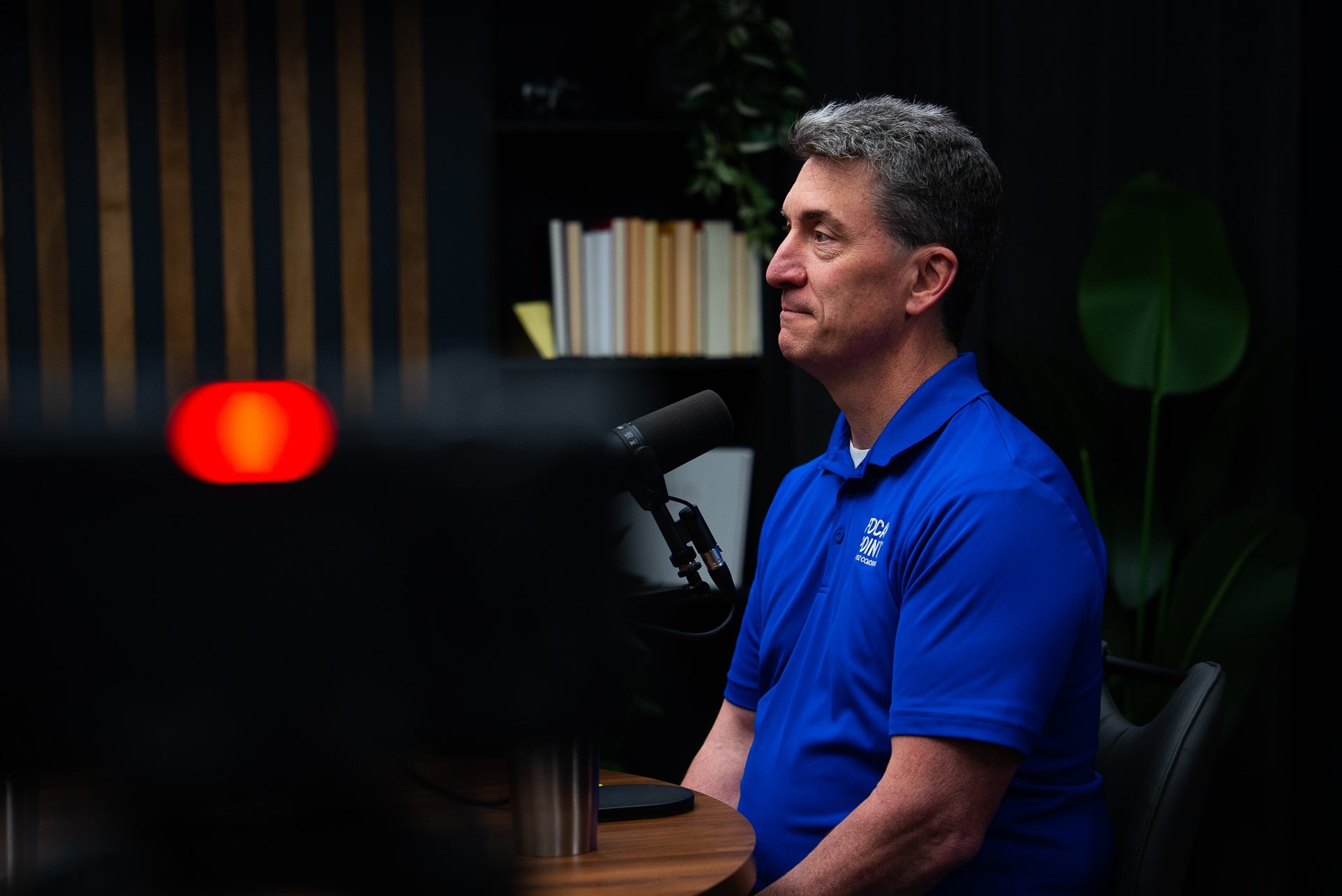
How to Make Your Webinar Look Professional (What Works)
How to Make Your Webinar Look Professional
Most webinars look amateurish—not because the presenter lacks credibility, but because a handful of fixable production mistakes signal "low effort" before the first word is spoken. Backlit windows, laptop cameras aimed up from a desk, hollow-sounding audio, and cluttered backgrounds all undermine the authority your content is trying to build.
The good news: you don't need a massive production budget to fix this. You need to understand which variables actually matter—and prioritize those. This guide covers exactly that.
Quick Answer
To make a webinar look professional, you need clean front-facing lighting, a neutral background, a camera at eye level, and decent audio—ideally a dynamic microphone rather than your laptop's built-in mic. Most of what makes a webinar look polished has nothing to do with the camera itself. Lighting, framing, and audio are the three levers that move the needle. Fix those and you immediately look more credible.
Why Most Webinars Look Amateur (Even With Good Content)
Before you can fix the problem, it helps to know what's causing it. In our experience producing webinars for B2B clients across Cincinnati and Northern Kentucky, the same four issues appear in almost every home-recorded webinar:
- Backlit window behind the presenter. When the brightest light source is behind you, your camera exposes for the background and turns you into a silhouette. Your face becomes dark and hard to read.
- Laptop camera below eye level. Built-in laptop cameras sit below the screen, pointing up at your face. Viewers see your ceiling, your nostrils, and an unflattering angle that subtly undermines authority.
- Echo-heavy recording environment. Hard floors, bare walls, and open rooms create reverb that makes audio feel hollow and distant. Viewers may not consciously notice it, but they disengage faster.
- Cluttered or distracting background. A busy bookshelf, laundry in the corner, or a busy open-plan office pulls focus from the presenter and signals low production value.
None of these require expensive equipment to fix. They require intentional setup. Our webinar production services eliminate every one of these issues by design—but if you're optimizing a home setup, here's where to focus first.
The Five Things That Actually Make a Webinar Look Professional
Not all production elements are created equal. These five have the highest impact-to-effort ratio:
- Front-facing light source. A simple ring light or a window in front of you (not behind) transforms your image quality immediately. Soft, even light on your face is the single biggest visual upgrade you can make without buying a new camera.
- Clean, neutral background. A solid wall, a branded backdrop, or a well-staged studio set keeps attention on the presenter. If you don't have a clean space, a professional studio solves this by default.
- Camera at or above eye level. Raise your laptop on a stand, or use a separate webcam mounted at eye height. This creates a natural, direct viewing angle that reads as confident and composed.
- Quality audio input. A dynamic USB microphone placed 6–12 inches from your mouth beats a laptop mic by a significant margin. Viewers abandon bad audio faster than they abandon bad video.
- Stable connection and consistent framing. Wired ethernet over WiFi for recording. Frame yourself from mid-chest up with consistent headroom. These details signal that the presenter is prepared and organized.
If you're a B2B team in Cincinnati or Northern Kentucky producing client-facing webinars, these five elements are worth getting right before you invest in anything else. A well-lit presenter with clean audio and a neutral background will always outperform a poorly lit presenter with a 4K camera.
Lighting, Background, and Framing: The Trifecta
These three work together. Get all three right and your webinar looks polished. Get one wrong and it undermines the other two.
Lighting: Your key light—whether it's a window, a ring light, or a softbox—should be in front of you, at roughly eye height or slightly above, angled toward your face. Avoid overhead room lighting as your only source; it creates unflattering shadows under your eyes and chin. Side lighting can work if it's soft, but front lighting is the easiest to get right consistently.
Background: Put as much distance as practical between yourself and the background. Even 4–6 feet of separation softens what's behind you and makes the background feel intentional rather than accidental. A plain wall, a branded rollup banner, or a well-staged studio set all work. Virtual backgrounds are a last resort—they look artificial under any camera movement and degrade image quality at the edges of your silhouette.
Framing: Sit or stand so the camera captures you from mid-chest up. Leave a small amount of headroom—don't crop the top of your head, but don't frame yourself so low that you look like a tiny figure in the center of a large empty space. Center yourself horizontally. This is standard broadcast framing and immediately reads as intentional and professional.
These aren't complicated rules. But they require a deliberate setup—not just opening a laptop and hitting "start webinar." For organizations producing webinars regularly, our studio rental options provide a pre-configured environment where all three are already dialed in.
Audio Quality: The Thing Viewers Notice Before They Notice Anything Else
Video quality gets the attention in most production conversations, but audio is what actually determines whether people stay or leave. Research on video engagement consistently shows that viewers will tolerate mediocre video far longer than they'll tolerate bad audio. If your webinar sounds hollow, distorted, or echo-heavy, you're losing audience retention regardless of how good the content is.
The microphone hierarchy (from worst to best for most home setups):
- Built-in laptop mic: Picks up everything—keyboard clicks, room noise, HVAC, your neighbor's lawn mower. Fine for internal check-ins; not appropriate for client-facing or high-distribution webinars.
- AirPods or earbuds with built-in mic: A real improvement over the laptop mic, but still a consumer-grade input. Compression artifacts and inconsistent positioning show up under close listening.
- USB headset: Solid for call centers; looks less polished on camera. The trade-off between audio quality and visual distraction is real.
- Dynamic USB microphone (e.g., Shure MV7, Audio-Technica ATR2100x): Designed to reject room noise, isolate the speaker, and deliver broadcast-quality audio in untreated spaces. This is the right call for anyone recording client-facing webinars at home or in a small office.
One non-negotiable: record a 60-second test before every session and play it back. You stop hearing your own room echo within minutes of sitting in it. Fresh ears on a test recording catch problems that live monitoring won't reveal.
If audio is still an issue after upgrading your microphone, the room itself may be the problem. Hard floors, bare walls, and open-plan offices are acoustic nightmares. Soft furnishings, rugs, bookshelves, and even a closet full of clothes absorb reflections. Or skip the optimization entirely and record in a professionally treated studio environment where acoustics are handled by design.
Home Setup vs. Professional Studio: Which Is Right for Your Webinar?
This isn't an either/or question—it depends on the stakes of the content and the audience you're serving.
Home or office setup works well for:
- Internal training and onboarding content
- Low-distribution team communications
- Casual thought leadership where "authentic home office" is part of the brand
A professional studio is the right call for:
- Client-facing webinars, sales presentations, and investor content
- High-distribution content you're publishing or licensing
- Course modules, certification content, or training products you're selling
- Webinars where you want to repurpose clips into short-form video content afterward
- Any situation where "looks like it was made on a laptop" would undermine the message
The practical case for a studio is this: a professional environment removes every production variable. Lighting, audio, camera position, background, and technical support are all handled. You show up, focus on the content, and deliver. The result looks consistent across every webinar you produce—which is a visible signal of organizational credibility that a home setup simply can't replicate reliably.
Many of the B2B teams we work with in Cincinnati and NKY batch their quarterly webinar calendar into a single studio day. Three or four sessions recorded back to back with a consistent visual treatment, professionally edited, and scheduled for release. It's a more efficient use of time than managing an ongoing home setup—and the quality difference is visible to the audience that matters most.
Our team at Cincinnati Podcast Studio handles the full production side so you can stay focused on the conversation. If you're curious whether a studio setup fits what you're building, a Discovery Call is the right starting point—no commitment, just a clear picture of what's possible.
You can also hear from Cincinnati-area business leaders about what consistent content production looks like in practice on the Cincinnati Business Podcast.
FAQ: Making Your Webinar Look Professional
- Why does my webinar look bad even though I have a good camera?
- Camera quality is rarely the problem. Backlit windows, camera angles below eye level, and echo-heavy rooms make even expensive cameras look amateurish. Fix lighting and framing first—those have more impact than the camera model.
- What's the most important thing that makes a webinar look professional?
- Lighting. A presenter lit from the front with a clean neutral background will look polished on a $200 webcam. Backlit or dim presenters look amateurish even on a cinema camera.
- Should I record my webinar in a studio or at home?
- For internal or low-stakes training, a well-lit home setup can work. For client-facing, sales, or high-distribution webinars, a professional studio removes every variable—lighting, acoustics, camera, and production support—so you look credible from frame one.
- How do I improve audio quality for my webinar?
- Move away from built-in laptop microphones. A dynamic USB microphone in a quiet room makes the single biggest audio improvement. Test your recording before every session to catch echo, hum, or background noise you've stopped hearing.
- What background looks best for a webinar?
- A clean, uncluttered neutral background works best—either a solid wall, a softly blurred studio set, or a branded backdrop. Busy home offices and virtual backgrounds (especially with movement) tend to look unprofessional and distract from the presenter.
- Can I record a professional-looking webinar in one day?
- Yes. Many organizations batch their entire quarterly webinar calendar in a single studio day. A full-day session at a production studio can produce multiple high-quality webinars with consistent look, audio, and branding—far more efficiently than managing an ongoing home setup.
Ready to Record a Webinar That Actually Looks the Part?
Professional webinar production isn't about spending more—it's about removing the variables that quietly undermine your credibility. Lighting, audio, framing, and environment. Get those right and your webinar delivers the authority your content already deserves.
Cincinnati Podcast Studio provides a complete production environment for B2B webinars, sales presentations, training content, and thought leadership sessions. Our team handles setup, recording, and post-production so you can focus on what you're saying—not how it looks.
If you're producing client-facing webinars and want them to look and sound like they came from a serious organization, our webinar production services are built for exactly that. Start with a Discovery Call and we'll map out what your next webinar could look like.
We also offer video podcasting services, course creation studio time, and content strategy consulting for teams that want a repeatable content engine beyond single webinar sessions. Contact the team with any questions.