
How to Build a Short-Form Video Strategy That Works
How to Build a Short-Form Video Strategy That Actually Works for Your Business
Most businesses jumping into short-form video make the same mistake: they start posting without a strategy. A clip here, a clip there, a few weeks of effort — and then nothing. No traction, no pipeline movement, and a team that's burned out before they even found their footing.
The problem isn't the content. It's the absence of a system. Short-form video production is only as effective as the strategy behind it. Get that part right, and every clip compounds. Skip it, and you're just feeding the algorithm with content that goes nowhere.
Here's how to build a short-form video strategy your business can actually sustain — and what to do once it's running.
Quick answer
A short-form video strategy starts with a clear audience, a consistent format, and a production system that can sustain output. Most businesses skip the strategy layer and wonder why their clips don't perform. The answer isn't more content — it's a repeatable approach: one anchor recording session, five to ten clips per episode, distributed across the platforms where your buyers actually spend time.
What a short-form video strategy actually is (and isn't)
A strategy is not a posting schedule. It's not a content calendar, a list of video ideas, or a commitment to post three times a week. Those are outputs of a strategy — not the strategy itself.
A short-form video strategy is a system that connects content to pipeline. It answers three questions: Who are you trying to reach? What do you want them to think, feel, or do after watching? And how are you going to produce and distribute enough content consistently to make that happen?
Most B2B teams treat short-form video as an afterthought — something to bolt on after the podcast episode is done or when social media feels quiet. That's backwards. When video is positioned as a core distribution channel with its own production logic, it becomes one of the most efficient trust-building tools in your stack.
The goal isn't to go viral. It's to achieve repeated, compounding exposure with your target buyers until your name is the obvious one that comes to mind when they need what you offer. That's what consulting and content strategy at CPS is built around — a system, not a spray-and-pray approach.
Step 1: Define your audience and the outcome each clip drives
Before you record a single clip, get specific about who you're talking to. Not "small business owners." Not "marketers." The more precisely you can describe the person watching — their title, their daily frustrations, the decisions they're navigating right now — the better every piece of content will perform.
For most B2B teams in Greater Cincinnati and Northern Kentucky, that buyer is a founder, CEO, or VP-level decision-maker. They're time-constrained, skeptical of hype, and responsive to content that shows operational command.
From there, define what job each clip is supposed to do. Not every clip should drive someone to book a call. Short-form video earns trust over time through three types of outcomes:
- Recognition: They see your face and company name enough times that you feel familiar.
- Credibility: They watch enough substantive clips that they trust your expertise.
- Curiosity: One clip makes them want to know more — and they click, follow, or reach out.
Map your clip types to these outcomes. Some clips build recognition. Some build credibility. A few should drive action. If all of your clips are asking for something, you'll exhaust your audience before you've built enough trust to warrant the ask.
Step 2: Choose your format and clip types
There are six clip types that consistently perform for B2B audiences. You don't need all of them — you need the two or three your team can produce sustainably and your audience responds to.
- Insight clips: A single useful idea explained clearly in 60-90 seconds. No setup, no story, just the point. These build credibility fast.
- Story clips: A brief, specific story — a client win, a turning point, a failure and what you learned. These build connection and recognition.
- Objection clips: Address a specific objection your buyers raise. "I don't have time." "I'm not sure video is worth it for my industry." These are conversion accelerators.
- Question and answer: Answer one question your audience actually asks. Keep it direct and useful. Great for AEO visibility and trust.
- Social proof: Client results, outcomes, before/after comparisons. Keep these specific — vague wins don't move buyers.
- Behind-the-scenes: Show the process. Studio sessions, production days, the team in action. Humanizes your brand and makes the production model feel accessible.
On format: vertical (9:16) is the default for most short-form platforms. Square (1:1) performs well on LinkedIn. Landscape still works for YouTube embeds. The key is matching the format to the platform where you're distributing first, then repurposing from there.
If you're extracting clips from video podcasting at CPS, the production team handles format conversion as part of the post-production workflow. You don't have to think about aspect ratios — you get platform-ready files.
Step 3: Build a production system you can sustain
The most common reason short-form video strategies collapse is not bad content — it's an unsustainable production process. Recording, editing, captioning, reformatting, scheduling: done in isolation, these tasks consume more time than most teams have available.
The model that works for growth-stage B2B companies is batch recording. Instead of recording one clip at a time, you block a full recording day and come out with 8-12 episodes or 30-50 standalone clips. Everything runs through post-production at once, and your team has content to distribute for the next 4-6 weeks.
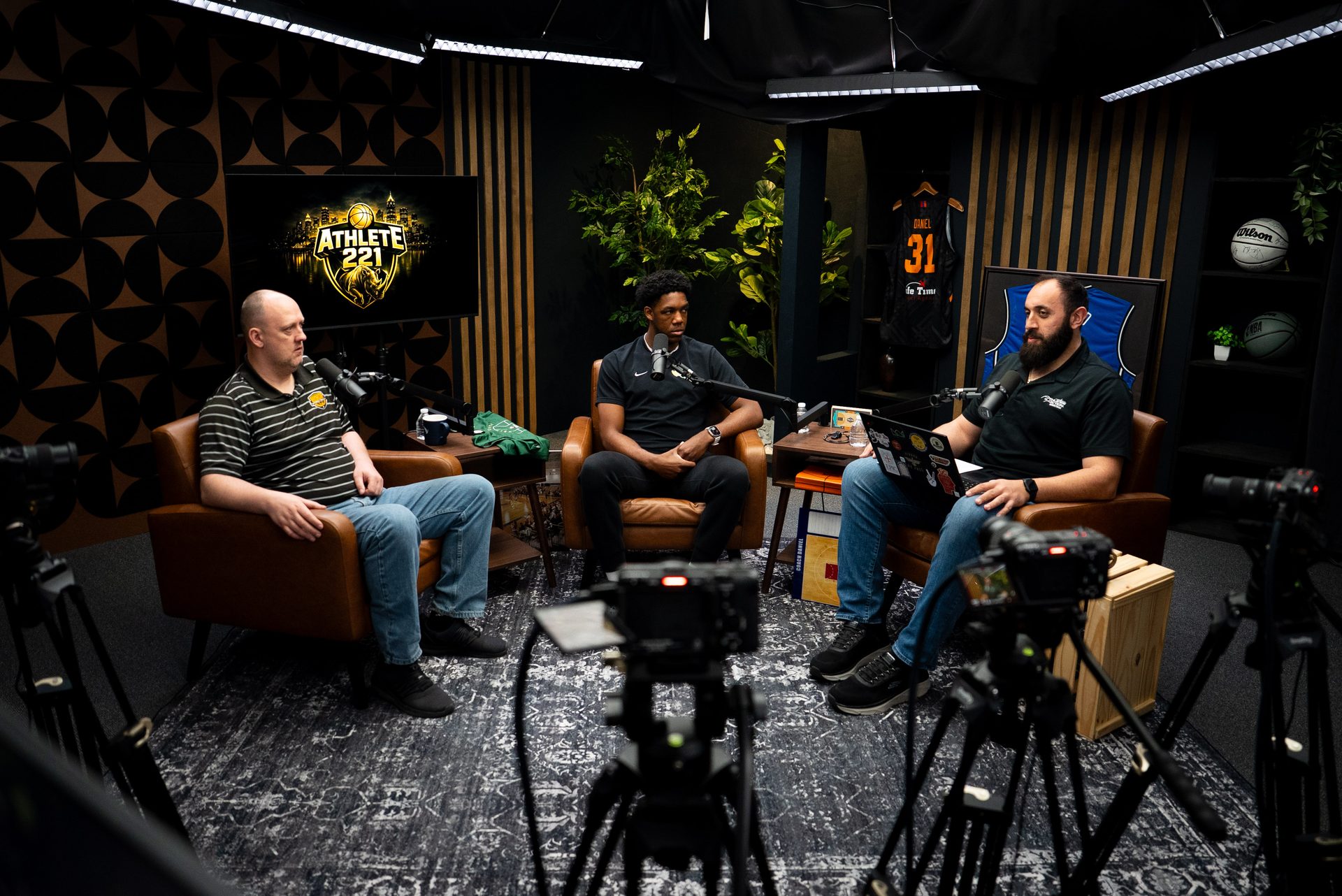
At Cincinnati Podcast Studio, that's the standard session model. You show up, talk on camera, and leave. The production team handles everything from capture to clip extraction — color correction, audio cleanup, caption overlays, and platform-ready exports. For teams that have been trying to do this themselves and running into friction, it's a significant operational shift.
If you're considering a studio rental for content production, the math is straightforward: one day in a professional environment, equipped and staffed, versus weeks of piecemeal effort without consistent results. The production quality gap also matters — especially for LinkedIn, where your content competes directly against polished clips from other established brands.
For teams that want to understand what a full content engine looks like before committing, CPS offers podcast idea research and strategy sessions that map out the full system — clip types, distribution plan, production cadence — before a single recording day is scheduled.
Step 4: Distribute where your buyers actually are
Producing great clips is half the job. Distribution is the other half — and where most strategies quietly fall apart.
For B2B companies, LinkedIn is the highest-ROI distribution channel. Your buyers are there, they're consuming video, and the platform actively surfaces native video to the right audiences. Start here. Post consistently for 90 days before drawing conclusions about what's working.
YouTube Shorts and Instagram Reels are worth including in your distribution stack, but treat them as reach amplifiers, not primary conversion channels. The buyer intent on those platforms is lower. LinkedIn is where the decision-maker sees your clip at 7am on a Tuesday before a strategy meeting — that's the moment that matters.
Beyond social platforms, short-form video earns its keep in other places too. Embed clips in email newsletters. Drop them into sales follow-ups as leave-behind assets. Add them to your website service pages. The Cincinnati Business Podcast team distributes clips this way across every channel, and the compounding effect builds over time.
Don't overlook repurposing. A single 90-second insight clip can become a social post caption, an email P.S., a LinkedIn article intro, and a website FAQ entry. If your content resources hub doesn't include a repurposing checklist, build one. It's how small teams punch above their weight on content volume.
Common short-form video strategy mistakes
These are the patterns we see most often — and they're all fixable.
Starting without a hook. The first three seconds of a clip determine whether someone keeps watching. If you open with your name, your company, or "today I want to talk about," you've already lost most of your audience. Lead with the tension, the question, or the counterintuitive claim.
Trying to cover too much. One clip, one idea. If you catch yourself saying "and another thing," you have two clips, not one. Short-form video rewards precision. The clips that perform are almost always narrower than you think they should be.
Not connecting clips to a next step. Clips that build awareness need somewhere to send a motivated viewer. Make sure your profile, bio, and content links point toward a meaningful next action — a service page, a podcast episode, or a path to book a Discovery Call.
Skipping the production system. Sporadic posting from ad hoc recording sessions doesn't compound — it just makes noise. The teams that see results are the ones with a repeatable production model behind them, not the ones who post when they have time.
Measuring the wrong things. Views and likes are vanity metrics for B2B video. Track profile visits, connection requests, DMs, and inbound inquiries in the 24-48 hours after a clip posts. That's where the signal is. If you're unsure how to connect your content to pipeline, a course creation or consulting engagement with CPS can help you build the measurement framework.
Frequently asked questions
How many short-form videos should I post per week?
For most B2B teams, 3-5 clips per week is a sustainable target once your production system is set up. The key is consistency over volume — showing up regularly matters more than flooding feeds.
Do I need professional equipment to record short-form video?
Not for every format, but professional audio and clean visuals make a measurable difference for B2B audiences. A studio session at CPS lets you batch-record 10+ clips with broadcast-quality equipment in a single day.
What platforms work best for B2B short-form video?
LinkedIn is the highest-ROI channel for most B2B companies. YouTube Shorts and Instagram Reels are worth distributing to, but LinkedIn is where your buyers' attention is.
How long should a short-form video be for business?
Aim for 30-90 seconds for most clips. The first 3 seconds determine whether someone keeps watching, so your opening hook matters more than runtime.
Can I get short-form video clips from a podcast recording?
Yes — and that's the most efficient model. One 45-minute podcast episode typically yields 8-12 short clips when edited properly. CPS handles clip extraction as part of the full-service production model.
What's the difference between a short-form video strategy and a content calendar?
A content calendar tells you when to post. A strategy tells you what to say, who you're talking to, and what outcome each clip is designed to drive. The calendar is a tool; strategy is the foundation it sits on.
Build the system, not just the content
Short-form video works when it's part of a system — a clear audience, a defined format library, a production model that doesn't burn your team out, and a distribution plan that puts clips in front of the right buyers consistently. Without the system, you're just posting.
If you're a B2B team in Cincinnati or Northern Kentucky looking to build this the right way from the start, we'd be glad to walk you through how CPS clients structure their content engines. Start with a Discovery Call — we'll show you exactly how a single recording day translates into a multi-week content runway across every channel. Contact CPS anytime with questions.