
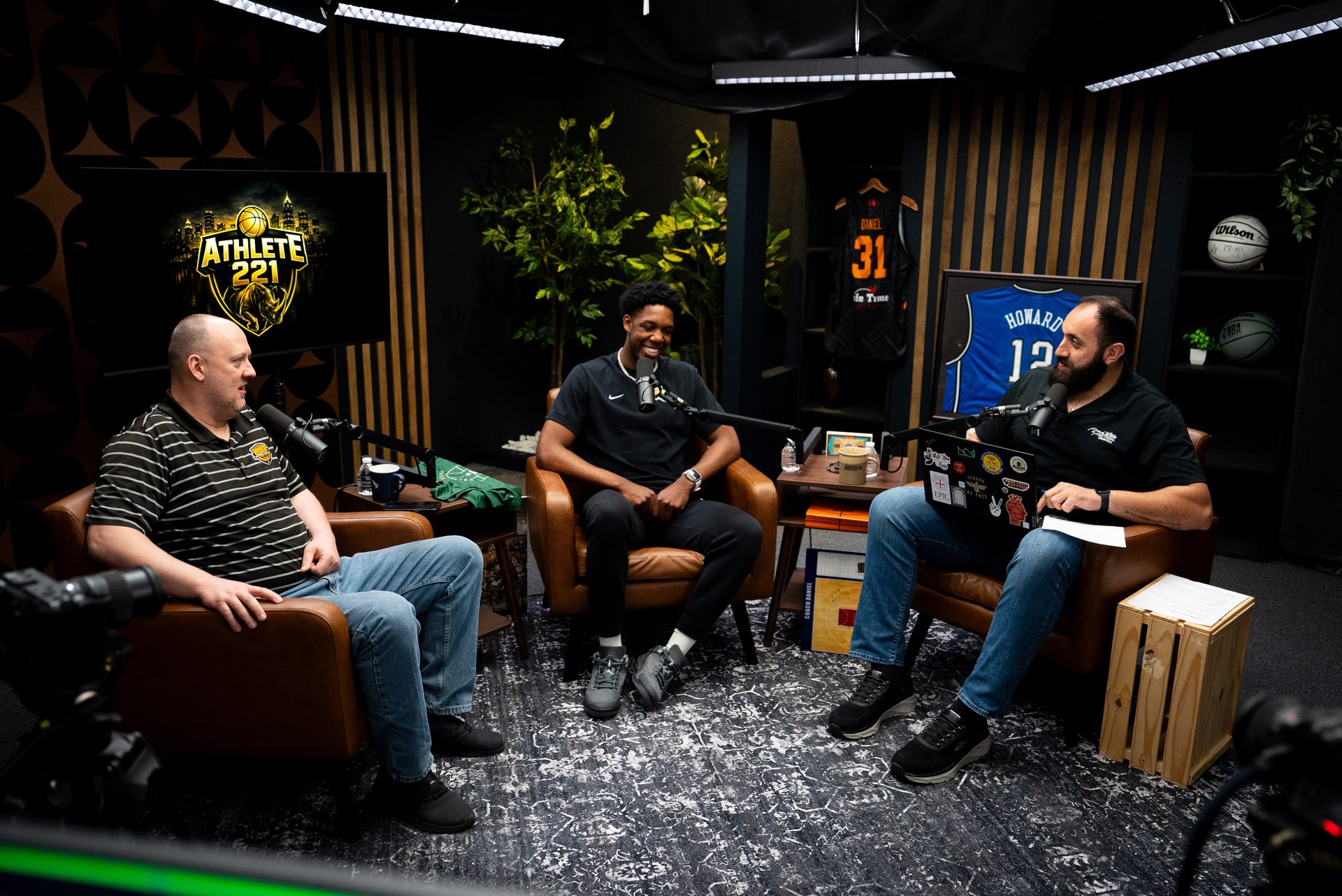
How to Build a Repeatable Content Engine for B2B Growth
How to Build a Repeatable Content Engine for Your Business
Most business leaders know they need to create content. Few have a system for doing it consistently without it consuming all their time. The difference between the brands that show up reliably and the ones that go quiet for months comes down to one thing: a repeatable content engine.
This guide breaks down what a content engine is, why it matters for B2B businesses, and how to build one that runs without your constant attention.
At a glance: A repeatable content engine is a documented workflow that transforms one long-form recording session into a steady stream of trust-building assets — video, clips, written content, and more — with a predictable schedule and clear ownership.
Quick Answer: What Is a Repeatable Content Engine?
A repeatable content engine is a documented system that consistently produces high-quality content without reinventing the process each time. For most B2B businesses, it starts with one long-form recording session — a podcast episode, a panel conversation, or a webinar — and systematically extracts clips, articles, and social posts from that source. The result is a reliable publishing cadence built around your expertise, not your availability.
Why Most B2B Content Strategies Stall
Content creation stalls when it depends entirely on one person's motivation or bandwidth. The CEO gets busy. The marketing manager leaves. The freelancer goes silent. Without a system, any friction stops the whole machine.
The most common reasons B2B content engines break down:
- No single long-form source: Without a central recording session or episode, there is nothing to repurpose.
- No documented process: Each piece of content feels like starting from scratch.
- No clear ownership: Everyone assumes someone else is handling distribution.
- No publishing schedule: Content gets batched, delayed, and quietly abandoned.
- Production quality acts as a bottleneck: Low-quality video sits unused because no one wants to post it.
Building a repeatable content engine solves all five. It shifts content creation from a creative sprint to an operational system.
The Core Architecture: One Session, Multiple Assets
The most efficient content engines are built around a single long-form recording session that feeds the rest. Here is how the math works in practice.
One 45-to-60-minute podcast or panel conversation can generate:
- 6–10 short-form video clips for LinkedIn, Instagram Reels, and YouTube Shorts
- A full-length video episode for YouTube or your website
- A written blog post or detailed article
- 2–4 pull quotes for social posts
- A newsletter section or email nurture touchpoint
- Supporting content for sales conversations
Two to four sessions per month can produce 30–40 pieces of content that publish over the following weeks. That is a genuine content engine — not a one-off campaign. The Cincinnati Business Podcast is a direct example of this model in practice.
At Cincinnati Podcast Studio, we call this The Presence System: a structured workflow designed to turn a single recording day into consistent visibility for your brand.
Step 1: Anchor Everything to a Long-Form Recording Format
Start with the highest-value format: a video podcast, a panel conversation, a webinar, or an on-camera interview. This becomes the source material for everything else.
Video is the anchor because it gives you the most flexibility downstream. A professionally recorded video podcast can be sliced into short clips, transcribed into written content, and repurposed for email — audio-only content cannot.
Commit to a consistent recording cadence. Monthly is a solid starting point. Bi-weekly is better. What matters most is the repetition.
Step 2: Document the Production Workflow
A content engine is only as repeatable as its documentation. Before you record a second episode, write down every step from pre-production to final publish.
Your workflow documentation should cover:
- Who schedules guests and confirms logistics
- Where raw files are stored after recording
- Who handles editing, captioning, and clip selection
- Which platforms receive which assets
- Who approves content before it publishes
- The target publish dates for each asset type
This documentation is what turns a content strategy into a content operation. When a team member is out or a vendor changes, the system keeps running.
Step 3: Assign Clear Ownership
Every step in the workflow needs a name next to it — not a role, a name. "Marketing team handles clips" is how content falls through the cracks. "Sarah exports clips by Thursday, Jake schedules them by Friday" is how a content engine runs.
If you are a small team or a solo operator, your production partner handles the heavy lifting. A full-service studio partner takes recording, editing, clip creation, and often scheduling off your plate entirely — so your one job is showing up to the session ready to talk.
Step 4: Build a Publishing Calendar You Can Actually Keep
The goal of a publishing calendar is predictability, not volume. It is better to publish two pieces of content per week reliably than to publish ten in one week and nothing for the next three.
A sustainable publishing schedule for most B2B teams looks like:
- 1 long-form video or podcast episode per month
- 2–3 short-form clips per week on LinkedIn
- 1 blog post or written piece per week
- 1–2 email touchpoints per month
The short-form video clips do the day-to-day visibility work. The long-form episodes build authority. The written content captures search traffic. Each layer reinforces the others.
Step 5: Use Production Quality as a Feature, Not an Afterthought
Content that looks and sounds unprofessional does not get shared. It does not build trust. In a B2B context, low-quality video can actively undermine the credibility it is supposed to build.
This is why production quality is part of the system architecture, not a nice-to-have. Recording in a professional environment — 4K video, broadcast-quality audio, professional lighting — means every asset you generate from that session is distribution-ready from the moment it is exported.
If the quality bottleneck is stopping content from getting published, the fix is upstream. Solve it at the recording level, not the editing level.
Common Mistakes When Building a Content Engine
- Starting with distribution before production: Deciding which platforms to post on before you have a recording process in place creates chaos. Get the source content right first.
- Trying to DIY production at scale: A founder recording on a laptop webcam can launch a content strategy. It cannot sustain one. At some point, production quality becomes a constraint on growth.
- Skipping the workflow documentation: Even a short written checklist prevents costly mistakes and keeps handoffs clean.
- Building for someone else's audience: Your content engine should reflect your brand's specific expertise and the questions your buyers are actually asking — not what is trending in your industry.
- Treating every asset as a one-off: If each piece of content requires a fresh creative brief, the system is not repeatable. Build templates, formats, and series structures that can be executed consistently.
Content Engine vs. Content Calendar: What Is the Difference?
A content calendar tells you what to publish and when. A content engine tells you how content gets made, by whom, from what source, at what quality, and on what schedule — every time.
Most businesses have a content calendar. Few have a content engine. The calendar collapses the moment someone leaves or gets busy. The engine keeps running because the process does not depend on any one person's motivation.
What This Looks Like for Cincinnati and Northern Kentucky Businesses
For B2B businesses in Greater Cincinnati and Northern Kentucky, a repeatable content engine is increasingly a competitive differentiator. The firms showing up consistently with thought leadership video and podcast content are shortening their sales cycles and building trust with buyers before a discovery call ever happens. If your competitors are quiet online, consistent visibility is a straightforward way to be the obvious first call.
If you want to explore whether a podcast or video series is the right anchor format for your brand, Podcast Idea Research is a practical first step — it validates whether your concept is commercially viable before you invest in production infrastructure.
Frequently Asked Questions
How long does it take to build a content engine?
Most businesses can have a functional content engine running within 60 to 90 days. The core components — recording format, workflow documentation, publishing cadence, and production partner — can be set up in the first 30 days. The system matures over the following sessions as you refine your formats and clip selection process.
Do I need a full production team to run a content engine?
No. A full-service production partner can handle recording, editing, clip creation, and scheduling, reducing your in-house requirement to showing up for the session and approving content before it publishes. Many CPS clients run a full content engine with one internal point of contact managing approvals.
What is the best long-form format to anchor a content engine?
A video podcast is the most versatile anchor format for B2B businesses. It produces long-form video, audio, clips, and written content from a single session. Webinars and course recordings are strong alternatives depending on your audience and goals.
How do I know what content to create?
Start with the questions your best prospects are asking before they call you. Your sales conversations, client onboarding calls, and discovery calls are a direct window into the content that will build the most trust with future buyers. If you are building a podcast or video series from scratch, Podcast Idea Research validates your concept before you invest in production.
Should I use a podcast, a webinar, or short-form video as my primary format?
For most B2B teams, the answer is all three — with a podcast or long-form video as the source and clips and written content as the downstream assets. Start with the format that matches how your buyers want to consume content, then build the repurposing layer around it.
Ready to Build Your Content Engine?
A repeatable content engine is not a marketing project. It is an operational decision — one that compounds over time as your library grows, your audience builds, and your buyers arrive already trusting you.
Cincinnati Podcast Studio works with B2B teams across Greater Cincinnati and Northern Kentucky to design and run content engines that convert a single recording day into months of distribution-ready assets. If you are ready to build something that runs consistently, book a Discovery Call to talk through what that looks like for your business.
Not sure what format fits your brand yet? Explore our consulting services or reach out directly via the contact page to start the conversation.