
How to Attract Better Podcast Guests for Your Business Show
How to Attract Better Podcast Guests for Your Business Podcast
You know exactly who you want on the show. The invite goes out, and then: silence, a polite decline, or a "maybe next quarter" that never turns into a booking. The guest list looks thin, not because the show lacks a topic, but because the ask isn't landing.
Most hosts assume the fix is a bigger contact list or a more impressive-sounding pitch. It's usually neither. If your invites keep stalling, it may be time to rework the ask itself, and you can get a second set of eyes on your guest strategy with a Discovery Call rather than guessing at what's wrong.
If you're a B2B team in Cincinnati or Northern Kentucky building a podcast around customer or industry voices, guest quality is usually the first thing to stall, and it's almost always fixable without changing your topic.
Quick Answer
Better podcast guests come from a sharper invite, not a bigger list. Lead with a specific angle only that guest can speak to, make the ask low-friction (one email, a clear time commitment, no prep homework), and show them a professional, video-first production so they know their time will produce something worth sharing. Most hosts lose good guests at the invite stage, not the interview.
Why Good Guests Say No (It's Rarely About the Topic)
When a strong prospective guest declines or goes quiet, the instinct is to blame the topic. It's rarely the real reason. Busy executives and subject-matter experts turn down podcast invites because the time commitment is unclear, not because they have nothing to say.
A generic "come talk about your business" invite reads as low-value and easy to ignore, because it could have been sent to anyone. And if a guest has already had one bad podcast experience, muddy audio, no editing, a host who talked over them, they get noticeably warier the second time someone asks.
Write an Invite That Gets a Yes in One Email
The invite itself does most of the work. Name the specific angle only this guest can speak to, not a generic topic prompt. "We'd love to have you talk about how your team cut onboarding time in half" lands very differently than "we'd love to have you on to talk about your business."
State the format, run time, and recording method up front: video, in-studio or remote, no live-stream pressure. Then make a single, clear ask. Propose two or three dates in the same email instead of starting a back-and-forth scheduling thread. Every extra email is a chance for the invite to slip to the bottom of an inbox.
Make the Prep and Scheduling Effortless
Once a guest says yes, friction creeps back in through prep and logistics. Skip the long guest questionnaire and send a short pre-call brief instead: the angle, three or four talking points, and what to expect on recording day.
Offer a couple of fixed windows rather than an open-ended "whenever works for you," and confirm the location or link, run time, and what to bring about 48 hours out. Guests who know exactly what's coming show up more relaxed, and that shows on camera.
Use Production Quality as a Recruiting Tool
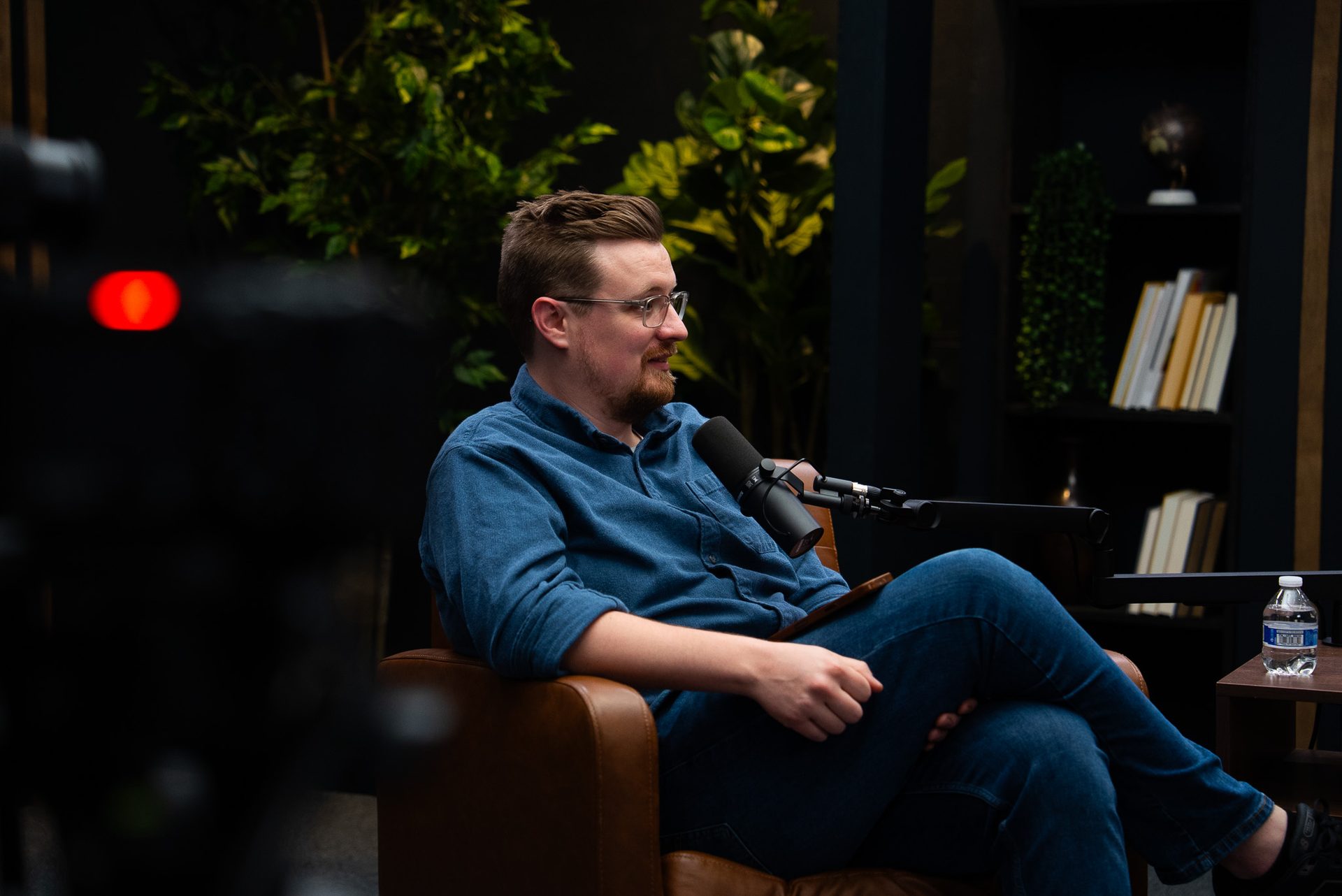
The invite doesn't end when you hit send. Include a link to a recent episode so a prospective guest can see the production value before they say yes. A real studio session, multi-camera video, clean audio, a producer running the room, signals the appearance is worth their time, not a favor they're doing you.
Guests who look and sound good are also far more likely to share the episode themselves once it's live, which turns every strong guest appearance into your next recruiting pitch. That's the compounding effect most shows never capture because the production isn't there to support it.
The connection between production value and audience trust isn't just a feeling. The Edelman Trust Barometer has consistently found that executives weigh how credible and polished a piece of content looks when deciding whether to engage with it or associate their name with it, which is exactly the calculation a potential guest runs before agreeing to appear.
What to Do During the Interview to Keep Guests Coming Back
Getting the booking is only half the job. Open with a warm, specific question tied to the guest's world, not a cold "tell us about yourself." Keep the host-to-guest talk ratio in the guest's favor; the show works better when they're doing most of the talking.
Afterward, give them something they can actually use: a short clip, a quote graphic, or a link to the finished episode, delivered quickly rather than weeks later. That follow-through is often the difference between a one-time guest and someone who refers three more people to the show, and it's one reason a content strategy consulting conversation can help you build a repeatable guest pipeline instead of restarting the search every month.
Common Mistakes That Scare Off Strong Guests
- Pitching too far in advance with no firm date, letting momentum die before a booking ever happens.
- Asking for a long-form commitment, 60 to 90 minutes, with no video or clip payoff to show for it.
- No clear next step after the episode airs: no thank-you, no shared clips, no tagging on social.
- Sending the same generic pitch to every prospect instead of naming the specific angle only they can speak to.
Each of these is an easy fix once you see it, which is why tightening the invite and follow-through process usually does more for guest quality than expanding the outreach list.
If you're a B2B team in Cincinnati or Northern Kentucky building a guest-driven show, this matters because the regional network of founders, operators, and experts is smaller and more connected than it looks. One well-produced episode with a strong guest tends to open the door to the next three.
Frequently Asked Questions
How do I get busy executives to agree to be a podcast guest?
Lead with a specific angle only they can speak to, state the time commitment and format in one email, and offer fixed date options instead of open-ended scheduling. Clarity beats flattery.
What should I send a guest before they agree to record?
A short brief covering the topic angle, format, run time, and recording method. Skip long questionnaires; save deeper prep for a confirmed booking.
Does production quality actually affect who says yes to being a guest?
Yes. Guests who see a recent episode with clean video and audio treat the invite as a real media opportunity rather than a favor, which raises response rates.
How long should a podcast interview be to respect a guest's time?
Most B2B guests respond well to 30 to 45 minute recordings. Longer sessions need a clear content payoff, like multiple short clips, to justify the time.
What keeps good guests coming back or referring other guests?
A smooth recording experience, a guest-forward conversation, and a usable clip or graphic they can share afterward. The post-episode follow-through matters as much as the interview.
The Bottom Line
Better podcast guests rarely come from a bigger contact list. They come from a sharper invite, a low-friction booking process, and production quality that makes the appearance worth a busy expert's time. Hear what that sounds like in practice on the Cincinnati Business Podcast, browse the CPS resource library for more guest and content strategy playbooks, or book a Discovery Call to talk through your show's guest strategy, or simply talk to our team about what a studio session with your next guest could look like.