
How Many Short-Form Clips Should You Publish Per Week?
How Many Short-Form Clips Should a Business Publish Per Week?
If you've started pulling clips from a podcast or video session, the next question is almost always the same: how many should you actually post? Too few and nothing builds momentum. Too many and quality slips, or your team burns out trying to keep up.
There's no universal number that works for every business, but there is a realistic range most B2B companies can sustain, and a set of factors that tell you where you should land inside that range.
In short: the right cadence depends less on a magic number and more on your footage supply, your editing capacity, and which platforms you're actually showing up on consistently.
Quick Answer
Most B2B companies see the best results posting 3 to 5 short-form clips per week per platform. Fewer than that rarely builds algorithmic momentum, and more only helps if quality holds steady. The right number depends on how much raw footage you have, your team's editing capacity, and which platforms you're actually active on.
Why There's No Single Magic Number
Platform algorithms reward consistency over raw volume. A channel that posts three strong clips every week, on schedule, tends to outperform one that posts ten clips one week and none the next.
A B2B audience watching for insight also behaves differently than a consumer audience scrolling for entertainment. Business viewers are more forgiving of a slower cadence if the content is useful, which changes the math compared to brands chasing viral reach.
Posting ten mediocre clips a week does less for your business than posting three clips that actually make a point. Volume without a hook or a takeaway just adds noise.
What a Realistic Weekly Cadence Looks Like
For most B2B teams, 3-5 clips per week per platform is the range that's both sustainable and effective. It's enough to stay visible in a feed without requiring a full-time content team.
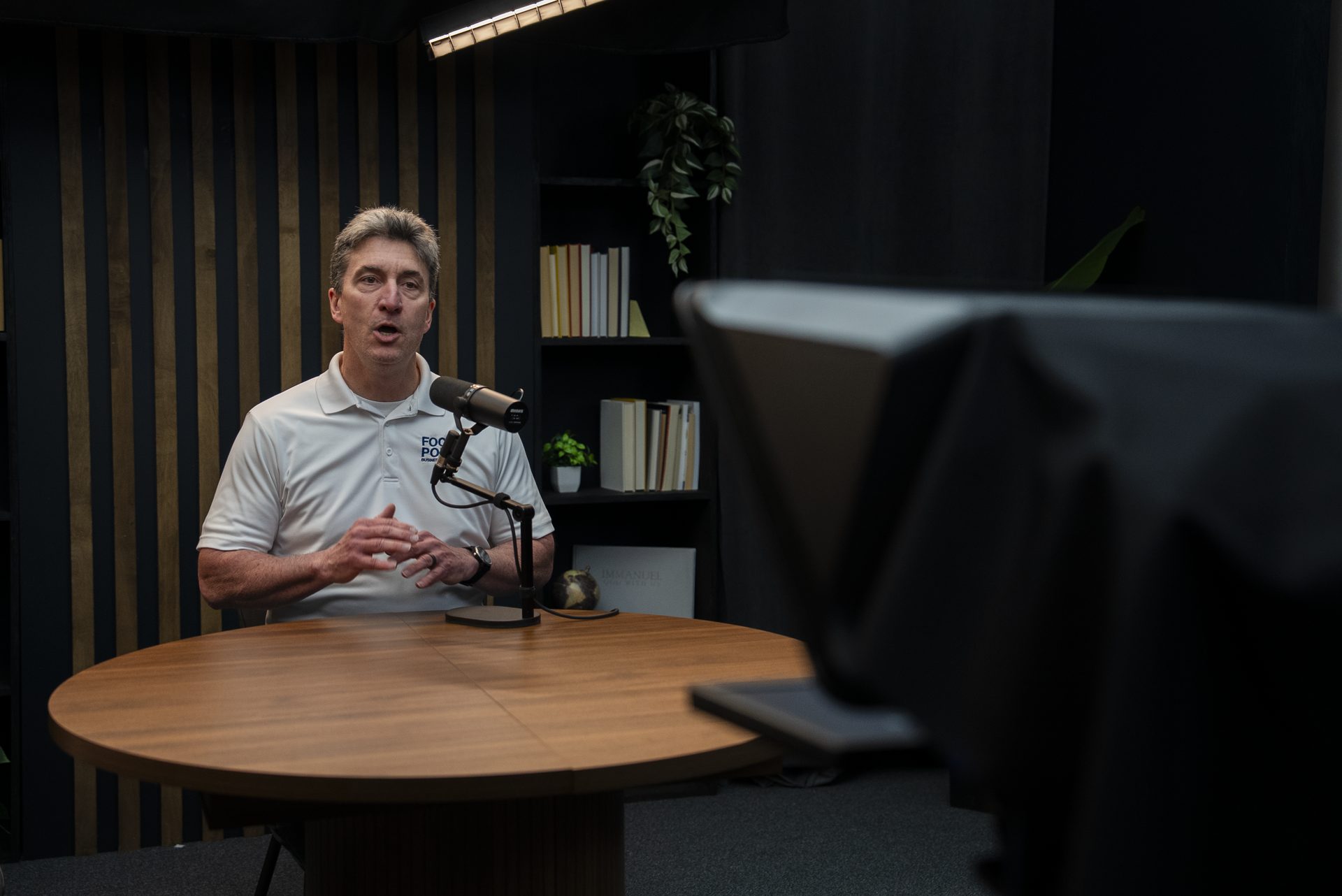
One well-recorded video podcasting session can realistically produce a week or two of clips. A 45-60 minute conversation, cut well, routinely yields 8-15 usable short-form moments.
Daily posting can work, but only for teams with dedicated content capacity and a steady supply of footage. It's not a baseline expectation, and treating it as one is a fast way to either burn out or drop quality.
What Actually Determines Your Right Number
A few factors matter more than any industry benchmark:
- Footage supply. One long recording session gives you weeks of material. No recent session means no clips to post, regardless of target.
- Editing bandwidth. Whether it's in-house or outsourced, your cadence is capped by how many clips can actually get finished each week.
- Platform mix. LinkedIn audiences respond to a different rhythm than Instagram or TikTok. Posting the same frequency everywhere ignores how each platform's audience actually behaves.
- Sales cycle length. Longer B2B sales cycles can sustain a lower-frequency, higher-depth approach better than a high-volume consumer playbook.
Common Mistakes Businesses Make With Posting Frequency
A few patterns show up again and again when businesses try to force a cadence that doesn't fit their reality:
- Copying a consumer-brand frequency. A target built for a lifestyle or entertainment brand rarely translates to a B2B audience evaluating a service provider.
- Posting in bursts. A flood of clips after a recording session followed by weeks of silence reads as inconsistent to both algorithms and followers.
- Hitting a quota without a hook. A clip published just to fill the calendar, with no clear point or opening line, underperforms even a lower-volume strategy built around stronger moments.
- Treating every clip equally. Not every moment from a session deserves a post. Prioritizing the strongest 3-5 clips usually beats publishing everything that was cut.
How to Build a Cadence You Can Actually Sustain
Instead of starting with a target number, start with what you actually have to work with:
- Start from your footage volume. Count how many usable clips a recent session actually produced, then build your calendar around that supply.
- Batch record to build a reserve. Batch recording a studio session gives you several weeks of clips from a single day, instead of scrambling for new footage every week.
- Use a content calendar. Space clips out deliberately instead of posting everything the week it's cut. This is a core part of building a short-form video strategy that holds up over time.
- Review performance monthly. Adjust cadence based on what's actually resonating, not on what a generic benchmark says you should be doing.
If you're a B2B team in Cincinnati or Northern Kentucky trying to build a short-form video presence without adding headcount, this matters because a single studio session here can fuel weeks of consistent posting without pulling your team away from client work.
According to HubSpot's video marketing research, short-form video continues to deliver the highest marketing ROI of any content format, but that return depends on consistency, not just output.
Not sure where your business should land in that 3-5 clip range, or whether your current footage can even support it? That's exactly the kind of question a Consulting conversation or a quick podcast idea research session can answer before you commit to a calendar you can't keep up with.
FAQs
Is posting short-form video every day necessary to see results?
No. Daily posting helps only if you can sustain quality and have the footage to support it. Most B2B teams get better traction from 3-5 consistent, strong clips per week than from daily low-effort posts.
How many clips can one podcast episode produce?
A single 45-60 minute recording session typically yields 8-15 usable short-form clips, enough to cover a week or two of posting depending on your cadence.
Should posting frequency be the same across every platform?
No. LinkedIn audiences respond to a slower, more deliberate cadence than Instagram Reels or TikTok. Match frequency to how each platform's audience actually behaves.
What happens if we post inconsistently?
Inconsistent posting, bursts followed by silence, tends to perform worse than a lower but steady cadence because algorithms and audiences both reward predictability.
How do we figure out the right cadence for our business?
Start with how much raw footage you can realistically produce each month, then build a calendar around that volume rather than an arbitrary target number.
Getting Your Cadence Right Starts With the Right Footage
The posting frequency debate usually isn't really about posting frequency. It's about whether you have enough strong raw footage to support a calendar in the first place. Solve that, and the cadence question mostly answers itself.
Our team at Cincinnati Podcast Studio helps B2B companies turn a single video podcasting session into weeks of short-form content, with the strategy and editing built in. Explore our short-form video services, check out the Cincinnati Business Podcast to see the format in action, or contact our team to talk through what a sustainable cadence looks like for you.
Ready to see how much content one session could produce for your business? Book a Discovery Call and we'll map it out.