
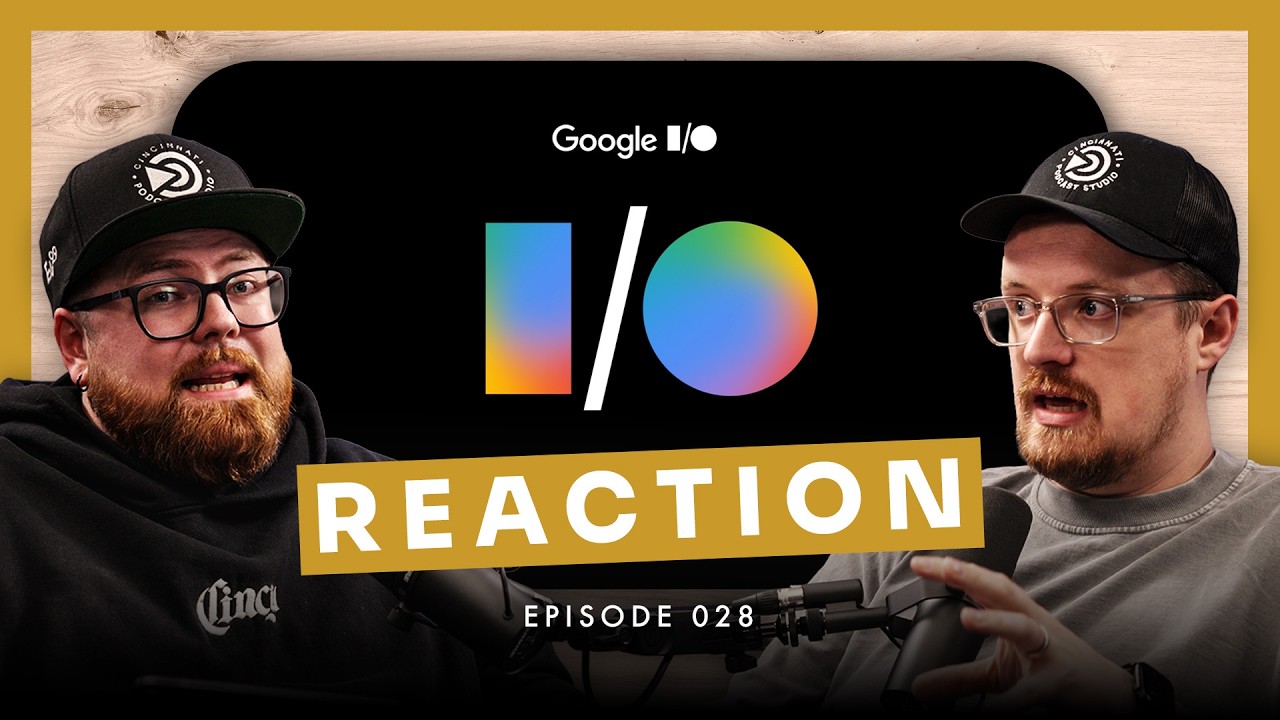
Google I/O, YouTube Brandcast 2026 & Apple Podcasts Video: What It Means
Google I/O, YouTube's Brandcast 2026, and Video on Apple Podcasts: What B2B Content Teams Need to Know
Three major platform announcements dropped in quick succession—Google I/O 2026, YouTube's Brandcast 2026, and Apple Podcasts adding native video support—and they're all pointing the same direction. If you produce video or podcast content for a B2B brand, these aren't just tech news items. They're signals about where distribution is going and which formats will get the most reach in the next 12–24 months.
We broke down each announcement on the Cincinnati Podcast Studio podcast and pulled out the parts that matter most for business content teams. Here's the practical read.
Quick Answer
Google I/O 2026, YouTube's Brandcast, and Apple Podcasts' video push are all pointing the same direction: video-first content is no longer optional. If your B2B brand isn't producing video podcasts or searchable video content, you're falling behind on three major distribution platforms simultaneously. The playbook is to start recording on camera now—before the gap widens. If you're already producing, audit whether your episodes are fully optimized for YouTube and Apple Podcasts discovery.
What Happened at Google I/O 2026 (And Why Podcasters Should Care)
Google I/O wasn't primarily a content creator event, but several announcements landed squarely in podcast and video territory. The clearest signal: Gemini's AI-powered search is pulling structured content—podcasts, video episodes, transcripts—into answer surfaces at a much higher rate.
What that means practically: a podcast episode with a clean transcript, accurate metadata, and a clear topic structure is no longer just a media file. It's an SEO asset that can surface as a direct answer in Google search, inside Gemini responses, and across the Google ecosystem. The content formats that have always performed well in traditional SEO—clear structure, specific answers, authoritative voice—now also apply to audio and video.
For B2B teams, this matters because your buyers search Google every day. A video podcast production strategy that includes transcripts and proper tagging now earns you search visibility that would otherwise require a full written content program. One production session can produce a video, an audio episode, a transcript-based blog post, and multiple short clips—all of which Google can index and surface.
The other Google angle worth noting: AI Overviews are pulling more content from authoritative sources—organizations with established topical depth. Brands that have been consistently publishing podcast and video content around a specific subject matter are being treated as topical authorities faster than brands just starting a blog.
YouTube Brandcast 2026: The Signals B2B Teams Should Not Ignore
YouTube Brandcast is where YouTube pitches advertisers on where to spend. What they pitch tells you exactly where the platform is investing. This year, podcasts and long-form content were front and center—which means YouTube is treating podcast-format video as a priority category for both organic reach and ad inventory.
The connected TV signal was equally loud. YouTube is now the most-watched streaming platform on connected TVs in the US. That's not a mobile-first audience casually swiping—that's an audience sitting down, choosing content intentionally, and watching full episodes. For B2B content teams, this is an argument for longer, more substantive episodes rather than just short clips.
YouTube also signaled that branded content from podcasts—interviews, expert conversations, industry analysis—is increasingly competing for the same attention that major media brands have historically dominated. That's the opening. B2B organizations that show up consistently with a polished video podcast are earning organic placement that would cost significant ad spend to buy.
The practical takeaway from Brandcast: YouTube is actively growing the podcast category. Shows that are already there will benefit from that tailwind. Shows that aren't will face a steeper climb as more content fills the space.
Apple Podcasts Goes Video: What This Changes for Podcast Distribution
Apple Podcasts adding native video support is the most direct change for podcast producers. For years, video podcasting meant YouTube first, with audio distributed separately through RSS. Now Apple Podcasts plays video episodes inline—same feed, same app, same audience.
What this means structurally: a single production session now feeds three major platforms without additional work. Record a video conversation, export audio for your RSS feed, upload the video to YouTube, and the video version is also available inside Apple Podcasts. The audience gets to choose how they consume it—watch on their TV via YouTube, listen on their commute through Apple Podcasts, or both.
The discoverability angle matters too. Apple Podcasts is now prioritizing video-enabled shows in Browse and Search. A podcast that only distributes audio gets less real estate than one with video episodes. For B2B shows trying to grow an audience, that visibility gap will compound over time.
There's also an audience expectation shift happening. Video podcasting was niche three years ago. Today, audiences increasingly expect to see the people they listen to—the face-to-face format builds trust faster than audio alone. Apple Podcasts making video native accelerates that expectation across their entire user base, not just the YouTube-native audience.
If you're based in Greater Cincinnati or Northern Kentucky and already have a podcast, the question isn't whether to add video—it's how quickly you can make the production side manageable. That's exactly what our video podcast production setup is built for.
How These Three Announcements Add Up for Your Content Strategy
The through line across Google I/O, YouTube Brandcast, and Apple Podcasts is straightforward: every major platform is rewarding video-first production. Google wants structured video content it can index. YouTube wants podcasts to fill its growing content category. Apple Podcasts wants video shows to differentiate its app.
For B2B content teams, this convergence creates a genuine multiplier. One professionally produced conversation—recorded properly on camera, with clean audio—can produce assets for all three platforms simultaneously. The production investment doesn't multiply; the distribution does.
The operational argument for consulting and content strategy at this level is similar to what we hear from most clients: the bottleneck isn't ideas or topics—it's the production infrastructure. Getting a guest in front of a camera, capturing usable footage and audio, and exporting in the formats each platform requires is the friction that stops most B2B teams before they start. When that friction is removed—when your team shows up and the production side is handled—the content output compounds quickly.
There's also a short-form video strategy component worth building in from the start. Every long-form episode is a source for 3–5 short clips—the kind of content that drives awareness on LinkedIn, Instagram, and YouTube Shorts. The same session that feeds your podcast also feeds your social content calendar for the week.
What Cincinnati/NKY B2B Teams Should Do Right Now
If your organization doesn't have a video podcast yet, these announcements make the case clearly. You're not just missing one content channel—you're missing placement on Google search, YouTube organic, and Apple Podcasts browse all at once. The gap between brands that are producing and brands that aren't is widening every quarter.
If you're in the Cincinnati/NKY region and want to know what a video podcast would actually look like for your organization—format, guests, episode cadence, distribution setup—the right first step is a Discovery Call with our team. We'll walk through what makes sense for your audience and goals before anything else.
If you already have a podcast and it's audio-only, now is the right time to add video. You don't need to rebuild the show—you need to add a camera to the recording session. Our team handles the rest: lighting, framing, editing, export formats for YouTube and Apple Podcasts, and short-form clip production.
If you have a video podcast but haven't fully optimized it for YouTube and Apple Podcasts, that's a podcast idea research and distribution audit conversation worth having. Titles, descriptions, chapters, transcripts, and metadata all affect how each platform surfaces your episodes—and most shows leave significant organic reach on the table.
You can also explore what's working on the Cincinnati Business Podcast for a local example of a video-first B2B show built on this exact production model.
Frequently Asked Questions
Does Apple Podcasts support video podcasts now?
Yes. Apple Podcasts added native video support, meaning shows that include video episodes display them inline. Listeners can watch or listen from the same feed—no separate app required.
How does YouTube Brandcast 2026 affect B2B content strategy?
YouTube used Brandcast to signal that podcasts and long-form content are a top advertising and organic category. B2B brands with video podcasts now compete for the same prime real estate that major media brands occupy.
What did Google I/O 2026 mean for podcast SEO?
Google's AI-powered search increasingly surfaces structured content—including audio and video with transcripts—as direct answers. Podcasts and video episodes with good metadata are now SEO assets, not just media files.
Do I need separate video versions for YouTube and Apple Podcasts?
Not necessarily. A professionally recorded video podcast episode can feed both platforms from the same production session. CPS structures every recording so you get the assets for both without additional production time.
How do I start a video podcast in Cincinnati?
The fastest path is a Discovery Call with CPS. We'll scope the format, guest flow, and distribution setup—then handle all production from recording day forward.
The Window Is Open—For Now
Platform shifts like these create windows. The brands that act early on video podcasting when YouTube started prioritizing it, or when Apple added support, built audience and organic reach that's hard to replicate later. These announcements from Google I/O, YouTube Brandcast, and Apple Podcasts are that same kind of signal.
CPS builds the production infrastructure so Cincinnati and Northern Kentucky B2B organizations can show up consistently on camera without the overhead. Your team brings the expertise and the conversations. We handle everything else—studio, production, editing, and webinar production if that's also in the mix.
If you're ready to put a production plan together, book a Discovery Call. If you'd rather start with a question, contact us directly.