
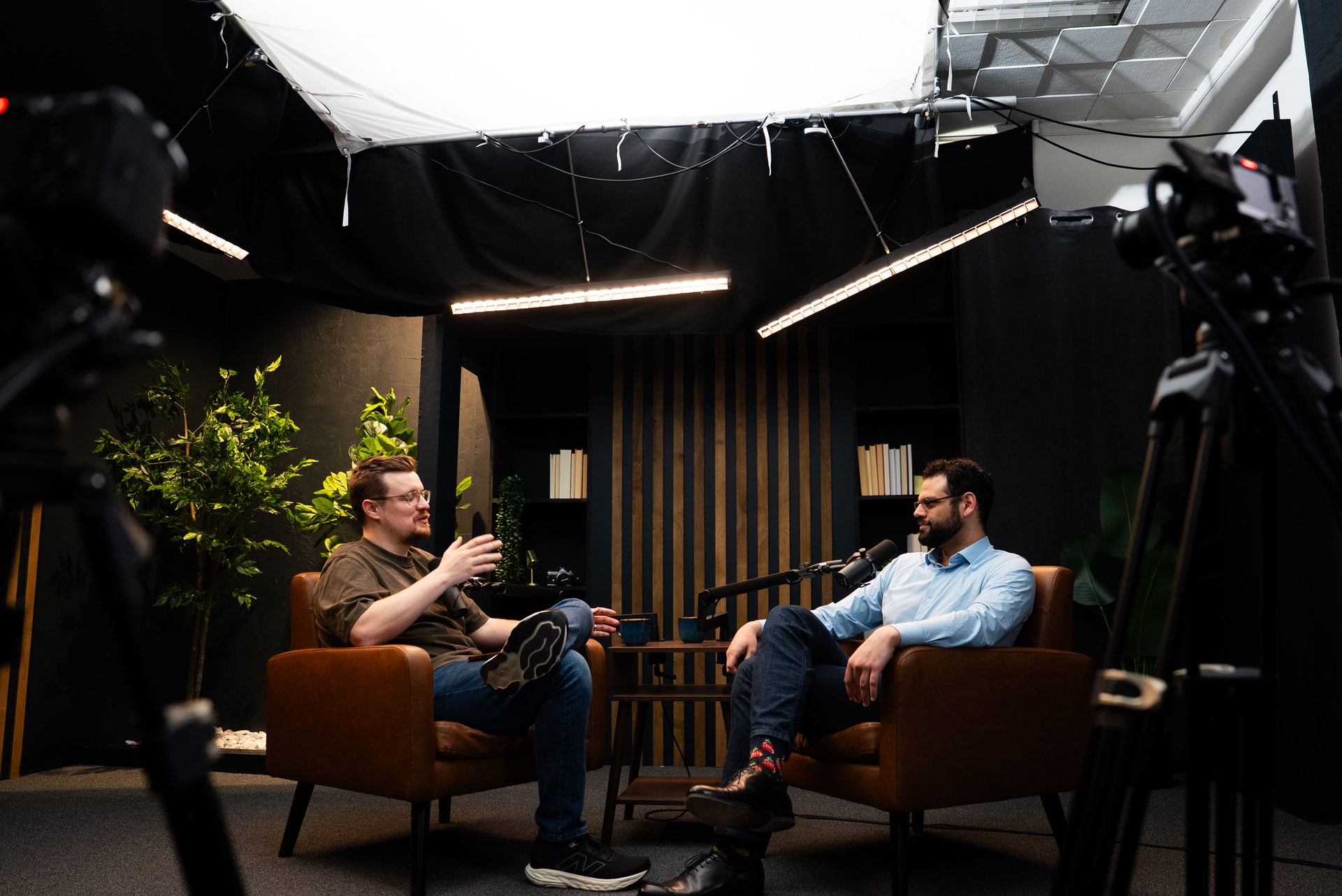
Content Strategist or DIY? How Cincinnati B2Bs Should Decide
Do You Need a Content Strategist, or Can You Figure It Out Yourself?
Most business owners don't wake up planning to hire a content strategist. They get there after months of publishing in bursts, staring at a blank topic list, or watching a competitor show up everywhere while their own content sits quiet. The real question isn't whether content strategy matters. It's whether you can build and run that system yourself, or whether it's time to bring in content strategy consulting to close the gap.
Here's a direct answer, then the specifics that actually determine which path fits your business.
Quick Answer
Most businesses can handle basic content planning on their own at first, but a content strategist starts earning its cost once you need a repeatable system, consistent output, and a point of view that holds up across formats. If you're publishing sporadically, guessing at topics, or spending hours each week without traction, that's the signal to book a Discovery Call instead of continuing to DIY it.
What a Content Strategist Actually Does
A content strategist isn't a scheduler and isn't the same thing as a content calendar. The job starts earlier than that: deciding what your business should be known for, which topics and formats support that, and how a single idea turns into weeks of material instead of one post.
- Defines the point of view a business builds its content around, not just a rotating list of topics
- Designs a repeatable system for cadence, formats, and distribution instead of one-off pieces
- Ties content back to business goals, like pipeline and hiring, instead of chasing vanity output
- Plans with formats like video podcasting in mind from the start, so one recording session can feed several channels
That distinction matters because a lot of businesses hire for the wrong gap. They bring in a writer or a scheduling tool when the real problem is that nobody has decided what the business stands for yet.
Signs You Can Handle This Yourself (For Now)
DIY content strategy isn't automatically the wrong call. It's the right call under a specific set of conditions, and recognizing them early saves you from hiring too soon or too late.
- You have one clear topic area and already understand your audience's questions well
- Someone on the team has a genuinely consistent writing or recording habit, not just good intentions
- You're early-stage and still testing which formats fit before investing further
- Your publishing volume is low enough that inconsistency isn't costing you visibility yet
If that describes your business today, keep going. The signals below are what tell you the window is closing.
Signs It's Time to Bring in Outside Help
The businesses that benefit most from outside content strategy help almost always recognize themselves in more than one of these patterns:
- You publish in bursts, then go quiet for weeks or months at a time
- You're guessing at topics instead of working from a system built around real buyer questions
- Content exists, but it doesn't add up to a recognizable point of view
- Content is always the first thing that gets dropped when the team gets busy
- You've tried DIY for six-plus months with no measurable traction to show for it
None of these are a verdict on your team. They're a sign the gap is strategic, not a matter of trying harder.
What DIY Content Strategy Really Costs You
The sticker price of a content strategist is the cost people weigh first. It's rarely the real cost. The expensive part of DIY content strategy is what happens while there's no system in place:
- Time: hours each week spent deciding what to make instead of making it
- Consistency: sporadic publishing resets algorithmic reach and audience momentum every time it happens
- Opportunity cost: competitors running a real system compound visibility while you keep restarting from zero
According to Content Marketing Institute's B2B benchmark research, the organizations that report the strongest content results consistently point to having a documented strategy as the differentiator, not budget size. The hidden cost of DIY isn't the strategist's fee. It's the months spent without a working system while that gap compounds.
What a Strategist Brings That DIY Can't Replace
Even disciplined teams hit a ceiling with DIY content strategy, because some parts of the job require distance from the business that's hard to get from the inside.
- An outside read on what's actually differentiated, versus what only sounds differentiated internally
- A production model built around batching, where one studio session multiplies into weeks of short-form video and written content instead of a single post
- Pattern recognition from other B2B accounts on which formats and hooks actually convert
- An accountability structure, so output no longer depends entirely on the founder's bandwidth
Common Mistakes Businesses Make Deciding This
A few recurring mistakes show up whenever businesses weigh this decision:
- Treating a content calendar and a content strategy as interchangeable, when a calendar only answers when, not why
- Waiting until burnout to ask for help, instead of before momentum is already lost
- Hiring for execution, like writing or editing, when the real gap is strategy and positioning
- Assuming consulting only makes sense once a business reaches a certain size
If you're a B2B team in Cincinnati or Northern Kentucky, this matters because the local market rewards consistent, recognizable experts more than one-off campaigns. A business that shows up reliably with a clear point of view tends to out-position a larger competitor that only publishes occasionally.
How CPS Approaches Content Strategy Consulting
At Cincinnati Podcast Studio, content strategy consulting starts with positioning and audience definition, before any conversation about equipment or production schedules. From there, we pair strategy with the production capability to actually execute it, built around a batch model where a single session feeds podcast idea research, episodes, clips, and written content for weeks. We also point businesses toward our Cincinnati Business Podcast as an example of what a consistent system looks like in practice, and our content resources hub for teams who want to start researching before committing to anything.
For most businesses stuck between DIY and hiring help, the most useful next step isn't a long proposal. It's a conversation about what a working system would actually look like for your specific business and team.
FAQs
What does a content strategist actually do?
A content strategist defines the point of view a business builds content around, sets a repeatable production system, and ties output back to business goals like pipeline and authority, rather than just scheduling posts.
How much content strategy can I realistically handle myself?
If you have one clear topic area, a consistent habit, and are still testing formats, DIY can work for a while. Once publishing gets inconsistent or content stops tying back to a clear point of view, outside help pays for itself.
When should a business bring in outside content strategy help?
The clearest signal is publishing in bursts with long gaps, guessing at topics instead of working from a system, or six-plus months of DIY effort without measurable traction.
Is content strategy consulting only worth it for large companies?
No. Small and mid-size B2B teams often benefit more, since they have less internal bandwidth to absorb inconsistent content and more to gain from a system that multiplies one recording session into weeks of material.
What's the difference between a content strategist and a content calendar?
A content calendar schedules what gets published and when. A content strategist decides what the business should be known for, which format mix supports that, and how each piece compounds into a system instead of standing alone.
The Bottom Line
DIY content strategy works until the gap between what you're publishing and what your business actually needs to be known for gets too wide to close in spare time. If any of the signals above sound familiar, the fastest way to find out what a real system would look like is to talk it through directly. Contact our team or schedule a Discovery Call to map out what content strategy support would actually look like for your business.