
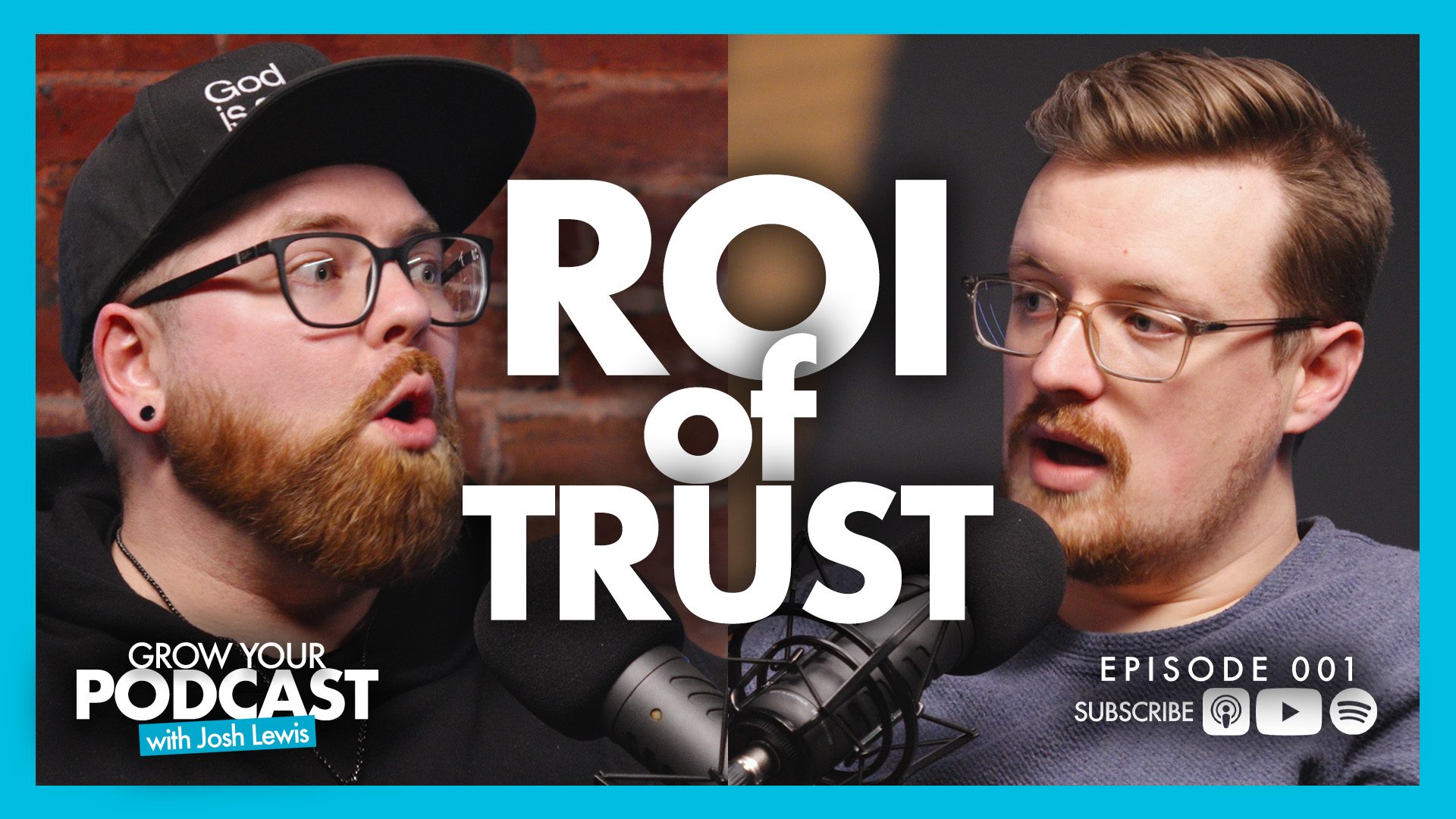
Business Podcasting ROI: What B2B Brands Are Missing (and the Practical Playbook to Fix It)
If you’re a CEO, founder, managing director, or marketing leader in a B2B company, you’ve probably had this thought:
“Podcasting seems cool… but what’s the ROI?”
Totally fair. Every marketing dollar gets scrutinized. And if you’ve tried content before, you know the pain: it starts strong, gets inconsistent, and then slowly dies in someone’s Google Drive.
This post is based on the core message of “Unlocking Podcasting ROI!” — most brands underestimate what podcasting can actually do when it’s treated like a strategic system, not a random creative project.
Quick answer: What is the ROI of a business podcast?
A business podcast’s ROI is usually “trust and authority that converts,” not immediate direct-response sales.
In B2B marketing, ROI typically shows up as:
Higher-quality inbound leads (“I feel like I already know you”)
Shorter sales cycles (less explaining, more closing)
Better brand perception (you become the “obvious choice”)
A content engine that feeds LinkedIn, YouTube, email, and your website consistently
Who this is for
This guide is for B2B decision-makers (CEOs, founders, managing directors, marketing leaders) who want to build trust, authority, and a consistent content engine without adding chaos to their week — especially in Greater Cincinnati / Northern Kentucky.
What brands are missing out on with business podcasting
Most people think “podcast” means:
A show that hopefully gets downloads
A nice-to-have marketing experiment
Something the CEO does “when they have time”
But a strategic business podcast is a B2B marketing + branding system.
When you do it right, your podcast becomes:
Executive thought leadership (personal branding for CEOs/founders)
Sales enablement (answer objections before the call)
Content repurposing fuel (clips + posts + blog + email)
SEO + AI discoverability (answers that show up in search)
The practical playbook: how to start a business podcast the smart way
Step 1: Pick the business goal (not just a topic)
What do we want this podcast to do for the business?
Pick ONE primary goal:
Build trust + authority in a niche
Generate pipeline + partnerships
Support recruiting + culture
Educate the market (complex offerings)
Step 2: Define the audience in plain English
Don’t say “business owners.” Say:
“Marketing leaders at B2B service companies doing $500K–$5M”
“Founders at regional tech companies who need consistent content”
“Consultants/coaches who want to become the go-to expert”
Step 3: Lock your positioning statement (copy/paste)
This podcast helps [WHO] get [RESULT] without [PAIN].
Examples:
This podcast helps B2B founders build a personal brand that drives pipeline without living on social media.
This show helps marketing directors turn expert conversations into consistent content without burning out their team.
Best podcast formats for B2B marketing
Option A: CEO Roundtable (high trust, bingeable)
2–3 hosts
Same rhythm every episode
Opinions + stories + lessons
Option B: Expert interviews (best for partnerships)
Guests you want relationships with
Built-in distribution when they share
Option C: Teach-the-market solo show (best for SEO)
10–20 minutes
Answer the exact questions prospects Google
If you’re busy: start with 2 episodes per month. Consistency > intensity.
Content pillars that make B2B podcasting easy
Rotate 3–5 pillars so you never run out of topics:
FAQ Episodes (questions prospects ask pre-sale)
Objection Episodes (“Is this worth it?” “What does it cost?”)
Case Study Episodes (wins + lessons + behind-the-scenes)
Trends / Hot Takes (B2B branding gold)
Leadership Episodes (how the CEO thinks)
Simple production standards (so your brand looks legit)
A business podcast does not need Hollywood production — but it does need to feel professional.
Minimum standards:
Clean audio (priority #1)
Consistent framing + lighting
Intentional-looking set/background
Repeatable workflow (so it doesn’t feel like chaos)
If you’re local, recording in a studio inCincinnati / Northern Kentuckycan remove the biggest friction: setup and tech overhead.
Repurposing: how one episode becomes a month of content
For each full episode, aim for:
8–12 short clips (30–90 seconds)
1 LinkedIn post (story + lesson)
1 carousel (framework, checklist, steps)
1 email (what you learned + CTA)
1 SEO blog post (to capture search + AI queries)
How to measure B2B podcast ROI (without losing your mind)
Don’t only track downloads. Track ROI in four buckets:
1) Brand trust signals
“I feel like I already know you”
People referencing episodes in calls
Invites to speak / collaborate / partner
2) Sales enablement signals
Sales team sending episodes to prospects
Prospects consuming content before calls
Fewer basic questions in discovery
3) Content efficiency signals
More consistent publishing
Less scramble for ideas
More reuse across channels
4) Pipeline influence signals
Inbound leads referencing content
Better lead quality
Shorter sales cycles (even small shifts matter)
Monthly scorecard
30-day launch plan (practical + doable)
Week 1: Strategy
Choose the goal
Define audience
Write positioning statement
Decide format + cadence
Outline 15–20 episode topics using pillars
Week 2: Record
Batch record 2 episodes
Keep it simple + consistent
Week 3: Publish + repurpose
Publish Episode 1 (YouTube + audio platforms)
Cut 8–12 clips
Write 1 LinkedIn post
Publish 1 SEO blog post
Week 4: Repeat
Publish Episode 2
Repeat repurposing
Review scorecard
Improve one thing (hooks, pacing, thumbnails, etc.)
FAQ (People Also Ask)
How do I start a podcast for my business?
Define goal + audience + positioning. Pick a sustainable cadence. Record in batches. Repurpose every episode into clips + SEO.
Is video podcasting better than audio-only for B2B?
Usually yes. Video wins on YouTube + clips for LinkedIn, while audio platforms still serve listeners.
What should a CEO talk about on a podcast?
FAQs, objections, trends, leadership lessons, and case studies. Show how you think.
How long does it take to see ROI?
Trust signals in 4–12 weeks (if consistent). Pipeline influence often 3–6+ months as the library compounds.
How often should we publish?
Start with what you can sustain. Two episodes per month is a great baseline.
Final takeaway
If you’re in B2B, you don’t need “viral.”
You needtrust at scale.
A strategic business podcast helps you:
Strengthen B2B branding
Build CEO/founder personal branding
Turn conversations into consistent content marketing
Compound over time
